
Kazakhstan's 1920s dekulakization seized 1.3 million livestock, archive study finds
This digest was compiled by AI from multiple sources — links to the originals are below.
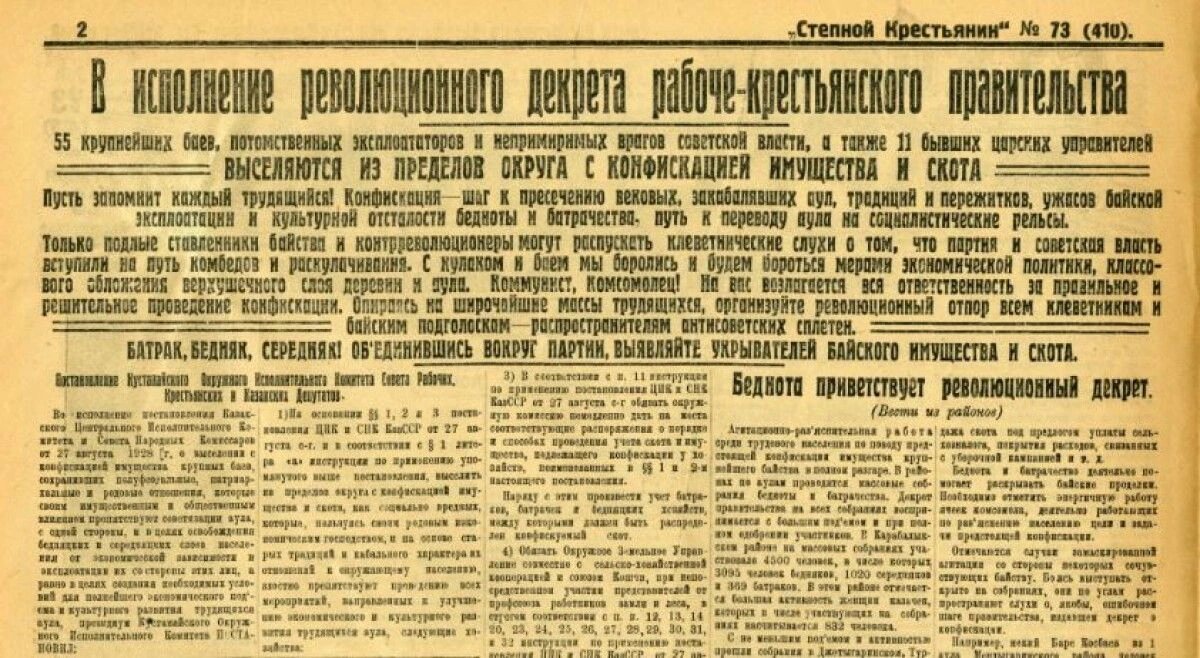
A Telegram channel analysis of 9,955 archival cases found that 1.295 million livestock were confiscated from Kazakh households during 1920s dekulakization. The median holding was 170 animals, with 62% of recorded households owning over 100. The study also documented 25,000 hectares of seized land and 1,902 mentions of other property.
Key Facts
- The Telegram channel kzlg analyzed 9,955 archival cases of Kazakhs subjected to dekulakization in the 1920s.
- The total livestock count in the analyzed cases was 1.295 million head, with a median of 170 animals per household.
- More than 100 livestock were owned by 62% of households with recorded numbers, and about one in five had over 500.
- The largest recorded holdings included 10,000 livestock for Abdrakhman Umarov, 6,300 for Dosym Nysanbayev, 6,250 for Kulbay Koktalov, and 6,200 for Sagatbek Balpikov.
- The study documented 25,000 hectares of confiscated land and 1,902 separate mentions of other property such as grain, farm equipment, houses, mills, and shops.
Livestock Confiscation
The kzlg Telegram channel compiled data from 9,955 archival files on Kazakhs subjected to dekulakization in the 1920s. The total livestock recorded in these cases was 1.295 million head, with an average of 392 animals per person. The median holding was 170 animals, meaning half of those with known livestock numbers had fewer than 170 and half had more. Over 100 livestock were owned by 62% of households with recorded figures, about one in five had more than 500, and 9% had over 1,000. The largest holdings included Abdrakhman Umarov with 10,000 head, Dosym Nysanbayev with 6,300, Kulbay Koktalov with 6,250, and Sagatbek Balpikov with 6,200.
Land and Other Property
The total area of confiscated land in the analyzed cases was 25,000 hectares, with a median household plot of 16.4 hectares. A typical example was Pavel Petrovich Kuznetsov, who had about 16.4 hectares of land, 18 livestock, and two workers. The study found 1,902 separate mentions of other property, most commonly grain, farm equipment, mowers, hay reserves, houses, mills, seeders, plows, warehouses, and shops. Also recorded were butter churns, barns, stables, bakeries, and workshops.
Scope and Impact
The authors note that confiscation affected not only wealthy bais but also ordinary households with 150–200 livestock, a few hectares of land, a couple of workers, a house, a mower, a plow, and grain and hay reserves. The current study is described as the first stage of work, with plans to analyze a larger dataset on Soviet repressions and to seek sponsors and partners.
1 source
Time · lag behind first