
India, China Agree to Delimit Less Contested Border Sections
This digest was compiled by AI from multiple sources — links to the originals are below.
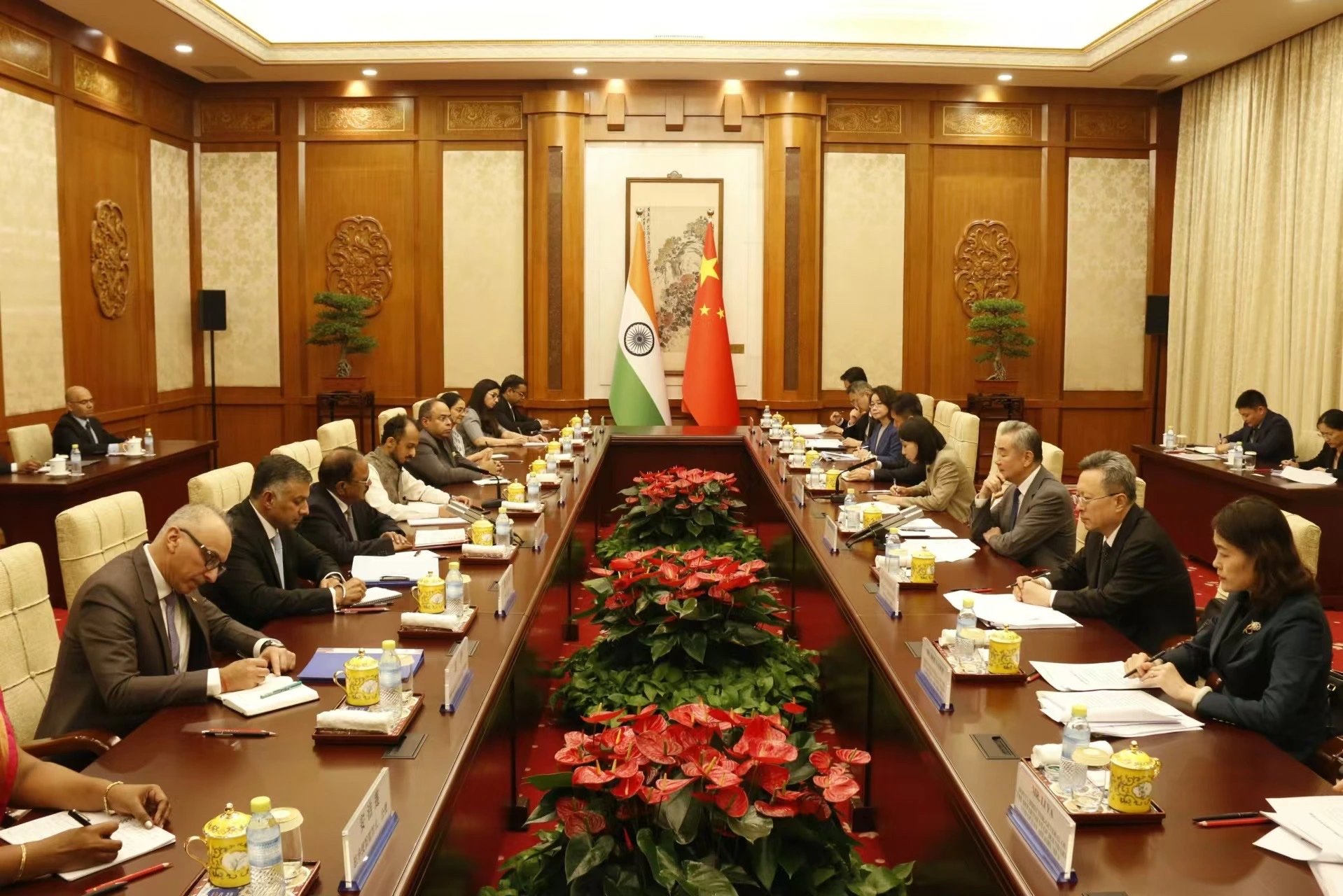
India and China agreed on August 26 to identify and delimit less contentious sections of their 3,500 km border. The two sides also established two new military hotlines and two new meeting points for commander-level interactions. The agreement follows talks in Beijing between India's National Security Adviser Ajit Doval and Chinese Foreign Minister Wang Yi.
Key Facts
- India and China agreed to identify and delimit less contentious sections of their 3,500 km border, according to a joint statement released on August 26.
- The two sides agreed to establish two new military hotlines in the eastern and middle sections of the border and two new meeting points for military commander-level interactions.
- Officials from both countries will meet next month to discuss trans-border rivers.
- The joint statement listed eight outcomes, including a commitment to address any situation on the ground promptly through existing diplomatic and military channels.
- The two countries reaffirmed their commitment to a 'package settlement' covering the entire border based on a 2005 pact.
Border Delimitation Process
A special group of negotiators will identify less disputed parts of the border and delimit them, the joint statement said. The talks in Beijing were held between India's National Security Adviser Ajit Doval and China's Foreign Minister Wang Yi, who are the designated special representatives for the boundary talks mechanism established in 2003. The two sides discussed ways to improve understanding of the Line of Actual Control (LAC) in appropriate areas for better border management. Differing perceptions of where the border lies have been the principal source of friction between the countries.
Military Confidence-Building Measures
India and China agreed to two new military hotlines in the eastern and middle sections of their border. They also agreed to two new meeting points for military commander-level interactions to immediately deal with any tensions along the 3,500 km border. The joint statement emphasized stabilizing the border and ensuring that any tensions are defused before they impact the larger relationship. India has stated multiple times that peace on the border is a prerequisite for progress in other areas of the China-India bilateral relationship, such as economic engagement.
Framework for Comprehensive Settlement
The two countries said they were committed to finding a solution to their boundary problem based on a 2005 pact that calls for a 'package settlement' covering the entire border. The 2005 pact also provides for both countries to safeguard the interests of their settled populations in the border areas. India has been particularly keen that the solution to border tensions with China be a comprehensive one, covering the entire stretch of the border rather than selected areas seen as easier to resolve. Some areas with easier resolution prospects are also ones where India holds a military advantage vis-à-vis China.
1 source
Time · lag behind first