
Fed's Barr says central bank should raise rates if inflation doesn't moderate
This digest was compiled by AI from multiple sources — links to the originals are below.
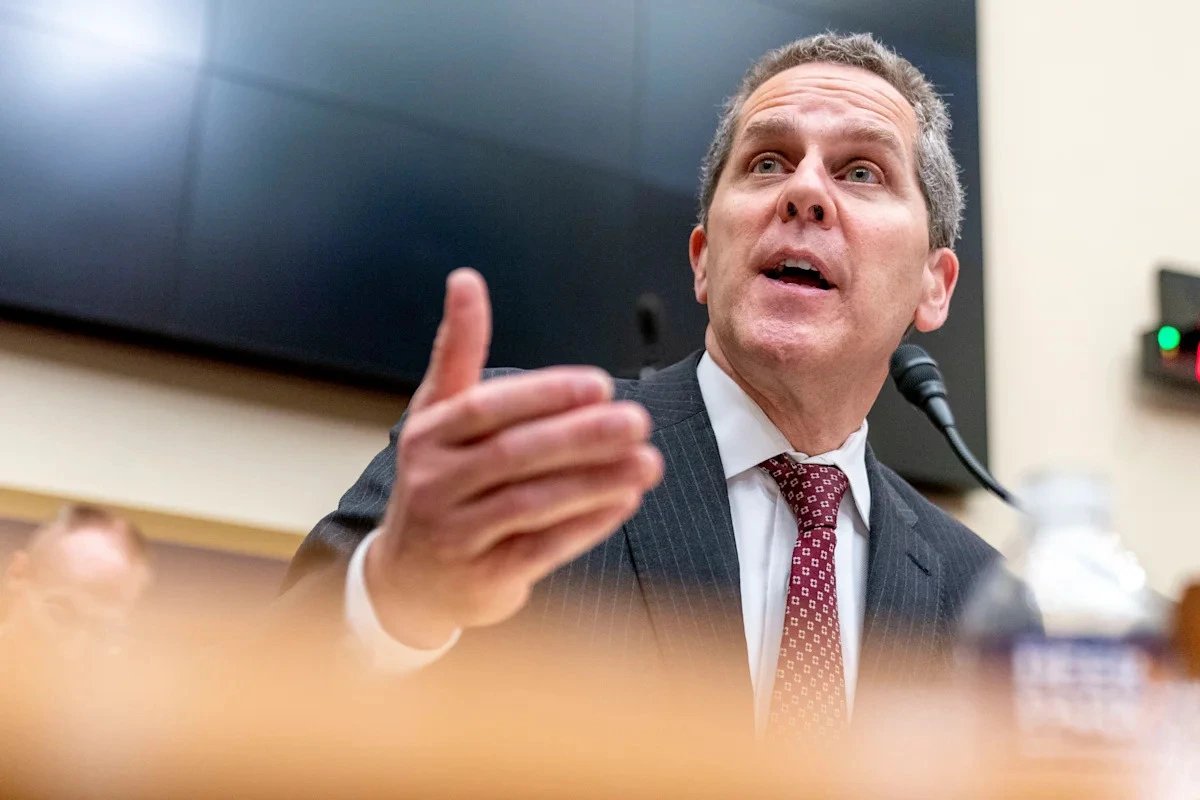
Federal Reserve Governor Michael Barr said Tuesday the central bank should raise interest rates if inflation doesn't moderate sufficiently. Barr's remarks come ahead of the Fed's Sept. 16 policy meeting, with markets now pricing a 66% chance of a hike.
Key Facts
- Barr said the Fed should act decisively to raise rates if inflation appears not to be moderating sufficiently.
- Markets are pricing in a 66% chance of a rate hike at the September meeting, up from just above 30% before Fed Chairman Kevin Warsh's speech last Friday.
- The Fed will receive two more readings on consumer and wholesale inflation next week before the Sept. 16 meeting.
- Barr said inflation remains too high, citing shocks from tariffs, the Middle East conflict, and the rapid AI build-out.
Barr's Policy Stance
Barr said the outlook for inflation and the economy will top the agenda at the Fed's policy meeting in just over two weeks. He said if trends give him confidence that inflation is moderating on a path to 2%, the Fed can take more time to assess its policy stance. However, if inflation appears not to be moderating sufficiently, Barr said the Fed should act decisively to raise rates. Barr said inflation remains too high, pointing to a series of shocks — from tariffs to the conflict in the Middle East to the rapid AI build-out — that pushed the Fed off course.
Market Expectations
Markets are pricing in a 66% chance of a rate hike for the September meeting, up from just above 30% before Fed Chairman Kevin Warsh's speech last Friday in Jackson Hole, Wyoming. Warsh put a rate hike back on the table, hinting that current interest rates may not be high enough. Barr said he views the job market as stable, with relatively low unemployment, and the economy as solid, powered in part by the boom in AI-related business investment.
1 source
Time · lag behind first