
Kazakh court jails Amanat Drive pyramid heads over 21 billion tenge fraud
This digest was compiled by AI from multiple sources — links to the originals are below.
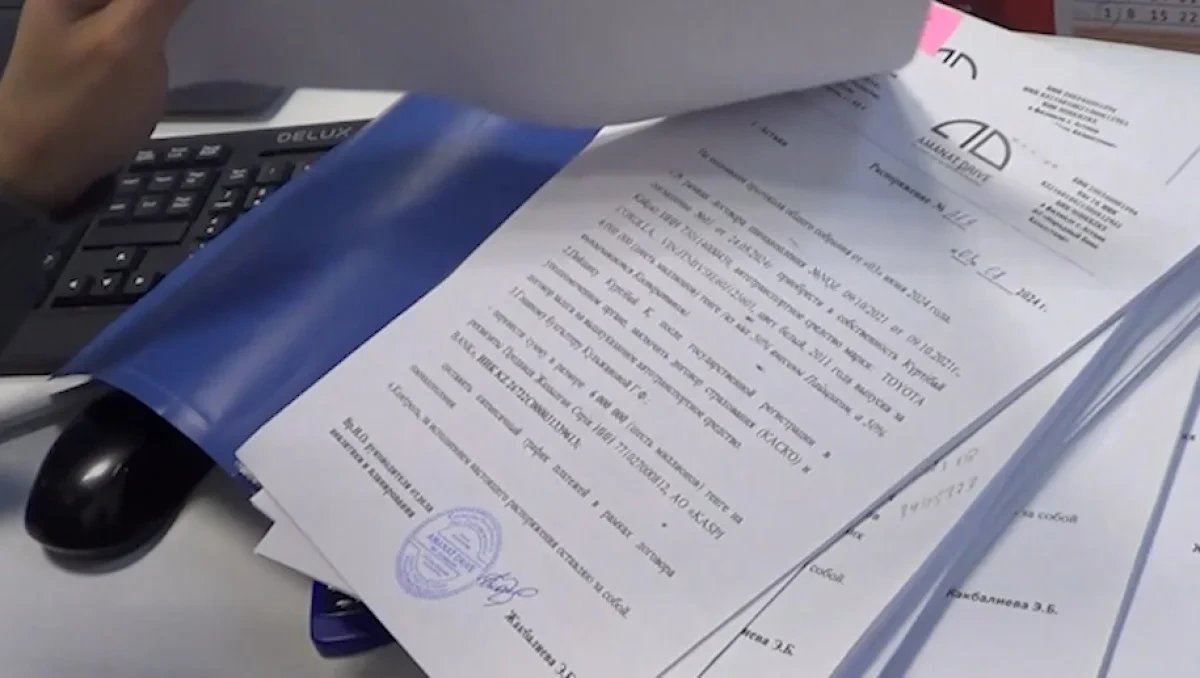
A court in Konaev sentenced two leaders of the Amanat Drive financial pyramid, which attracted more than 8,000 depositors and over 21 billion tenge. Shuken K.K. received eight years in prison, while Uratbek M.S. was sentenced to one year. The court also ordered confiscation of two apartments and three Lexus vehicles purchased with the funds.
Key Facts
- The Konaev city court sentenced Shuken K.K. to eight years in prison and Uratbek M.S. to one year for running the Amanat Drive pyramid.
- The pyramid attracted more than 8,000 depositors and over 21 billion tenge, according to the Financial Monitoring Agency.
- More than 1.8 billion tenge was withdrawn and cashed out through fictitious contracts with controlled companies.
- The court confiscated two apartments and three Lexus vehicles purchased with the funds and registered to trusted persons.
- The verdict has not yet entered into legal force.
The Sentences
The Konaev city court found Shuken K.K. guilty and sentenced him to eight years in prison. Uratbek M.S. was sentenced to one year in prison. The verdict has not yet entered into legal force.
The Scheme
Organizers offered citizens the purchase of real estate and cars on attractive terms — without interest payments and with the possibility of subsequent installment plans. To launder criminal proceeds, a multi-level scheme was implemented using controlled legal entities — Allo, ne kerek LLP, I M@RKETING LLP, and Gold SapaPremium LLP. These companies acted as fictitious suppliers of services such as advertising, real estate and transport market analysis and forecasting. On the basis of fictitious contracts, more than 1.8 billion tenge was withdrawn and converted into cash.
Asset Confiscation
Using the attracted funds, the convicts purchased two apartments and three Lexus cars, registering them in the names of trusted persons to hide them from possible confiscation. The court confiscated the said property into state revenue.
8 sources
Time · lag behind first