
USDA halts Cyclospora research as outbreak reaches 30,000 cases
This digest was compiled by AI from multiple sources — links to the originals are below.
The USDA is defunding two of three Cyclospora research programs and relocating the third to Iowa, with no parasitologists expected to move. The US is experiencing its largest Cyclospora outbreak on record, with nearly 30,000 cases and 922 hospitalizations. The research shutdown comes even as the CDC tallies two deaths from the parasite this summer.
Key Facts
- The CDC has tallied nearly 30,000 confirmed and probable Cyclospora cases this summer.
- At least 922 people have been hospitalized with cyclosporiasis, and two have died.
- Two of three USDA Cyclospora research programs have been defunded, and the third is losing all its scientists.
- The USDA is relocating the Beltsville Agricultural Research Center to Iowa, but no parasitologists plan to move.
- Since 2018, the US has generally reported between 2,000 and 5,000 Cyclospora cases annually, with 1,180 cases in 2025.
Research Shutdown
The USDA is defunding two of the three research programs that represent nearly all Cyclospora work at the department. The third program is about to lose every scientist working on it. The USDA is shuttering the Beltsville Agricultural Research Center near Washington, DC, and moving its work to a location in Iowa. Insiders told Politico that not one of the scientists working on the project plans to relocate from Maryland to Iowa. One USDA employee said, "They will have no parasitologists. There will be a big knowledge gap."
Outbreak Scale
The US is experiencing the largest Cyclospora outbreak ever recorded. The Centers for Disease Control and Prevention has tallied nearly 30,000 confirmed and probable cases this summer. At least 922 people have been hospitalized with cyclosporiasis, and two have died. Since 2018, the US has generally reported between 2,000 and 5,000 cases, though the US reported 1,180 cases in 2025.
Research Challenges
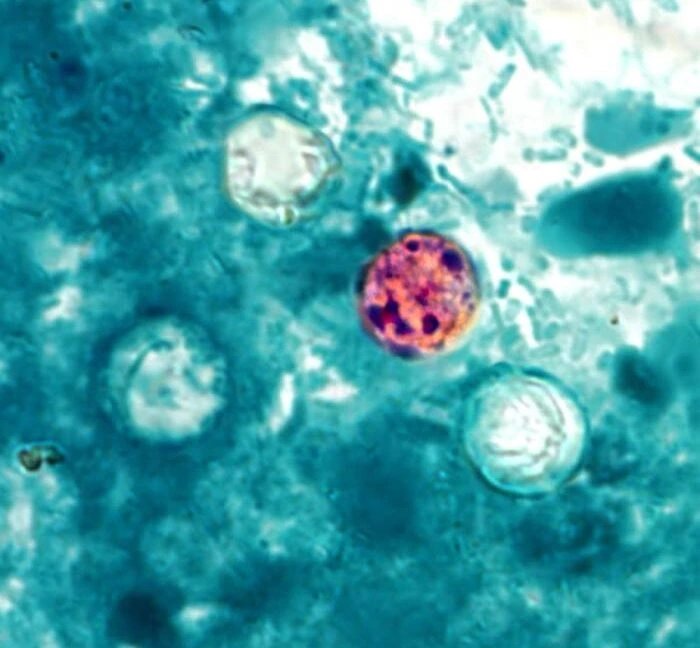
Cyclospora is difficult to work with in a laboratory compared to other foodborne pathogens, such as E. coli or Salmonella. Cyclospora grow and reproduce only in the human gut, not in lab conditions. The parasite can be shed intermittently or at low levels, requiring repeat fecal samples from an infected person. Cyclospora has a much larger genome than bacteria, making genomic sequencing costlier and more laborious. It also reproduces sexually, meaning each generation will have new mixes of genes, making it harder to trace back lineages of the parasite to a single contaminated food.
1 source
Time · lag behind first