
China, Kazakhstan, Russia weigh Irtysh cargo corridor to Arctic
This digest was compiled by AI from multiple sources — links to the originals are below.
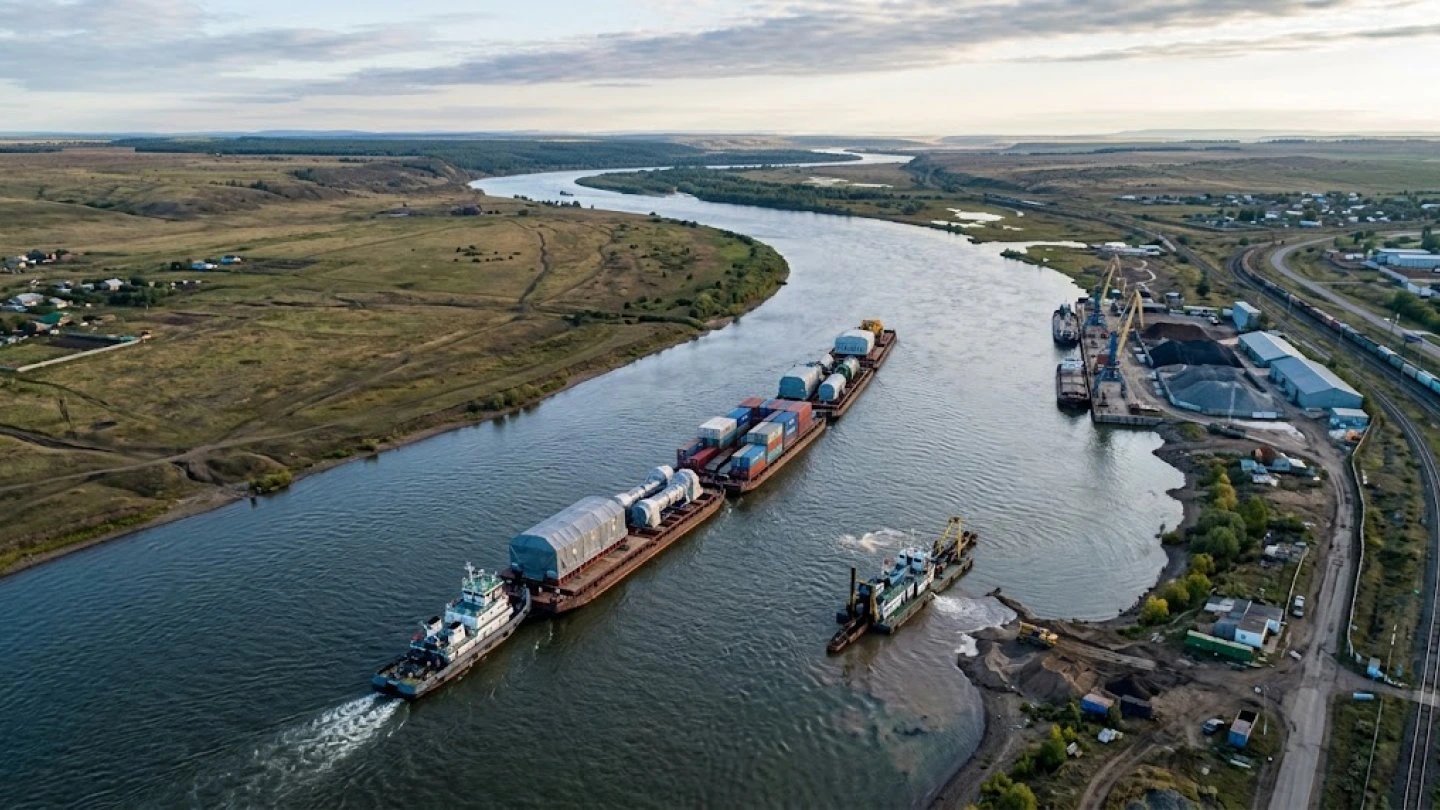
China, Kazakhstan and Russia are discussing turning the Irtysh River into a cargo corridor to the Arctic Ocean, a project dubbed the 'Water Silk Road'. The 4,248-km river could give Beijing an alternative to vulnerable sea lanes through the Malacca and Bering straits. The idea was promoted at the 22nd Russia-Kazakhstan interregional cooperation forum by Pavlodar river port development adviser Batyrbek Musin.
Key Facts
- The Irtysh River stretches 4,248 km, with about 1,800 km through Kazakhstan's East Kazakhstan, Abai and Pavlodar regions.
- The proposed corridor could carry up to 15 million tonnes of cargo per year and cut delivery time from the Ob-Irtysh basin to the Chinese border by 7–10 days.
- Pavlodar river port development adviser Batyrbek Musin says barges of 1,000 to 5,000 tonnes would require hydro complexes every 50–100 km, dredging and riverbed cleaning.
- Experts estimate modernization costs at tens or even hundreds of billions of dollars, while Siberian rivers freeze for half the year and the Irtysh is too shallow for navigation.
- Shanghai Institute for International Studies senior fellow Zhao Long says the war in Ukraine and tensions around the Strait of Hormuz make alternative transport corridors more attractive.
The Proposed Route
The Irtysh originates in China's Xinjiang Uygur Autonomous Region, flows through Kazakhstan's East Kazakhstan, Abai and Pavlodar regions, then enters Russia and joins the Ob River. The Ob reaches the Arctic Ocean, giving the route a total length of 4,248 km, of which about 1,800 km lie in Kazakhstan. The project was promoted at the 22nd Russia-Kazakhstan interregional cooperation forum by Batyrbek Musin, development adviser for the Pavlodar river port. Musin said transporting large equipment from China along the Irtysh is possible in principle, but hydro complexes would need to be built every 50–100 km, along with dredging and riverbed cleaning, to allow barges of 1,000 to 5,000 tonnes.
Strategic Rationale
For Beijing, the corridor would reduce dependence on sea lanes through the Malacca and Bering straits, which could be blocked by sanctions or military control in a major conflict. Shanghai Institute for International Studies senior fellow Zhao Long said the war in Ukraine and tensions around the Strait of Hormuz make alternative transport corridors increasingly attractive. Warming is also making the Northern Sea Route gradually more accessible for shipping. The corridor's capacity is estimated at up to 15 million tonnes per year, with delivery times from the Ob-Irtysh basin to the Chinese border cut by 7–10 days.
Obstacles and Costs
Siberian rivers freeze for half the year, and the Irtysh is too shallow for navigation in its current state. Experts estimate modernization costs at tens or even hundreds of billions of dollars. China's main production capacity is on the east coast, while the Irtysh lies in the far northwest, making river transport economically uncompetitive with sea or rail routes. The project also requires a level of trust and integration among the three countries that does not yet exist, with observers noting tacit rivalry between China and Russia for influence in Central Asia.
2 sources
Time · lag behind first