
New Taldykorgan–Ust-Kamenogorsk highway shows damage after 180 billion tenge build
This digest was compiled by AI from multiple sources — links to the originals are below.
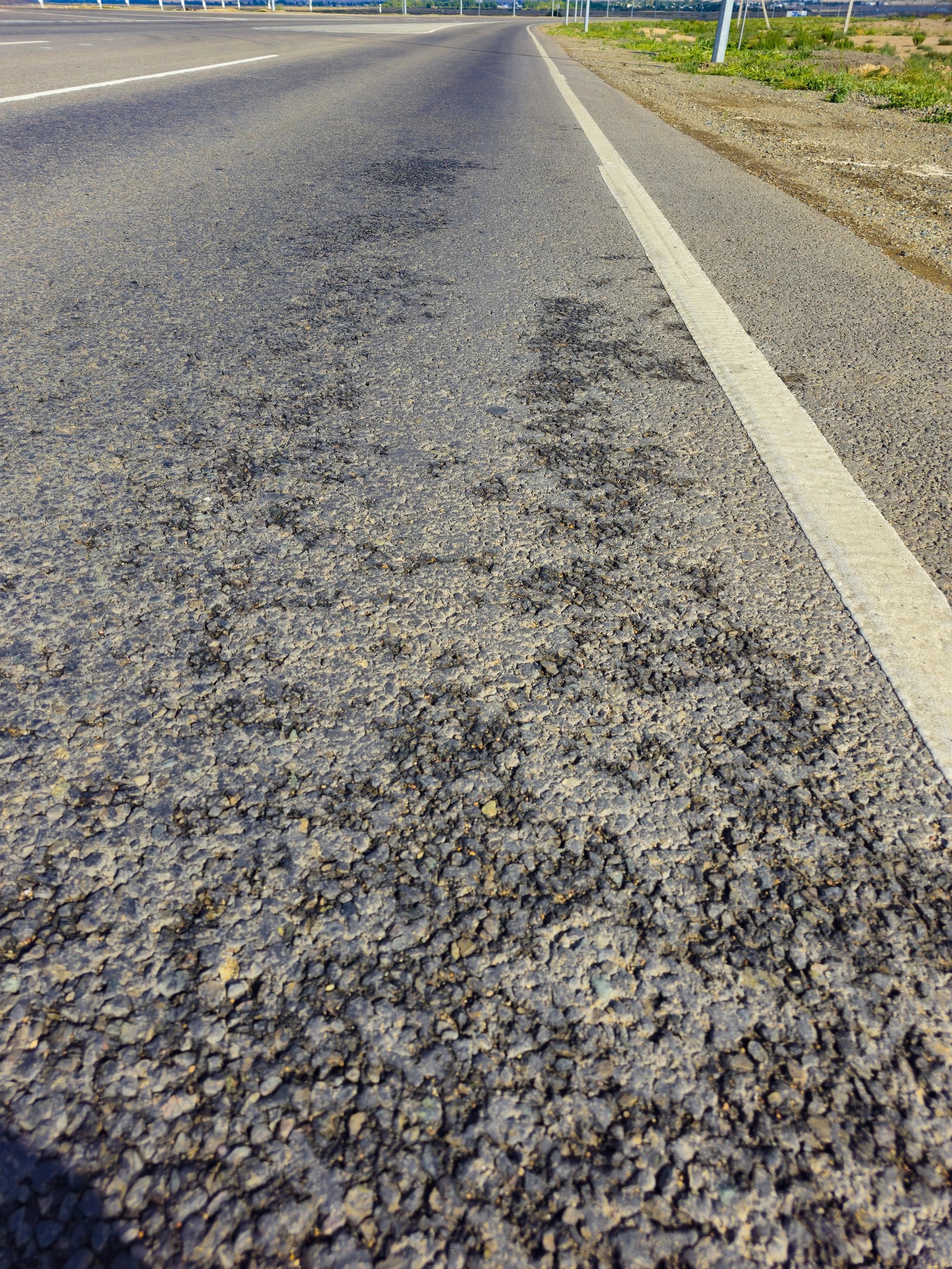
Activists in the Abai region inspected the Taldykorgan–Ust-Kamenogorsk highway on August 21, 2026, and reported widespread asphalt peeling, base subsidence, and possible construction quality issues. The road, built from 2018 to 2025 with over 180 billion tenge in loans from China's Exim Bank, has a two-year warranty from contractor CITIC Construction. The activists now seek new inspections and an extended warranty period.
Key Facts
- The Taldykorgan–Ust-Kamenogorsk highway cost over 180 billion tenge, financed by loans from China's Exim Bank.
- The road was built from 2018 to 2025 by Chinese contractor CITIC Construction, which provided a two-year warranty.
- On August 21, 2026, activists led by Rollan Mashpiev inspected the road and found asphalt peeling in dozens of places and base subsidence.
- Core samples showed the lower base layer was 7 cm thick instead of the designed 10 cm.
- In November 2025, an asphalt examination found sample thickness several centimeters less than the project design, but results were not provided to the commission.
Inspection Findings
On August 21, 2026, a group of activists led by Rollan Mashpiev traveled from Semey to the Ayagoz district to inspect the Taldykorgan–Ust-Kamenogorsk highway. They reported asphalt peeling in dozens of places and base subsidence, indicating low asphalt quality. Mashpiev stated that the asphalt will not last five years, or even two, and that repairs cannot begin until the five-year inter-repair period ends. Core samples revealed a systemic problem: the lower base layer was 7 cm thick instead of the designed 10 cm.
Project History and Warranty
The highway was built from 2018 to 2025 using borrowed funds from China's Exim Bank, costing over 180 billion tenge. General contractor CITIC Construction provided a two-year warranty on the work. In November 2025, an asphalt examination with the Road Assets Quality Center found sample thickness several centimeters less than the project design, but the results were not provided to the commission. CITIC Construction sued activist Rollan Mashpiev to remove social media posts about quality monitoring but lost the case.
1 source
Time · lag behind first