Classroom devices erode human skills needed for AI era, education experts say
This digest was compiled by AI from multiple sources — links to the originals are below.
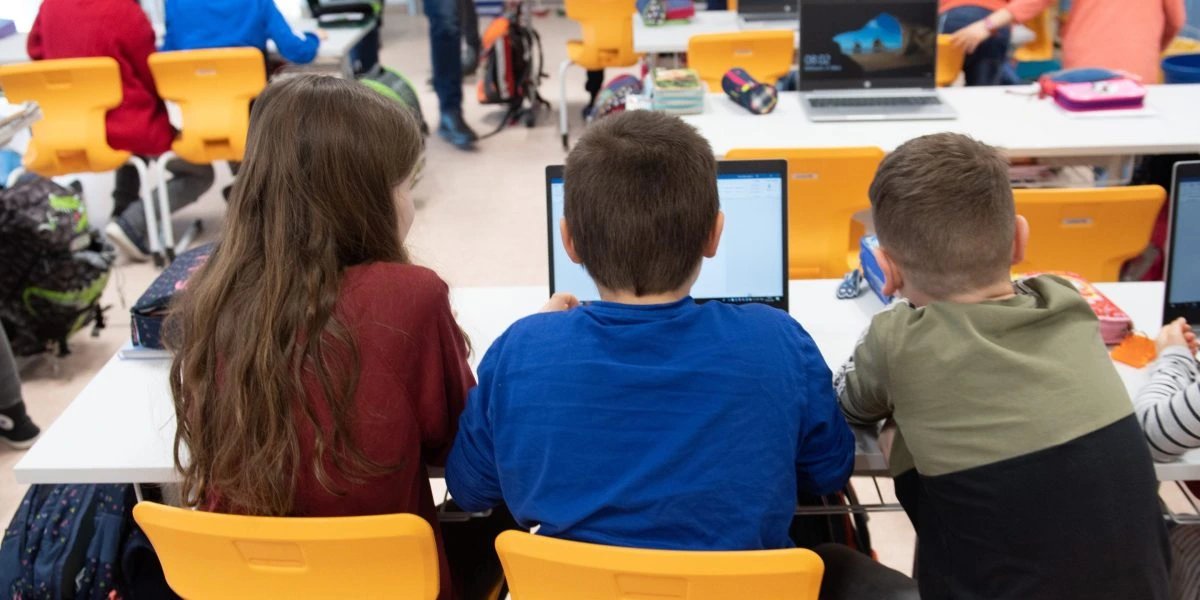
Education professors Sarah Schneider Kavanagh and Katie A. Danielson argue that classroom computers and adaptive software deprive children of skills like attention, curiosity, and collaboration. They say such distinctly human abilities are becoming more valuable as artificial intelligence advances. The warning comes as at least 17 states have introduced or debated legislation on classroom devices.
Key Facts
- University of Pennsylvania professor Sarah Schneider Kavanagh and University of Portland professor Katie A. Danielson wrote in a Washington Post op-ed that elementary school taught children to wait, negotiate disagreements, and explain their thinking.
- Lawmakers in at least 17 states had introduced or debated legislation related to devices or screens in classrooms as of July.
- Los Angeles Unified, the nation's second largest school district, banned in-school screen use for preschool through first grade and curbed screen time for older students earlier this year.
- Neuroscientist Jared Cooney Horvath told the U.S. Senate Committee on Commerce, Science, and Transportation that Gen Z is less cognitively capable than previous generations despite unprecedented access to technology.
The Professors' Argument
Kavanagh and Danielson wrote that elementary school always taught more than reading and mathematics. Children learned to wait for someone else's idea, negotiate disagreements, and explain their thinking. The professors added that children's cognition matures through person-to-person interactions, not just from receiving information. They warned that when students click through math lessons alone, they do not hear different ways of thinking.
AI and Human Skills
Kavanagh and Danielson argued that collective learning is especially important in the era of AI. They said distinctly human skills like attention span, curiosity, judgment, empathy, and collaboration become more valuable as AI advances. The professors wrote that children do not need school to become more like the digital world because they are already immersed in it outside school hours. They said schools should provide conversation instead of consumption and collaboration instead of personalization.
Growing Backlash
Computers and online learning expanded in classrooms for decades and became essential during COVID-19 lockdowns. Schools continued to rely heavily on devices after the pandemic rather than reverting to pre-pandemic methods. At least 17 states had introduced or debated legislation on classroom devices or screens as of July. Los Angeles Unified banned in-school screen use for preschool through first grade and curbed screen time for older students earlier this year. Neuroscientist Jared Cooney Horvath testified to the U.S. Senate that Gen Z is less cognitively capable than previous generations despite unprecedented technology access.
1 source
Classroom devices erode human skills needed for AI era, education experts say