WWII rationing imposed 35 mph speed limit and banned pleasure driving
This digest was compiled by AI from multiple sources — links to the originals are below.
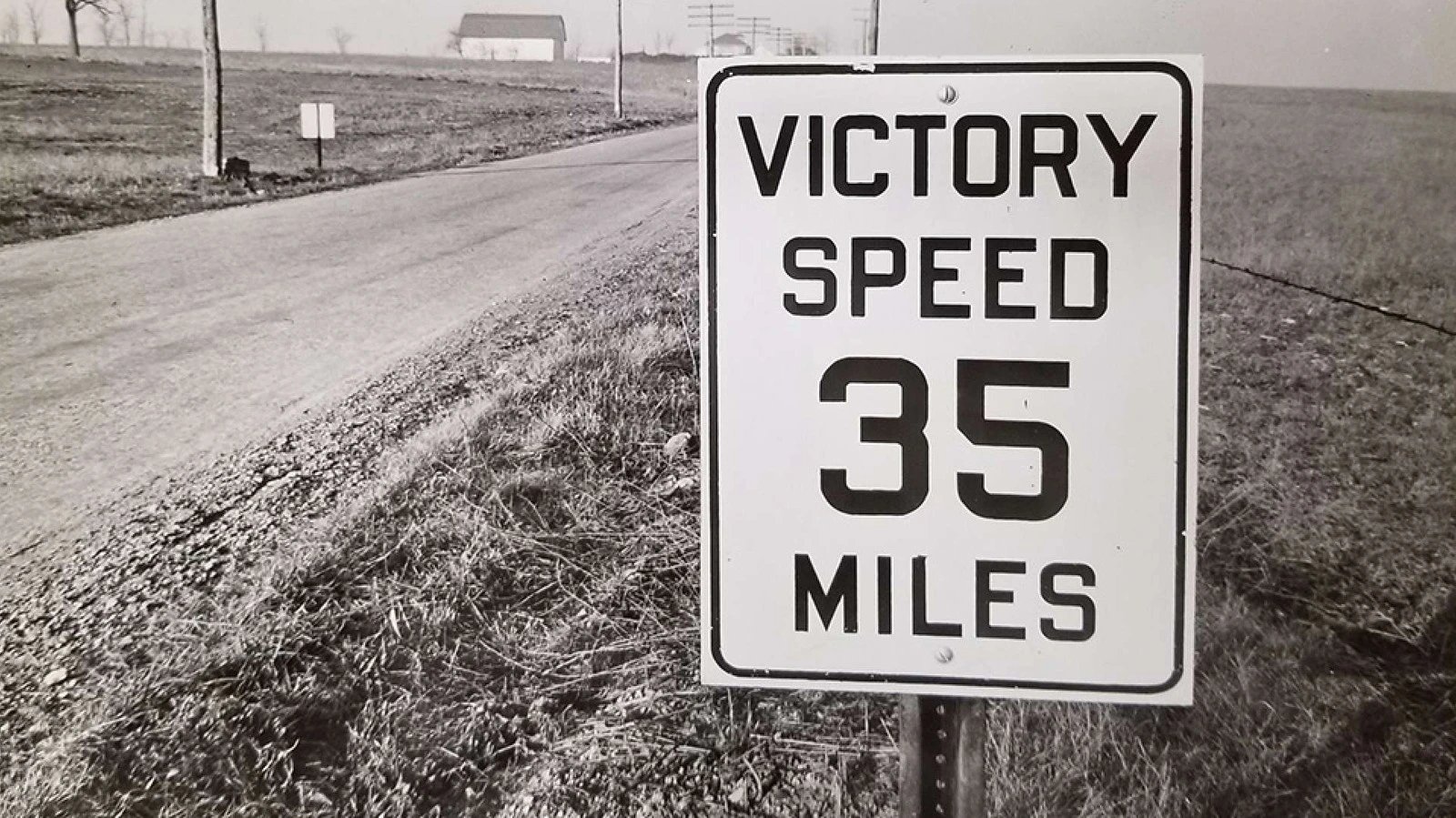
The U.S. government imposed a national 35 mph speed limit in May 1942 to conserve rubber and fuel during World War II. In January 1943, pleasure driving was banned on the Eastern seaboard, and most drivers were limited to 4 gallons of gas per week. Civilian vehicle production halted in February 1942, forcing drivers to prove necessity to obtain a new car.
Key Facts
- The national 35 mph speed limit, called 'Victory Speed', was imposed in May 1942 to conserve rubber and fuel.
- Civilian vehicle production was halted in February 1942, and unsold cars were stockpiled.
- In January 1943, pleasure driving was banned on the Eastern seaboard.
- Most drivers were limited to 4 gallons of gasoline per week, while long-distance commuters could receive up to 10 gallons.
- Car owners were allowed only five tires: four on the vehicle and one spare; all others had to be surrendered.
Rationing Measures
The federal government imposed rationing of vital war materials in 1942, forcing drivers to avoid unnecessary travel. A monthly vehicle use tax and an occupation-based gasoline rationing system were introduced. The national 35 mph speed limit was imposed in May 1942 and was called 'Victory Speed'. Experts calculated that driving at 35 mph doubled tire life compared to 60 mph.
Vehicle Restrictions
The federal government halted production of all civilian vehicles in February 1942, according to the National Park Service. Sales were stopped, and existing unsold supply was stockpiled. To buy a new car, a person needed to be in a profession where travel was deemed necessary and prove their current car had more than 40,000 miles. Car owners could only have five tires: the four on the vehicle and a spare; any other tire had to be surrendered to the government.
Fuel and Driving Bans
A national fuel rationing system was implemented in December 1942. In January 1943, pleasure driving was banned on the Eastern seaboard. Most drivers were limited to 4 gallons of gas per week, while long-distance commuters were allowed up to 10 gallons. Delivery drivers and doctors were allowed unlimited fuel but had to display a special sticker on their cars. The stickers reminded drivers to check tire pressure regularly, slow down before turning, and drive under 35 mph.
2 sources
WWII rationing imposed 35 mph speed limit and banned pleasure driving