
XCMG rolls out first unit of 14,000-tonne ring crane in Xuzhou
This digest was compiled by AI from multiple sources — links to the originals are below.
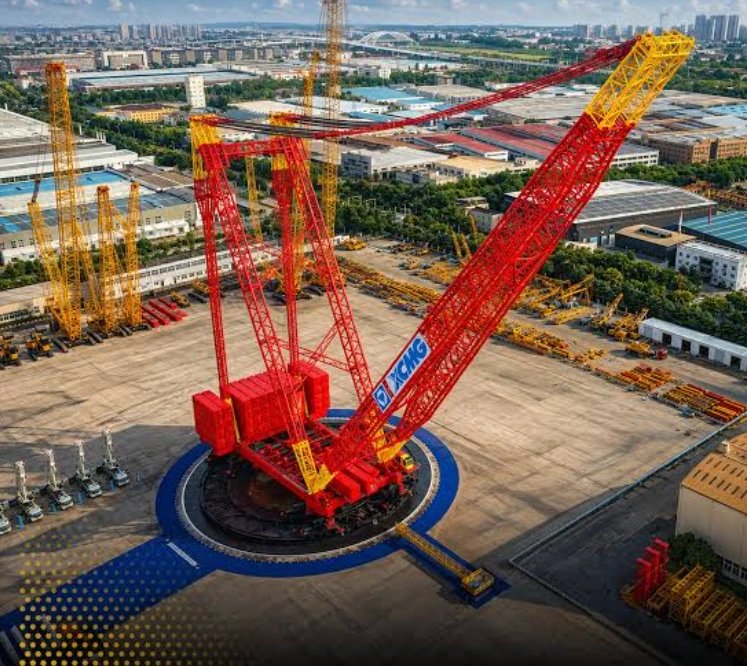
XCMG and Sinopec Heavy Lifting & Transportation rolled out the first unit of a jointly developed ring crane in Xuzhou, Jiangsu province, on August 28, 2026. The unit can lift independently, but the system will reach its full 14,000-tonne capacity only after a second main unit is completed and integrated.
Key Facts
- The first unit of the crane left the production line in Xuzhou, Jiangsu province, on August 28, 2026.
- The complete two-unit system will have a maximum lifting capacity of 14,000 tonnes and a lifting moment of 700,000 tonne-metres.
- XCMG describes the system as the world's first 14,000-tonne-capacity ring crane.
- The direct electric drive system can reduce energy consumption by more than 30% and increase operational efficiency by 20%, according to XCMG.
- The localisation rate of the project's critical parts exceeds 90%, with more than 1,000 simulations and hundreds of tests completed during design.
System Configuration
The new crane consists of two main units that can work together, unlike conventional systems. The first unit has been assembled and can perform lifting operations on its own. When the two units are combined, the system's maximum lifting capacity will reach 14,000 tonnes and its lifting moment 700,000 tonne-metres. A 14,000-tonne capacity is roughly equivalent to the combined weight of 9,300 cars. Actual capacity varies with load distance, boom position, and operation geometry, so the crane cannot lift 14,000 tonnes under all conditions.
Nuclear Plant Applications
A primary goal of the crane's development is to accelerate nuclear power plant construction. Modern plants increasingly require lifting thousands of tonnes as larger components are pre-assembled and brought to site as single pieces. XCMG states the system can lift large modules and main equipment for two nuclear islands from a single position with the same boom configuration. This will allow some parts to be installed as larger blocks instead of being assembled in small sections on site. The crane is also planned for use in petrochemical plants and offshore wind energy projects, especially for lifting heavy parts of increasingly large wind turbines to high points.
Efficiency and Localisation
The machine uses a direct electric drive system. XCMG reports this technology can reduce energy consumption by more than 30% while increasing operational efficiency by 20%. The company also states that fuel costs and carbon emissions will be reduced. The localisation rate of the project's critical parts exceeds 90%. More than 1,000 simulations and hundreds of tests were carried out during the design process.
1 source
Time · lag behind first