
Russia's strikes on Ukrainian retail aim to erode war support, analyst says
This digest was compiled by AI from multiple sources — links to the originals are below.
Russian forces have intensified strikes on Ukrainian civilian retail infrastructure, including shopping centers and warehouses, with a drone hitting an Epicenter hypermarket in Zaporizhzhia on August 28. The attacks aim to damage Ukraine's economy and public morale, according to political analyst Ihor Chalenko. At least 17 Epicenter facilities have been damaged since the campaign began.
Key Facts
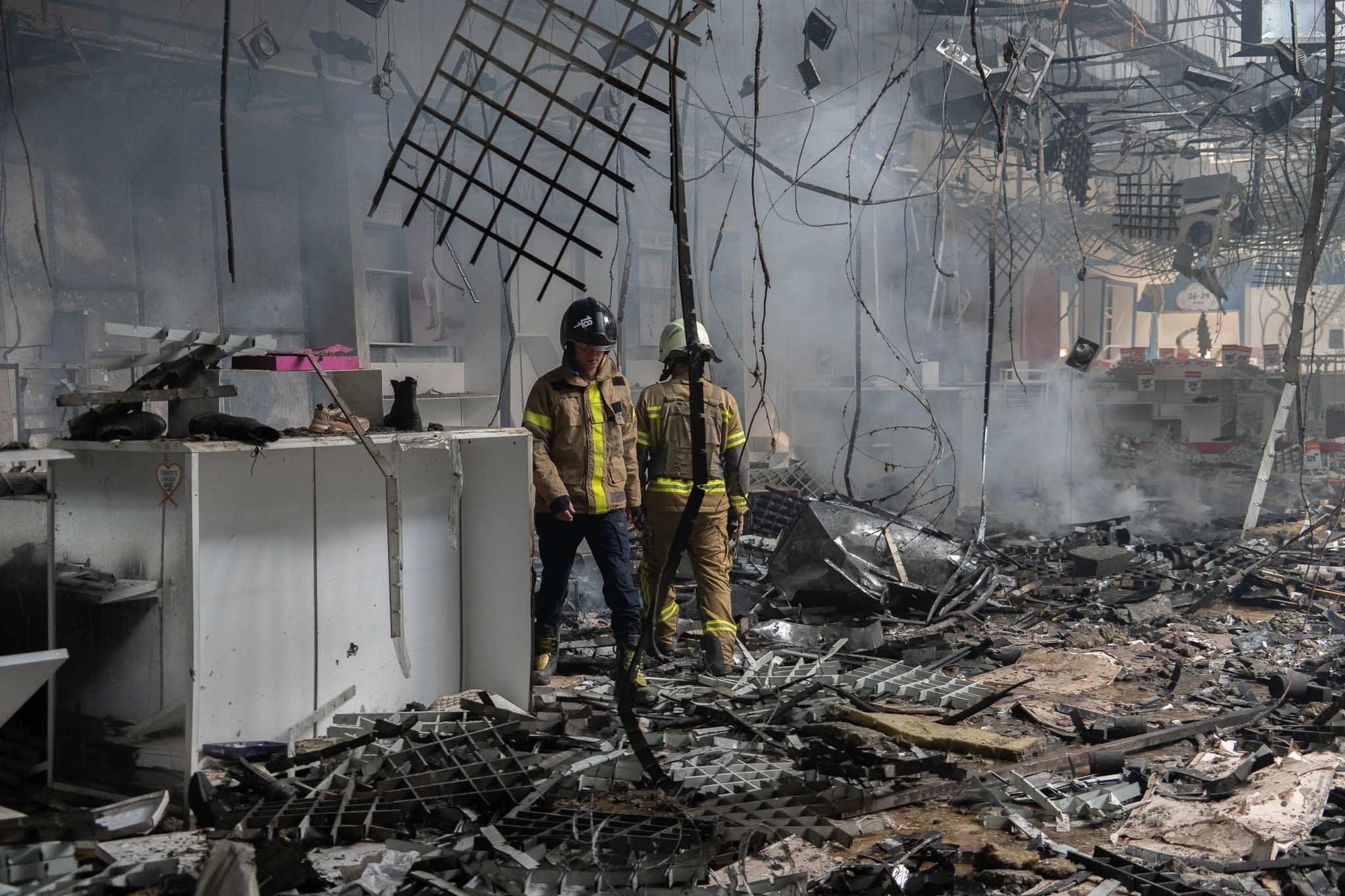
- A Russian drone struck an Epicenter construction hypermarket in Zaporizhzhia on August 28, causing a fire over about 2,000 square meters and wounding four people.
- On August 21, a Russian drone attack on the Solnechna Galereya shopping center in Kryvyi Rih killed 16 people and wounded 140, including 25 children.
- At least 17 Epicenter network facilities have been damaged by Russian strikes, including the last open Epicenter in Kharkiv and a facility in Boryspil.
- A KMIS poll from early August found that 61% of Ukrainians are ready to endure the war as long as necessary.
Strike Campaign
Russia has intensified attacks on Ukrainian civilian commercial targets, including shopping centers, retail chains, and warehouse complexes. On August 28, a drone hit the Epicenter hypermarket in Zaporizhzhia, igniting a fire covering about 2,000 square meters and injuring four people. The previous day, strikes hit the last open Epicenter in Kharkiv and a facility in Boryspil, bringing the total damaged Epicenter sites to at least 17. On August 21, drones struck the Solnechna Galereya shopping center in Kryvyi Rih, killing 16 people and wounding 140, including 25 children; three people remain missing. Earlier attacks burned warehouses of food chains Fora, NOVUS, and Silpo, as well as stores of Aurora home goods, Comfy electronics, and Dom Igrushek near Kyiv.
Strategic Objectives
Political analyst Ihor Chalenko, head of the Kyiv Center for Analysis and Strategies, says the strikes on retail serve economic, cognitive, and political goals. Economically, Russia targets system-forming businesses linked to hundreds of producers to reduce Ukraine's tax revenue and its ability to fund defense. Cognitively, the attacks aim to sow despondency among Ukrainians, as Russia cannot achieve decisive advances on the battlefield. Chalenko notes that destroying warehouses of children's toys has no military necessity, but is intended to create a prolonged depressive state and push people to seek an end to the war on any terms. A KMIS poll from early August found 61% of Ukrainians are ready to endure the war as long as necessary, a readiness Russia seeks to undermine through strikes on civilian objects.
Air Raid Disruption
Air raid alerts lasting up to 20 hours a day effectively halt trade, allowing Russia to achieve its goal without a single hit. In Kyiv, a JYSK store employee told customers, "Sorry, air raid alert, we are closing," during the third alert of the morning.
1 source
Time · lag behind first