
Ocean's upper 2,000 metres gained record 23 zettajoules of heat in 2025
This digest was compiled by AI from multiple sources — links to the originals are below.
The upper 2,000 metres of the ocean gained an estimated 23 zettajoules of heat in 2025, the largest annual increase on record. The gain was roughly 39 times the energy produced by all human activities in 2023, according to an international assessment led by the Chinese Academy of Sciences. 2025 was the ninth consecutive year of record ocean heat content.
Key Facts
- The upper 2,000 metres of the ocean gained 23 ± 8 zettajoules of heat in 2025 relative to 2024, according to the Institute of Atmospheric Physics at the Chinese Academy of Sciences.
- The 2025 increase was roughly 39 times the energy produced by all human activities in 2023, based on global primary-energy statistics.
- 2025 was the ninth consecutive year in which annual ocean heat content set a record, the longest unbroken sequence in the observational series.
- The assessment was led by Yuying Pan and Lijing Cheng and published in the peer-reviewed journal Advances in Atmospheric Sciences.
- The estimate covers the layer from the surface to 2,000 metres and does not directly include water below that depth.
Record Heat Gain
The upper 2,000 metres of the ocean held more heat in 2025 than in any earlier year in the modern instrumental record. The Institute of Atmospheric Physics at the Chinese Academy of Sciences estimated a gain of 23 ± 8 zettajoules relative to 2024. Carbon Brief calculated that the increase was around 39 times the energy produced by all human activities in 2023. 2025 was the ninth consecutive year in which annual ocean heat content set a record, the longest unbroken sequence in the observational series.
Measurement Methods
The peer-reviewed assessment in Advances in Atmospheric Sciences was led by Yuying Pan and Lijing Cheng and involved researchers from institutions across several continents. Ocean heat content estimates the thermal energy stored across a volume of water, derived from temperature profiles that account for seawater density and heat capacity. The quoted figure covers the layer from the surface to 2,000 metres and represents a change from 2024 to 2025, not the total heat already stored in the ocean. The estimate does not directly include water below 2,000 metres, where the abyssal ocean stores heat but is observed much less completely. The uncertainty attached to the estimate is part of the result because no instrument can sample every place at every moment.
Argo Observation Network
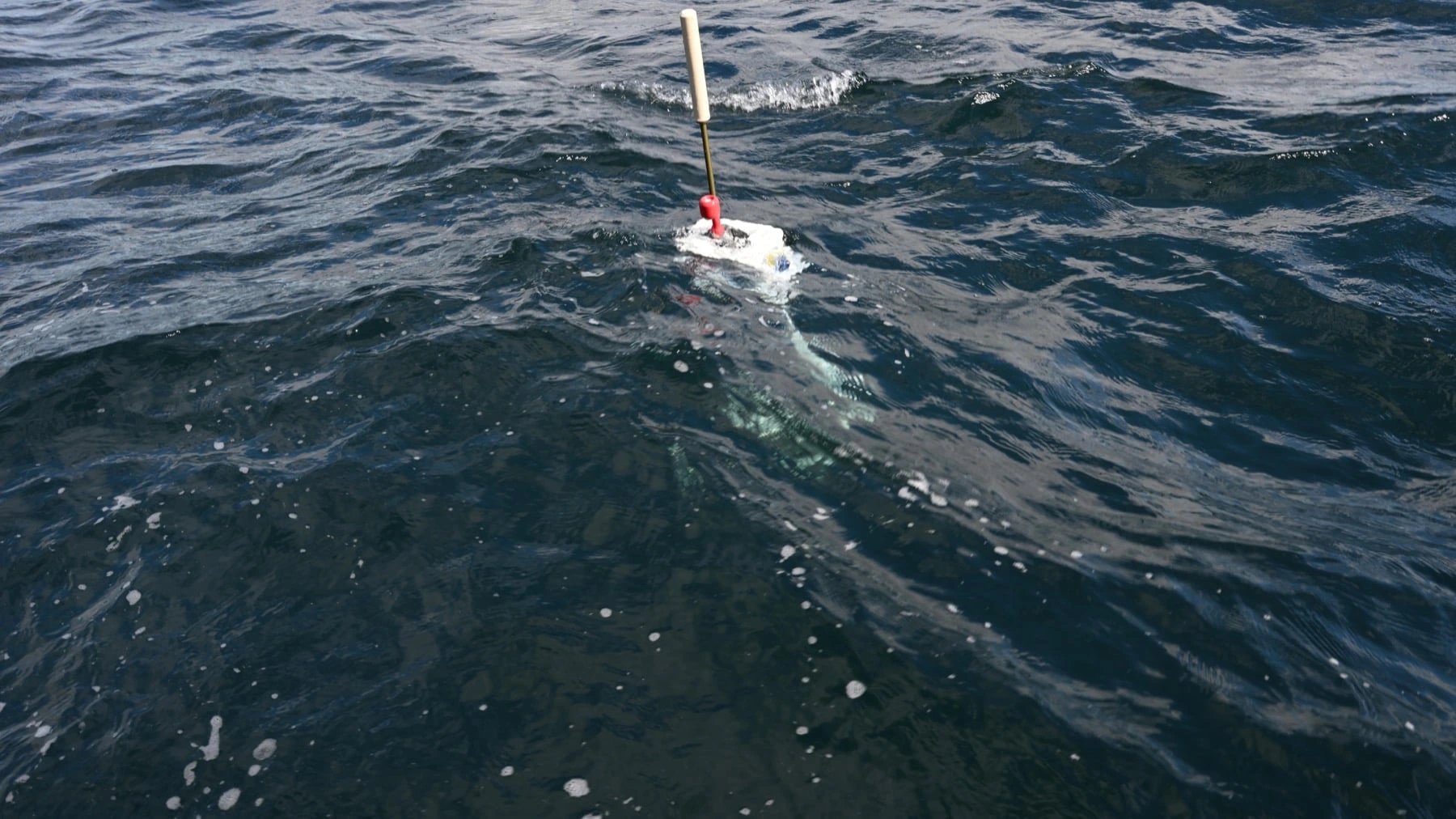
Modern estimates depend heavily on the international Argo programme, whose robotic floats descend to about two kilometres and then rise while measuring temperature and salinity. Data from ships, moorings and other instruments are also used, especially when researchers extend the record into the decades before Argo became global. Scientists correct known biases in older instruments, perform quality checks and estimate conditions across gaps in space and time. Argo's broad coverage since the early 2000s has reduced uncertainty and made it possible to follow heat as it shifts between basins and depths.
1 source
Time · lag behind first