
IATA: Jet fuel in Kazakhstan now costs more than in Dubai
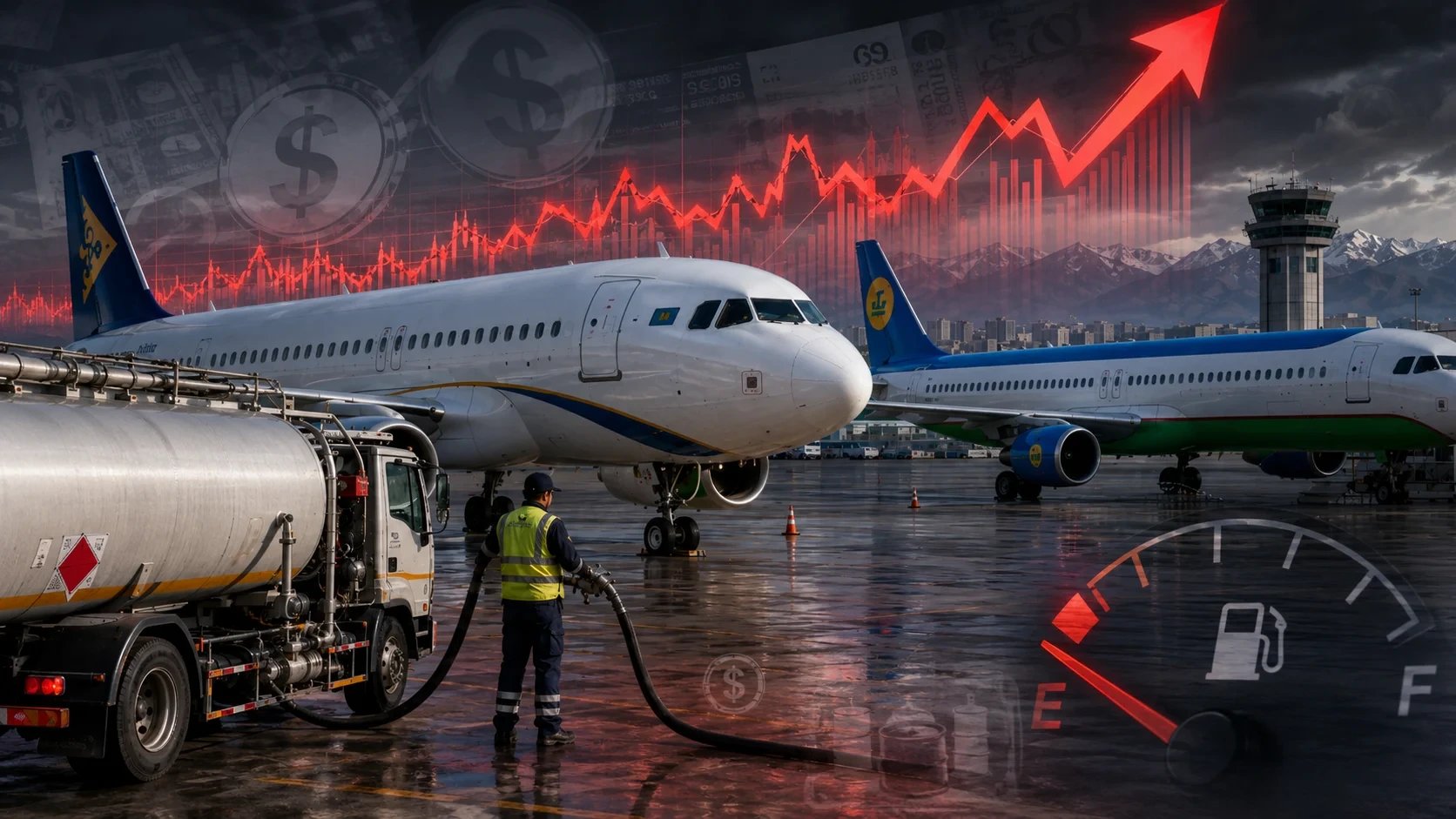
This digest was compiled by AI from multiple sources — links to the originals are below.
The International Air Transport Association (IATA) says jet fuel prices in Kazakhstan are higher than in comparable aviation hubs, including Dubai. The gap raises operating costs for airlines serving the country. IATA projects global airline fuel spending will reach $350 billion in 2026, nearly a third of industry operating costs.
Key Facts
- IATA says jet fuel prices in Kazakhstan are higher than in comparable aviation hubs, including Dubai.
- IATA projects global airline fuel spending will reach $350 billion in 2026, nearly a third of industry operating costs.
- IATA expects global airline profitability to fall from 4.2% in 2025 to 2% in 2026.
- In 2025, three Kazakh refineries produced about 750,000–760,000 tonnes of jet fuel against domestic demand of roughly 1.2 million tonnes.
- In June 2026, Kazakh airports estimated total jet fuel needs at about 110,000 tonnes, while Kazakh refineries could supply only 73,400 tonnes.
Fuel Price Gap
IATA states that jet fuel prices in Kazakhstan exceed those in comparable aviation hubs, including Dubai. As a result, airlines operating in Kazakhstan face higher fuel costs for the same volume of consumption. The price gap is widening against a backdrop of rising global jet fuel costs. IATA projects that airlines worldwide will spend about $350 billion on fuel in 2026, nearly a third of total industry operating expenses. The association also expects global airline profitability to decline from 4.2% in 2025 to 2% in 2026.
Domestic Supply Shortfall
Kazakhstan's high jet fuel prices are compounded by a shortage of domestic production. In 2025, three Kazakh refineries produced about 750,000–760,000 tonnes of jet fuel, while domestic demand was roughly 1.2 million tonnes. The gap between production and consumption was estimated at 450,000–600,000 tonnes. In June 2026, Kazakh airports estimated their total jet fuel needs at about 110,000 tonnes, but Kazakh refineries could produce only 73,400 tonnes. Prices rose sharply: at the start of 2026 a tonne of jet fuel cost $734–788, but by June the upper bound reached $1,577.
Air Astana Response
Air Astana has been working to reduce fuel consumption since at least August 2025. The airline's fuel-saving program includes buying fuel where it is cheaper and transporting reserves between airports, adjusting takeoff parameters, and introducing a flight monitoring system. Air Astana management said these measures saved about $6 million over a year without harming operational stability. IATA notes that Air Astana has begun using artificial intelligence to optimize fuel consumption, with the airline estimating savings of up to 2%. In 2025, Air Astana received eight Airbus A320 family aircraft and retired three Embraer E2 jets, moving toward a more unified fleet that reduces fuel, maintenance, crew training, and logistics costs.
1 source
Time · lag behind first