
Russia imposes fuel rationing as refinery output falls to 3.8 million barrels
This digest was compiled by AI from multiple sources — links to the originals are below.
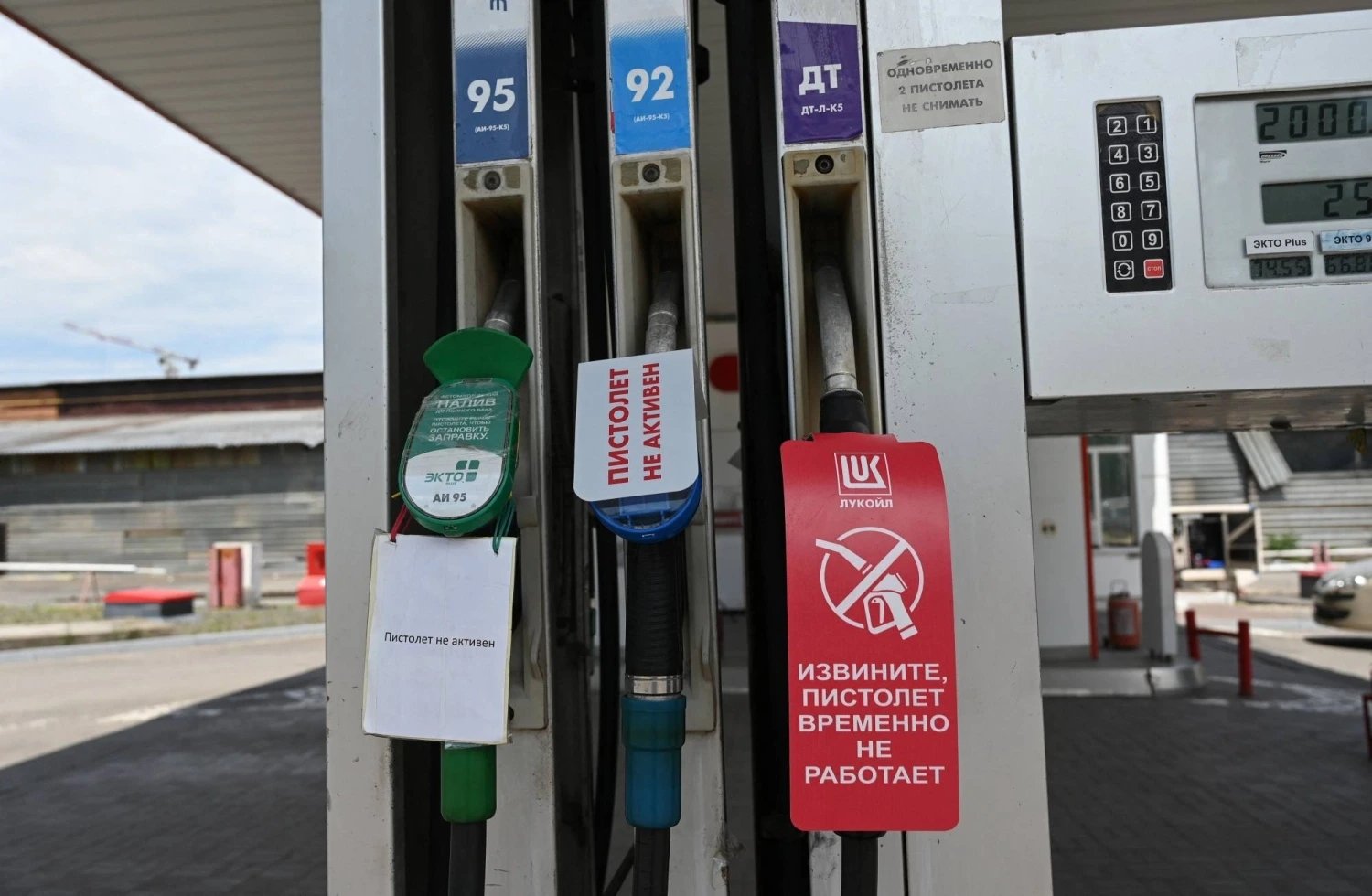
Russia has imposed fuel rationing across all 85 regions, with Moscow stations limiting sales to 40 liters per customer. Refinery throughput fell to 3.8 million barrels per day in August from the usual 5.5 million, leaving only 10 of 33 plants fully operational. The shortages have driven AI-92 and AI-95 gasoline prices up 30 percent in three months.
Key Facts
- Moscow fuel stations now cap sales at 40 liters per customer, with some limiting purchases to 20 or even 10 liters.
- Russian refinery throughput fell to 3.8 million barrels per day in August from the usual 5.5 million barrels.
- Only 10 of Russia's 33 oil refineries are fully operational; 12 are running at reduced capacity and 11 are shut down.
- AI-92 and AI-95 gasoline prices have risen 30 percent over the past three months.
- Russia has begun importing fuel from Belarus, India, Morocco, and Turkey, with 50,000 tonnes to be delivered via the Baltic port by the end of summer.
Fuel Rationing
Fuel shortages are being felt across Russia, with rationing introduced in Moscow. Moscow stations now limit sales to 40 liters per customer, and some sell no more than 20 or even 10 liters. Around 80 percent of Moscow filling stations are short of gasoline. Social media advertisements offer gasoline coupons and paid queue-standing services at fuel stations.
Refinery Crisis
Refinery throughput fell to 3.8 million barrels per day in August from the usual 5.5 million barrels. Only 10 of Russia's 33 oil refineries are fully operational, while 12 are running at reduced capacity and 11 are shut down. Expert Sergei Afontsev linked the crisis to economic sanctions, disrupted logistics, and severed trade with some countries. Modernization of the refining sector would require at least five years, according to specialists.
Imports and Fuel Quality
Russia has started buying fuel from Belarus, India, Morocco, and Turkey. About 50,000 tonnes of fuel are to be delivered via the Baltic port by the end of summer. These imports are insufficient to cover the domestic market. Russia has begun producing lower-grade Euro-2 and Euro-5 gasoline, which has a harmful environmental impact.
1 source
Time · lag behind first