AI reshapes radiology as FDA clears 1,400 devices, three-quarters for imaging
This digest was compiled by AI from multiple sources — links to the originals are below.
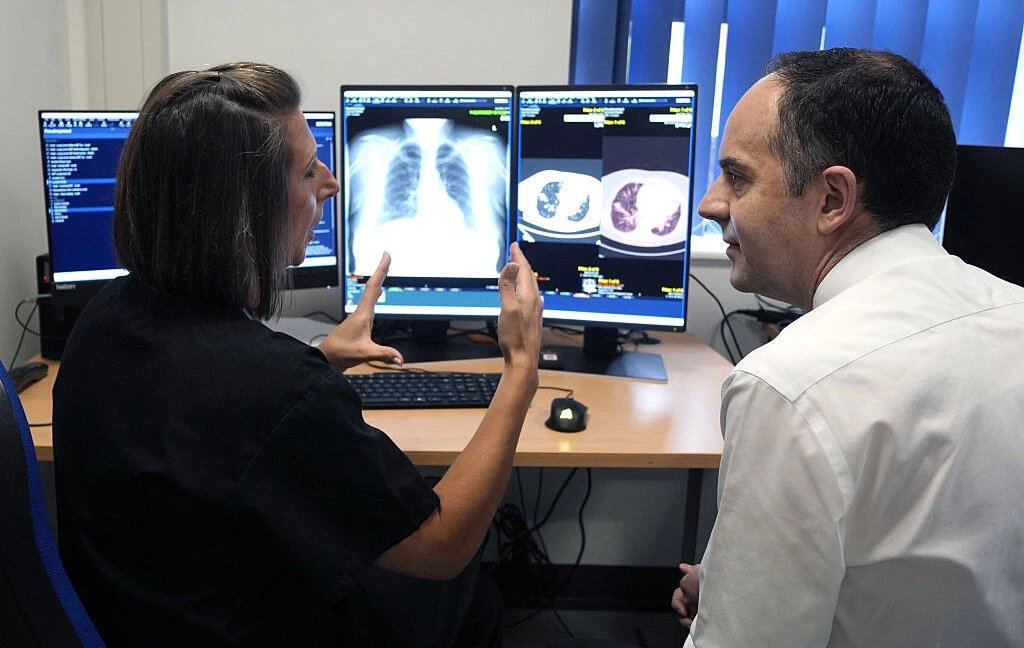
AI is transforming radiology, with about three-quarters of the 1,400 AI-enabled medical devices cleared by the FDA as of early 2026 targeting imaging. Radiologists now evaluate AI decisions, identifying rare algorithm errors while AI matches or exceeds human performance in some tasks. The field's workforce is expected to grow 26 percent over three decades, even as AI becomes a standard colleague.
Key Facts
- As of early 2026, about three-quarters of the 1,400 AI-enabled medical devices cleared by the FDA were for radiology.
- An analysis of 43 clinical trials concluded that AI-assisted colonoscopies reveal more polyps than conventional ones.
- Average human error rates involving diagnostic images are estimated to range from 3 to 5 percent, translating to about 40 million errors worldwide each year.
- The number of radiology practitioners is expected to expand by 26 percent or more over the next three decades.
AI Adoption in Radiology
Radiology is medicine's leading area for AI adoption, making it a bellwether for expert decision-making systems across healthcare. As of early 2026, about three-quarters of the 1,400 AI-enabled medical devices cleared by the FDA were for radiology. Some AI tools make physicians more efficient by drafting reports or alerting them to images that urgently need attention. Other AI tools identify abnormalities not visible to the human eye or interpret images as well as, and sometimes better than, trained radiologists.
Human-AI Collaboration
Radiologist Curtis Langlotz, director of the Center for Artificial Intelligence in Medicine and Imaging at Stanford University, says AI still makes mistakes that humans would not. Radiologists now evaluate each AI decision, identifying the rare instances when the algorithm gets it wrong. Radiologist Paul Yi, section chief of intelligent imaging informatics at St. Jude Children's Research Hospital, says this requires a whole mental rewiring. Ten years after Geoffrey Hinton's prediction, the key question is how to combine AI's technical precision with human experience and flexibility.
1 source
AI reshapes radiology as FDA clears 1,400 devices, three-quarters for imaging