
French language laws emerge as flashpoint in Canada-US trade dispute
This digest was compiled by AI from multiple sources — links to the originals are below.
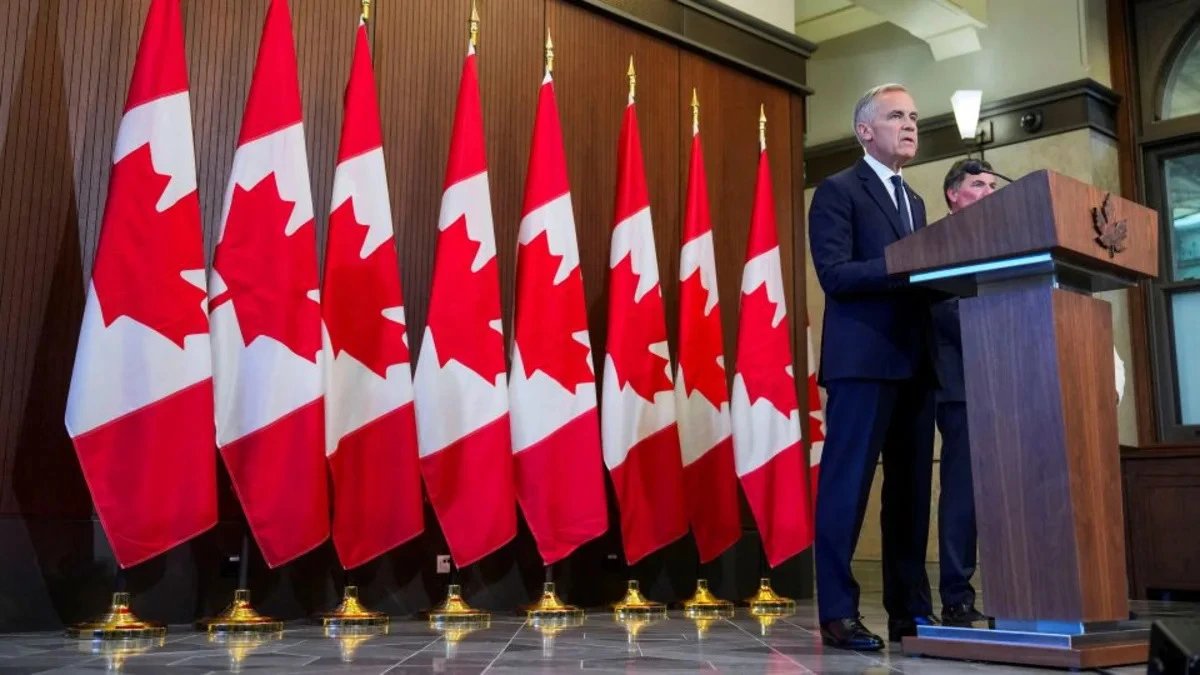
Prime Minister Mark Carney rejected a proposed trade deal with the United States, citing threats to French language and culture. The collapse of talks has led to US tariffs on $20 billion in Canadian goods, with Canada preparing retaliatory measures. The dispute has drawn sharp reactions from US President Donald Trump and Republican lawmakers facing midterm pressure.
Key Facts
- Prime Minister Mark Carney said Canada 'could not accept' a proposed deal that would have weakened French language protections.
- The US has imposed 50% tariffs on roughly $20 billion worth of Canadian goods since negotiations stalled Friday.
- US Trade Representative Jamieson Greer called Ottawa's concerns about French a 'funny, fake story' on Monday.
- President Donald Trump denied wanting to interfere with Canada's French language laws in a Truth Social post on Tuesday.
- Republican Senator Susan Collins of Maine called the new tariffs on Canada 'a mistake' while campaigning Monday.
French Language Protections
Canada is a bilingual country with laws protecting English and French, the first language of roughly one fifth of the population. Nearly 85% of Quebec's population is primarily Francophone. Product labels must be displayed in both English and French, and US streaming platforms must support and promote Canadian content, including Indigenous and French Canadian content. Canada's language requirements have long been viewed by the US as a trade barrier but are generally a red line for Ottawa.
Negotiation Collapse and Tariffs
Prime Minister Mark Carney walked away from a deal he said included 'threats to French language and culture'. On Monday, Carney said Canada 'could not accept' the proposed deal and that his government 'will not give (the US) what they have asked'. Since negotiations stalled Friday, the US has imposed 50% tariffs on roughly $20 billion worth of Canadian goods. Carney initially pledged to match the tariffs 'dollar-for-dollar,' but on Monday said his government may consider a more targeted approach to maximize effect. Canada plans to announce tariffs of its own on Tuesday.
Political Reactions
US Trade Representative Jamieson Greer called Ottawa's concerns about French a 'funny, fake story' on Monday. Carney denied the issue was a laughing matter, saying there is an 'enormous gap between our perspective and the US perspective'. On Tuesday, Donald Trump denied that the US wanted to interfere with Canada's French language laws, while calling Carney 'weak and ineffective' in a Truth Social post. Republican Senator Susan Collins of Maine warned that fallout from Trump's approach would hurt US businesses and consumers, mentioning lobsters, blueberries, lumber and other Maine products. Michigan's Democratic nominee Abdul El-Sayed said on social media that 'Trump is escalating a trade war with Canada for his own vanity'.
3 sources
Time · lag behind first