
Taliban enacts police law banning all protests in Afghanistan
This digest was compiled by AI from multiple sources — links to the originals are below.
Afghanistan's Taliban government has enacted a new police law that bans all demonstrations nationwide. The 53-article law, approved by Taliban leader Hibatullah Akhundzada and published on August 22, 2026, also expands security forces' powers to detain, search, and surveil citizens.
Key Facts
- The law, approved by Taliban leader Hibatullah Akhundzada, was published in the official gazette on August 22, 2026.
- Article 50 of the 53-article law explicitly prohibits all demonstrations in Afghanistan.
- The law authorizes security forces to identify citizens, summon them for questioning, detain suspects, conduct searches, and carry out surveillance.
- Security forces are equipped with water cannons, shields, batons, barriers, weapons, and explosives under the new law.
- Women in Afghanistan remain barred from education beyond secondary school and from most professions under Taliban rule.
The Police Law
The Taliban government has enacted a new police law, known as the shurta law, that formally bans all demonstrations in Afghanistan. The 53-article document was approved by Taliban leader Hibatullah Akhundzada and published in the official gazette on August 22, 2026. Article 50 of the law explicitly prohibits any demonstrations on Afghan territory, with no exceptions or conditions under which authorities could permit rallies or public actions. The law assigns enforcement responsibility to the Ministry of Interior.
Expanded Security Powers
The new law significantly expands the powers of the security forces, which the Taliban authorities refer to as shurta instead of police. Officers are authorized to establish citizens' identities, summon people for questioning, detain suspects, conduct searches, and carry out surveillance. The law also regulates the use of force, with security forces equipped with water cannons, shields, batons, barriers, weapons, and explosives. Article 39 defines the circumstances under which officers may use weapons.
Impact on Women
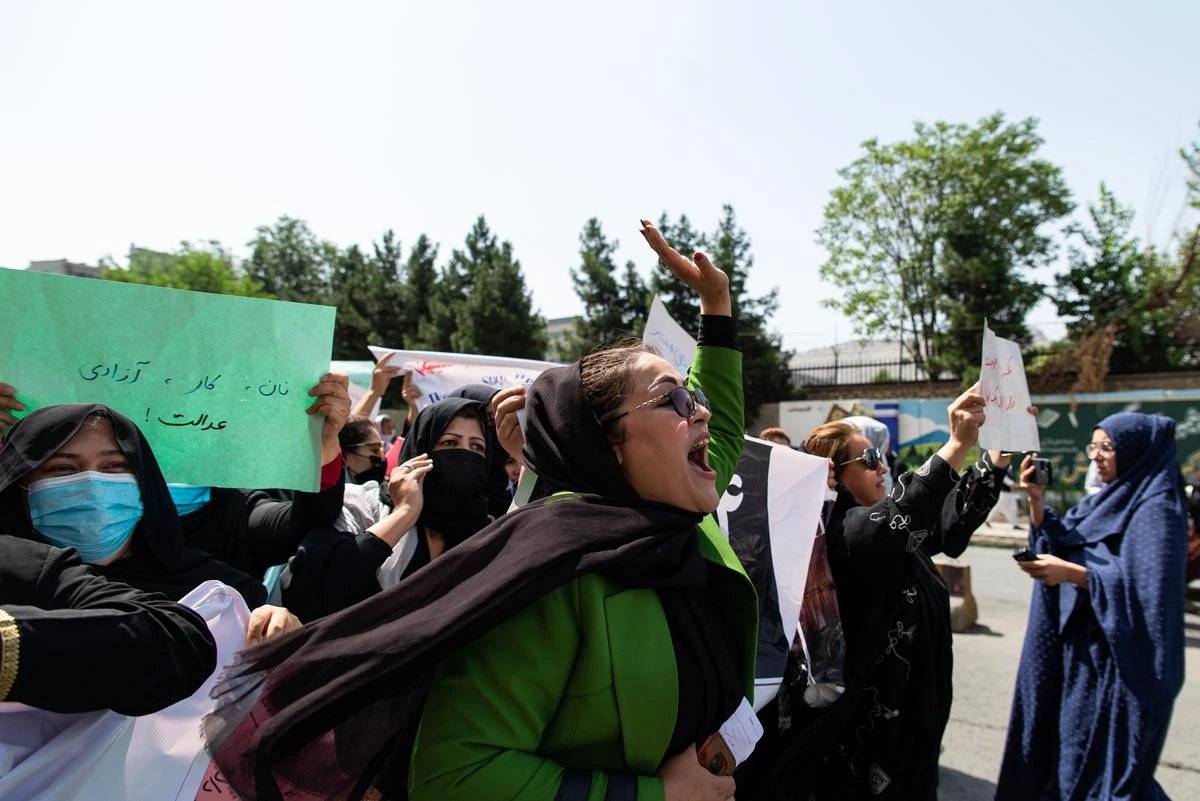
Women in Afghanistan remain one of the most vulnerable groups under Taliban rule. Since the Taliban's return to power, women have been barred from education beyond secondary school and from most professions, with strict rules imposed on their behavior in public places. Women's protests against these measures have regularly been met with detentions and forcible dispersal. The new police law further narrows the space for civic activity in Afghanistan, as the ban on protests and expanded security powers now have official legal form.
5 sources
Time · lag behind first