
Tokayev's G20 invitation tests Kazakhstan's balancing act
This digest was compiled by AI from multiple sources — links to the originals are below.
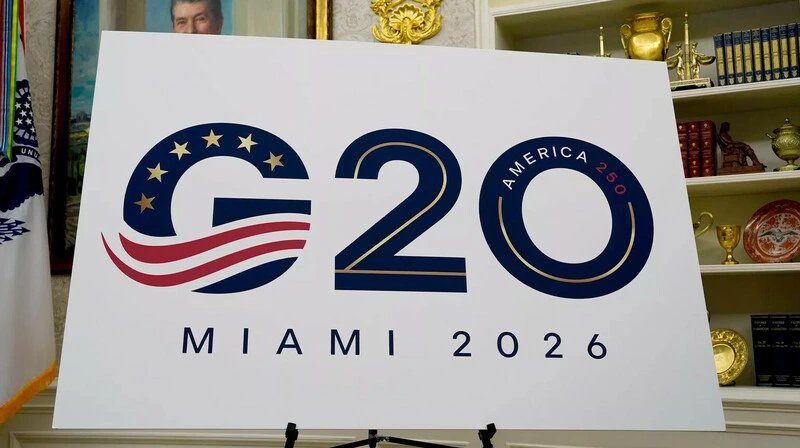
Kazakhstan's President Kassym-Jomart Tokayev will attend the G20 summit in Miami this December at the invitation of the United States. The invitation reflects Washington's growing interest in Kazakhstan and the Trans-Caspian region. It also intensifies competition among major powers as Kazakhstan seeks to maintain its multi-vector foreign policy.
Key Facts
- Kazakhstan is not a G20 member and has participated in the summit only twice before, in St. Petersburg in 2013 and Hangzhou in 2016, each time at the invitation of the host country.
- Kazakhstan generates more than 60% of Central Asia's GDP and accounts for approximately 75% of the region's trade with the US, while bilateral goods trade reached $5 billion in 2025.
- During President Tokayev's November 2025 visit to Washington, Kazakhstan and the United States signed 29 agreements worth $17 billion across industry, digitalization, education, healthcare, transport and other sectors.
- Iskander Akylbayev, CEO of Xander Group and chairman of CFive, expects the Miami G20 to be highly pragmatic and transaction-driven, with priorities including economic growth, secure energy supply chains and technological innovation.
The Invitation
Kazakhstan is not a G20 member and has participated in the summit only twice before, in St. Petersburg in 2013 and Hangzhou in 2016, each time at the invitation of the host country. This time, the invitation comes from the United States, amid a rapidly expanding Kazakhstan-U.S. relationship and a sharp rise in Washington's interest in the wider Trans-Caspian region. The invitation may signal that Kazakhstan has become a more important strategic and economic partner for Washington, but it may also reflect the Trump administration's broader effort to strengthen ties across a region increasingly important for energy, critical minerals, trade routes and technology.
Economic Dimension
Kazakhstan generates more than 60% of Central Asia's GDP and accounts for approximately 75% of the region's trade with the US, while bilateral goods trade reached $5 billion in 2025. During President Tokayev's November 2025 visit to Washington, Kazakhstan and the United States signed 29 agreements worth $17 billion across industry, digitalization, education, healthcare, transport and other sectors. The Astana Times reported at the time that the visit represented a new phase in the strategic partnership, with experts describing a shift from symbolic diplomacy toward a more results-oriented model of cooperation.
Expert Assessment
Iskander Akylbayev, CEO of Xander Group and chairman of CFive, expects the Miami G20 to be highly pragmatic and transaction-driven, with priorities including economic growth, secure energy supply chains and technological innovation. He added that Tokayev's participation should be seen as more than a diplomatic gesture, noting that the invitation reflects a wider change in Washington's view of Central Asia, which he believes is moving from the geopolitical periphery to the global economic agenda.
1 source
Time · lag behind first