
Community-led response key to stopping DRC's deadliest Bundibugyo Ebola outbreak
This digest was compiled by AI from multiple sources — links to the originals are below.
The Democratic Republic of the Congo's 17th Ebola outbreak, caused by the Bundibugyo virus, has reached 5,290 confirmed cases and 2,516 deaths across 56 health zones as of August 21. Community representatives in Bunia are calling for direct involvement in the response, saying they know where families seek care and how to rebuild trust. The outbreak is now the second-largest ever recorded and is moving faster than any previous one, fuelled by decades of armed conflict that displaced more than a million people.
Key Facts
- As of August 21, the DRC has reported 5,290 confirmed Ebola cases and 2,516 deaths across 56 health zones.
- The government of the DRC declared the country's 17th Ebola outbreak 100 days ago, following confirmation of the Bundibugyo virus.
- WHO declared a Public Health Emergency of International Concern, and Africa CDC declared a Public Health Emergency of Continental Security.
- Neighbouring Uganda has interrupted locally acquired transmission of the virus.
- Several health zones in northern Ituri and South Kivu provinces in the DRC have also interrupted transmission.
Community Engagement
In Bunia, community representatives including survivors, women, young people, local organisations, health workers and leaders from affected areas have delivered a direct message: involve us. They say they know where families seek care, how information moves and why trust is breaking down, and they ask for the means to help drive the response. Community members can identify illness early, alert health teams, help trace contacts, challenge dangerous rumours and support families through access to treatment and safe, dignified burials. The response always moves faster when communities lead alongside national authorities and health workers.
Frontline Worker Safety
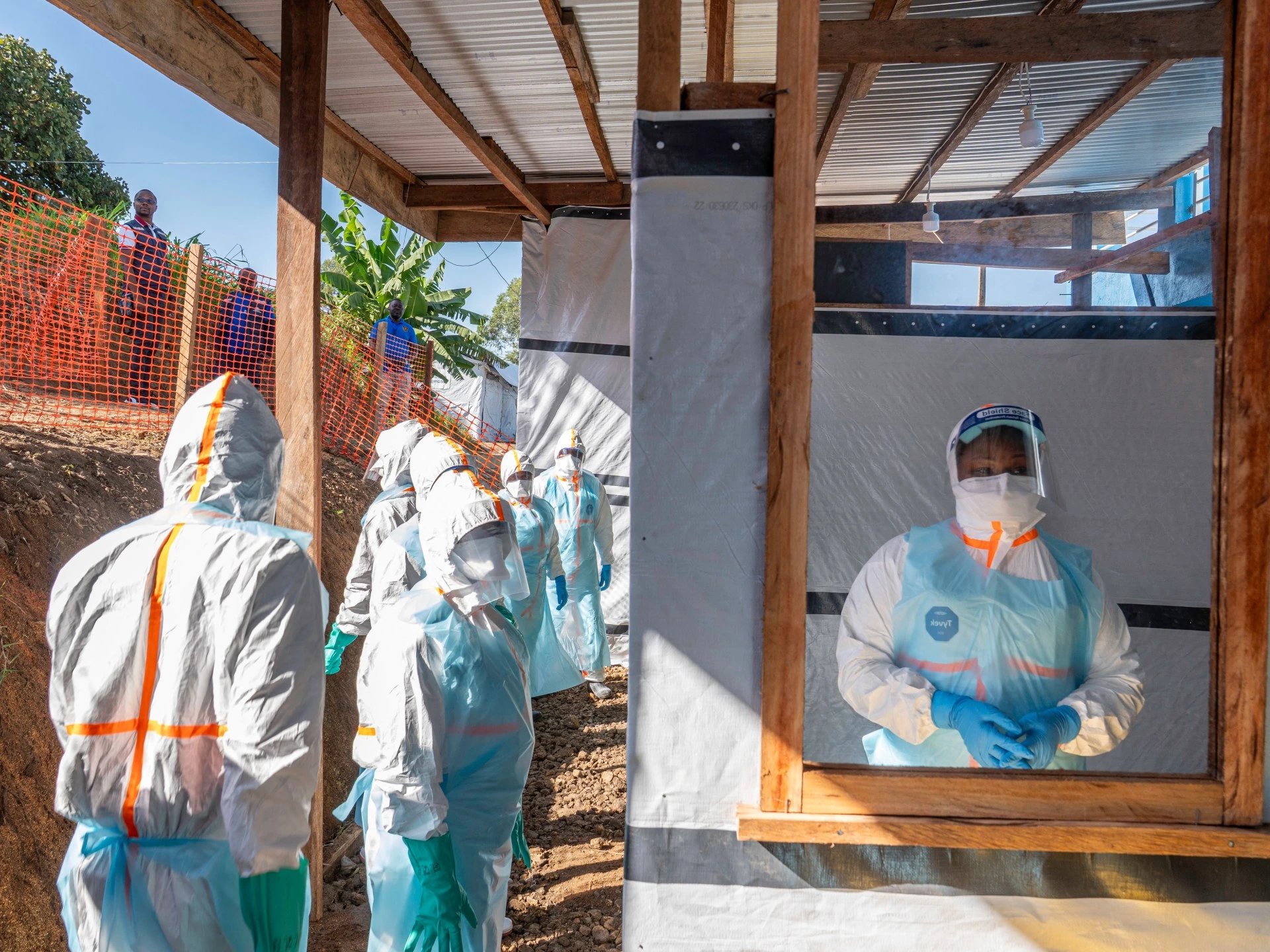
Health workers, laboratory teams, contact tracers, community health workers and burial teams are working under extraordinary pressure, often in insecure and hard-to-reach areas. Some have contracted Ebola in the line of duty. Their service must be met with action: safety, protective equipment, training, sufficient medical supplies, timely payment, psychosocial support and access to rapid diagnosis and high-quality supportive care if they fall ill. The safety of frontline workers is central to stopping transmission.
Response Progress
Under the leadership of national authorities, Congolese responders, WHO, Africa CDC and partners have expanded surveillance, deployed laboratories, supported treatment centres, reinforced infection prevention and delivered essential supplies. Neighbouring Uganda has interrupted locally acquired transmission of the virus. Several health zones in northern Ituri and South Kivu provinces in the DRC have also interrupted transmission. These experiences prove that the outbreak can be stopped more quickly when rapid detection, decisive national leadership and close cooperation with communities break the chains of transmission.
1 source
Time · lag behind first