
Fake Russian salmon caviar floods Kazakhstan stores without proper labeling
This digest was compiled by AI from multiple sources — links to the originals are below.
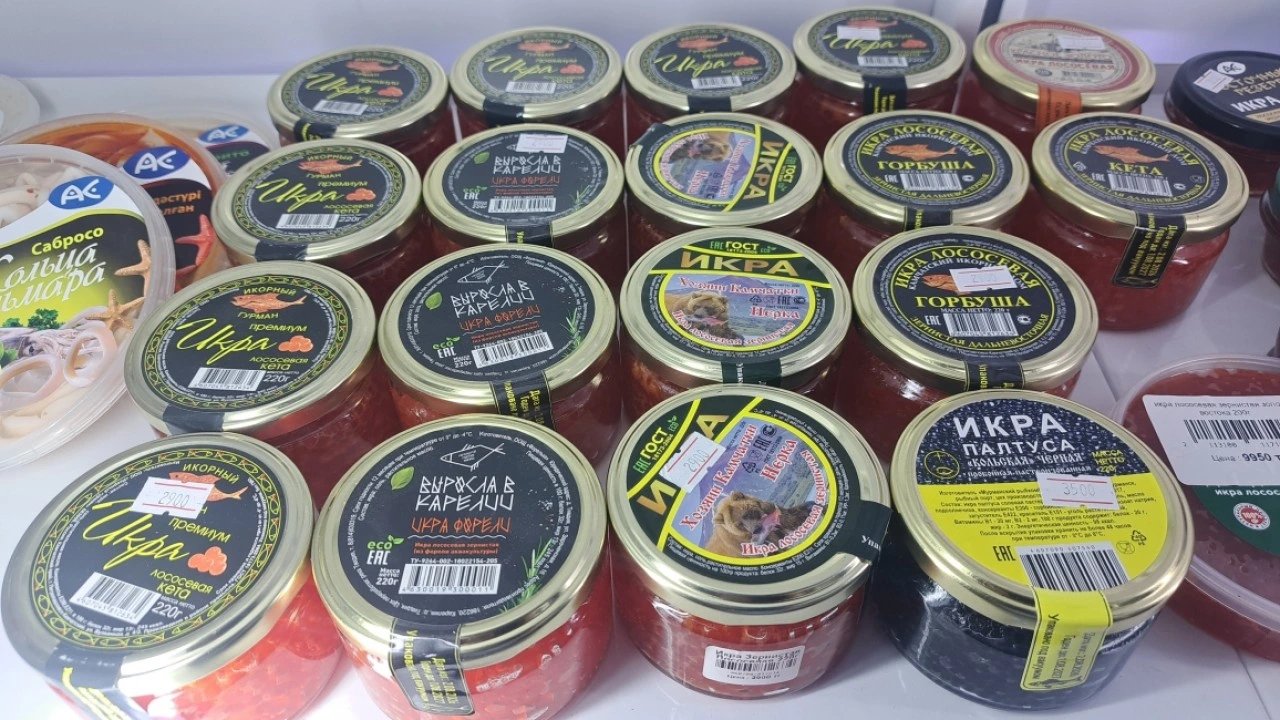
Counterfeit salmon caviar from Russia has appeared in stores and markets across Kazakhstan, sold without required labeling or Kazakh-language information. The products, priced at 2,500–3,500 tenge per 220-gram jar, are three to four times cheaper than genuine caviar. Russian regulators had flagged the producers as non-existent 'ghost' enterprises as early as 2023.
Key Facts
- Counterfeit salmon caviar from Russia is sold in Kazakhstan at 2,500–3,500 tenge per 220-gram jar, three to four times cheaper than genuine caviar.
- The labels list non-existent Russian companies, including OOO 'Forelka' and OOO 'Ikorny Gurman', with addresses not found in Russia's Unified State Register of Legal Entities.
- Rospotrebnadzor warned in 2023 that such caviar was produced by unknown persons in unknown conditions and could cause food poisoning.
- In Ust-Kamenogorsk supermarkets, genuine local salmon caviar costs 13,440 tenge per 200 grams, while imitation caviar from a Belarusian brand sells for 900–1,040 tenge.
Counterfeit Products
The counterfeit caviar is sold in glass jars labeled as chum salmon and other red fish caviar, allegedly produced according to GOST 18173-2004. Labels bear GOSTs, technical specifications, barcodes, and addresses of enterprises that do not exist in Russia's Unified State Register of Legal Entities. One product, 'Forel caviar under the brand Vyrrosla v Karelii', is attributed to OOO 'Forelka' at a non-existent address in the village of Tivdiya. Another product from non-existent OOO 'Ikorny Gurman' lists an address in Petropavlovsk-Kamchatsky, Kamchatka Krai.
Consumer Reaction
Ust-Kamenogorsk resident Yulia Feklistova said she bought such caviar for 2,500 tenge per jar and found the taste 'not bad, but definitely not real caviar'. Another resident, Ida Kharlamova, expressed concern that if the caviar is of unknown quality, 'we don't even know what's mixed in and how it will affect health'. Sellers offer conflicting explanations for the low price: some admit the caviar is artificial, others claim it is genuine but sold directly from the producer, and still others say it is 'structured' caviar.
1 source
Time · lag behind first