
US appeals court dismisses California, Giffords challenge to ghost gun rule
This digest was compiled by AI from multiple sources — links to the originals are below.
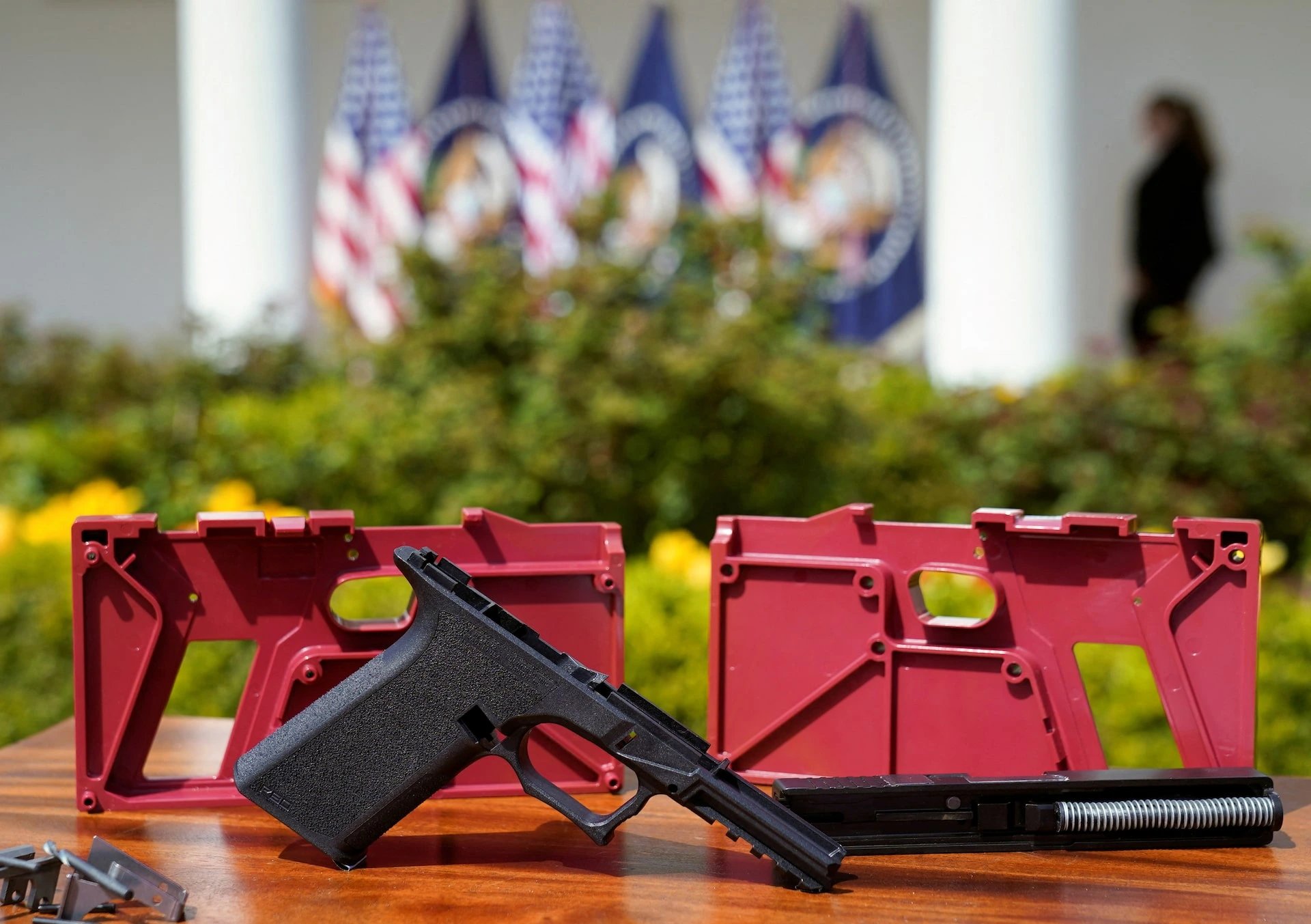
A federal appeals court threw out a lawsuit by California and the Giffords gun control group claiming a Biden-era ghost gun rule was too weak. The 9th U.S. Circuit Court of Appeals ruled 3-0 that the plaintiffs failed to show the rule caused them harm. The decision came four days after a Texas judge found the rule unconstitutional.
Key Facts
- The 9th U.S. Circuit Court of Appeals voted 3-0 to dismiss the lawsuit on August 21, 2026.
- U.S. District Judge Reed O'Connor in Fort Worth, Texas, found the 2022 ghost gun rule unconstitutional on August 17, 2026.
- The rule was adopted in 2022 during former Democratic President Joe Biden's administration.
- In March 2025, the U.S. Supreme Court reversed O'Connor's earlier ruling striking down the rule, but on the ground that ATF exceeded its authority in adopting it.
- Circuit Judge Eric Tung, a Trump appointee, wrote the opinion joined by Biden appointees Holly Thomas and Anthony Johnstone.
The Court's Ruling
The 9th U.S. Circuit Court of Appeals in San Francisco reversed a lower court ruling that had found the ATF's interpretation arbitrary and capricious. Circuit Judge Eric Tung said California did not show that ATF forced it to spend more to train law enforcement and speed up its own ghost gun legislation. Tung also said Giffords did not show that ATF undermined the nonprofit's core mission and forced it to spend more combating the guns' proliferation. He added that most of the alleged harm predated the rule, and California and Giffords could not sue based on 'speculation' that wrongdoers would exploit the alleged loophole.
The Ghost Gun Rule
The 2022 rule adopted during former Democratic President Joe Biden's administration addressed partially completed receivers, or frames, for AR-15 type semi-automatic rifles. The Bureau of Alcohol, Tobacco, Firearms and Explosives (ATF) treated partially completed receivers as firearms only if they were sold with tools or jigs that could make them functional. California and Giffords objected to this interpretation, arguing that people could buy those components separately. Ghost guns lack serial numbers and can be acquired without background checks, allowing people otherwise ineligible to buy firearms to purchase components they can build into finished guns.
Legal Context
The decision came four days after U.S. District Judge Reed O'Connor in Fort Worth, Texas, found the 2022 rule violated people's constitutional right to bear arms under the Second Amendment. In March 2025, the U.S. Supreme Court reversed O'Connor's earlier ruling striking down the rule, but on the ground that ATF exceeded its authority in adopting it. Republican President Donald Trump has supported more expansive gun rights than his predecessor, but the Trump administration defended the ghost gun rule in court.
1 source
Time · lag behind first