
Galkynysh Phase IV and TAPI make Turkmenistan a regional connectivity hub
This digest was compiled by AI from multiple sources — links to the originals are below.
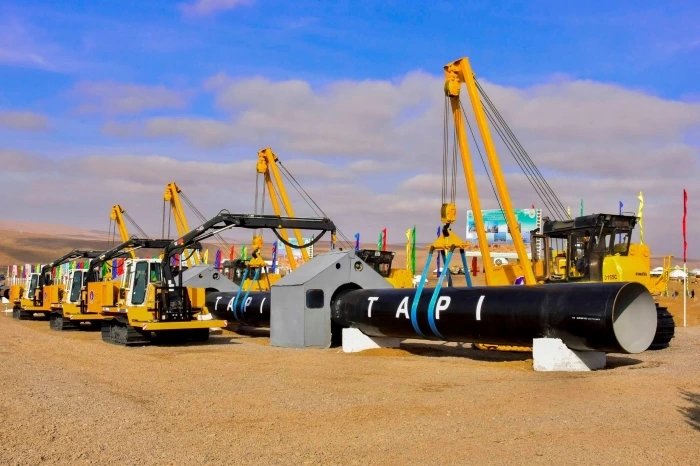
Turkmenistan is building a regional connectivity role around its gas resources, with Galkynysh Phase IV launched in April 2026 and TAPI construction advancing in western Afghanistan. Afghanistan’s Ministry of Mines and Petroleum reported in July that 101 km of TAPI pipeline had been laid, with 126 km of corridor prepared and 36 km buried. The shift reframes Turkmenistan’s landlocked position around corridors linking China, the Caspian, the Caucasus, Europe, Afghanistan and South Asia.
Key Facts
- Phase IV of the Galkynysh gas field launched in April 2026 with new production wells and a gas-processing facility designed for annual capacity of 10 bcm.
- Afghanistan’s Ministry of Mines and Petroleum reported in July that 101 km of TAPI pipeline had been laid, 126 km of corridor prepared, 108 km of connecting and monitoring roads constructed, and 36 km of pipeline buried.
- Turkmenistan borders Iran and Afghanistan, has access to the Caspian Sea, and is a major natural gas supplier to China.
- TAPI adds a southward dimension to Turkmenistan’s connectivity, linking South Asia to existing east-west and north-south corridor options.
From Resource Producer to Hub
Two projects illustrate the shift: Phase IV of Galkynysh and the TAPI pipeline. The Galkynysh Phase IV development, launched in April 2026, includes new production wells and a gas-processing facility with annual design capacity of 10 bcm. In July, Afghanistan’s Ministry of Mines and Petroleum reported 101 km of TAPI pipeline laid, 126 km of corridor prepared, 108 km of roads constructed and 36 km of pipeline buried. Physical progress of this kind begins to shift TAPI from geopolitical concept towards infrastructure under implementation.
Connectivity Beyond Gas
TAPI has an energy-security rationale, but its economic implications extend to associated investment in transport, logistics, power generation, industrial development, telecommunications and services. Central Asian governments are placing increasing emphasis on connectivity, reframing the region’s landlocked geography around corridors connecting China, the Caspian, the Caucasus, Europe, Afghanistan and South Asia. Turkmenistan occupies an unusual position within that map: Caspian Sea access, borders with Iran and Afghanistan, major gas supplier to China, and an intersection of several east-west and north-south routes. TAPI adds a southward dimension to that connectivity.
Investor Evidence
Physical progress, such as the 101 km of TAPI pipeline laid by July, matters to investors. For Leandro Slovinski, Global Editorial Director of The Investor, the critical issue is implementation. Slovinski said institutional investors do not respond to marketing narratives; they respond to evidence of long-term direction, economic stability and implementation.
2 sources
Time · lag behind first