
Xi's Jiang Zemin speech reframes reform era as New Era foundation
This digest was compiled by AI from multiple sources — links to the originals are below.
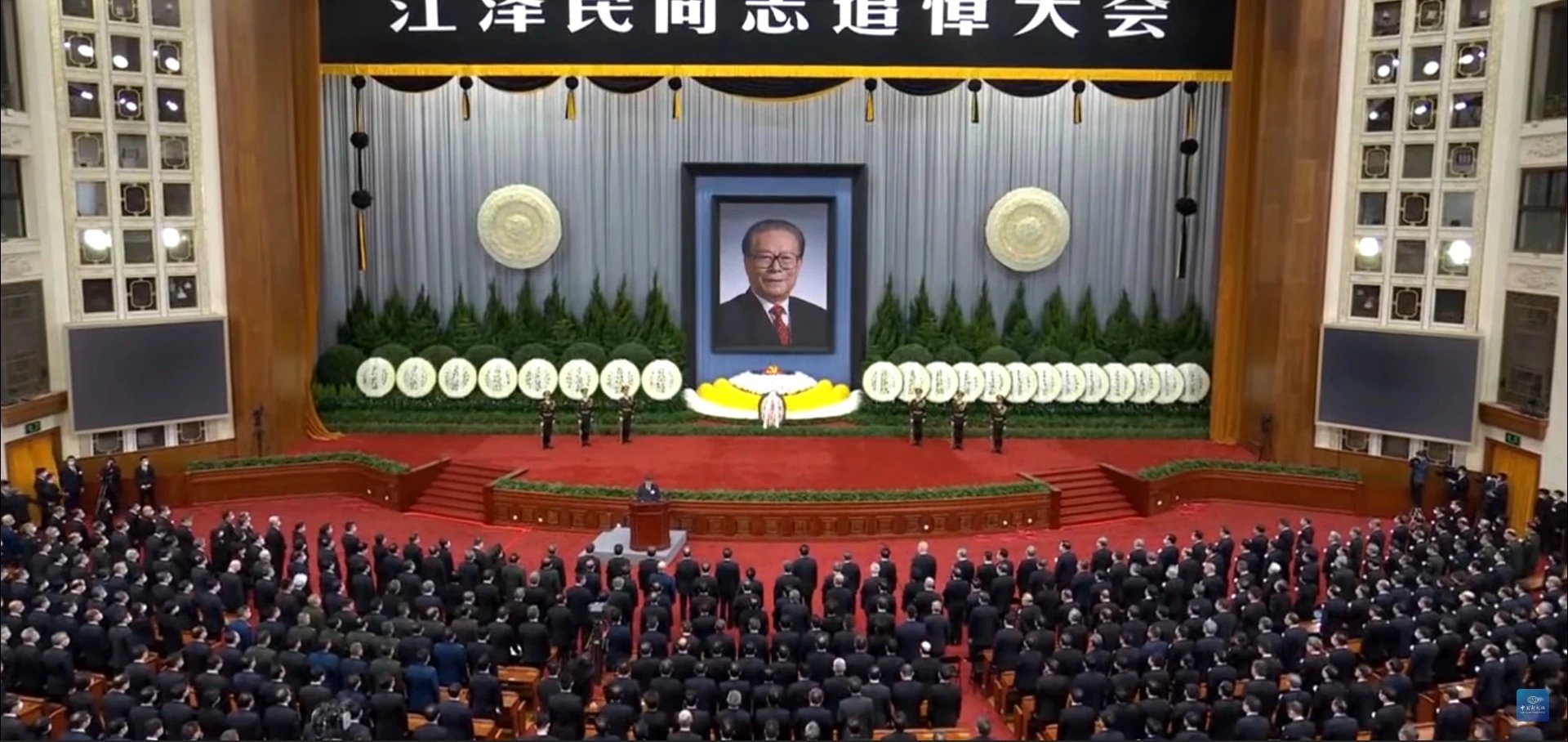
Xi Jinping's August 17 speech commemorating the 100th anniversary of Jiang Zemin's birth recasts the former Chinese leader's reform era as a historical foundation for Xi's 'new era for socialism with Chinese characteristics'. The speech frames Jiang as a loyal defender of Communist Party supremacy, citing his handling of major tests including June 1989 and the 1995-96 Taiwan Straits Crisis.
Key Facts
- Xi Jinping delivered the speech on August 17, the 100th anniversary of Jiang Zemin's birth.
- Xi called Jiang 'a great Marxist,' 'a great proletarian revolutionary, politician, military strategist, diplomat,' and 'the core of the party's third generation central leadership collective.'
- The speech presents Jiang's tenure as an indispensable link in the development of 'socialism with Chinese characteristics' from Mao to the present.
- The speech lists June 1989 and the Taiwan Straits Crisis of 1995-96 among the 'major tests' Jiang faced.
- Jiang joined the Communist Party of China in 1946 and became general secretary in June 1989.
The Speech's Historical Frame
The commemorative speech constructs Jiang Zemin's legacy as the historical foundation for Xi Jinping's 'new era for socialism with Chinese characteristics.' Xi proclaimed that new era at the 19th Party Congress in October 2017. The narrative traces Jiang from joining the Communist Party of China in 1946 to becoming general secretary in June 1989. Jiang's direction of 'a new situation of comprehensive reform and opening up' is tied to his commitment to the party's basic theory, basic line, and basic strategy.
Defense of Party Supremacy
Xi describes Jiang as having 'unwavering political faith' in Marxism, communism, and socialism with Chinese characteristics. The speech highlights Jiang's handling of 'major tests' in late 1980s and early 1990s domestic and international politics. Those tests include June 1989 and the Taiwan Straits Crisis of 1995-96. Jiang is credited with upholding the Four Cardinal Principles, carrying out governance and rectification, and engaging in diplomatic struggles. The speech states Jiang resolutely safeguarded the country's independence, dignity, security, and stability.
Instrumentalization of Party History
The speech exhibits the CCP's tendency to 'make the past serve the present' through instrumentalization of historical narratives about itself and its leaders. Xi's version incorporates Jiang's era as a direct antecedent to the new era proclaimed in 2017, not as an alternative path. This framing contrasts with assessments of the Jiang era as a vestige of a bygone period of 'liberalization.' The speech instead positions Jiang as a loyal servant and protector of the CCP's political and ideological patrimony.
1 source
Time · lag behind first