Magyar reframes Hungary's OTS ties as EU-aligned pragmatism
This digest was compiled by AI from multiple sources — links to the originals are below.
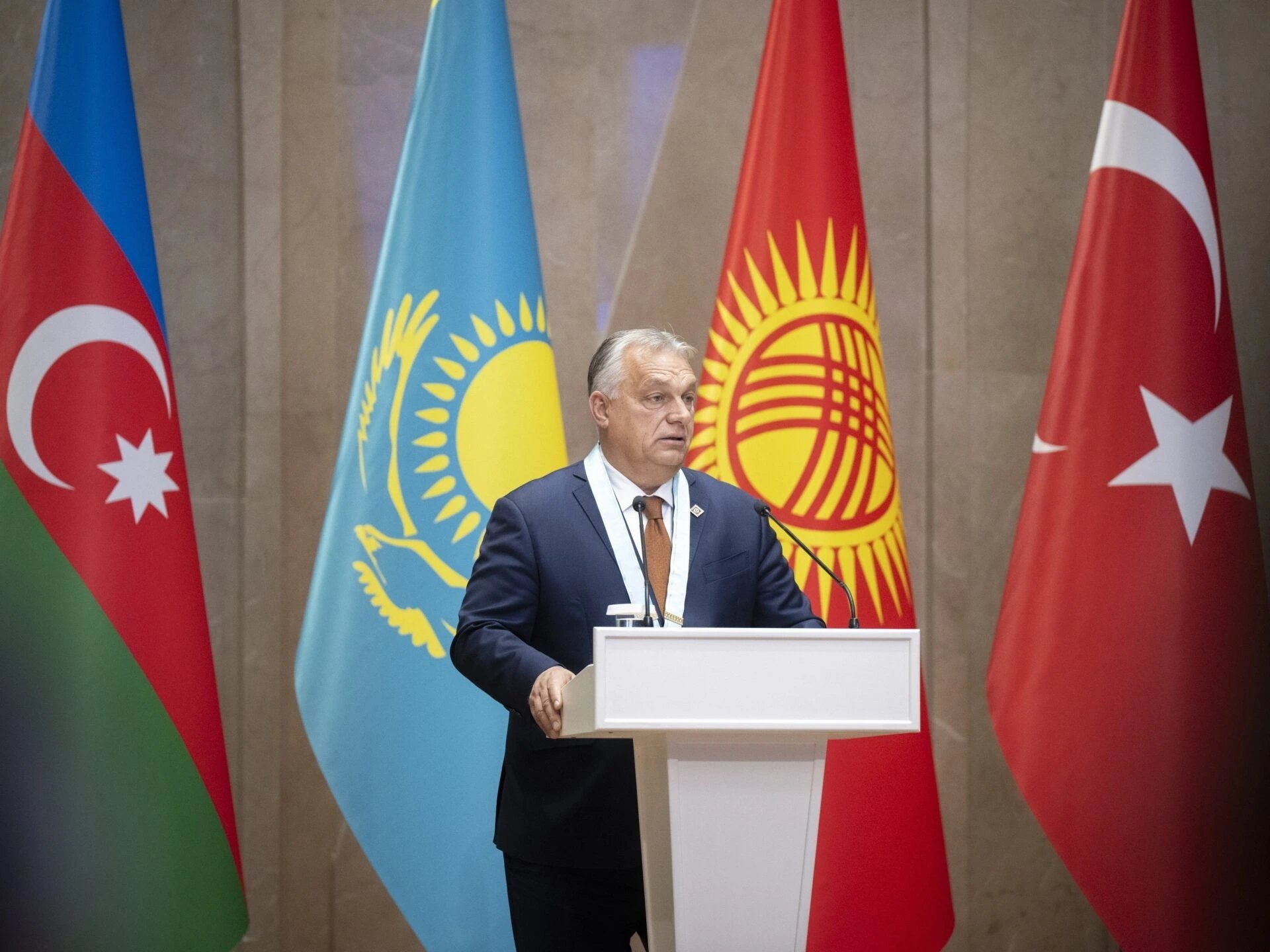
Hungarian Prime Minister Peter Magyar has broken rhetorically with Viktor Orbán's Eastern Opening, declaring that Hungarians envision their future in the European Union. Hungary's observer status in the Organization of Turkic States remains the test case, as a Tisza-led government reframes ties with Turkey, Azerbaijan, Kazakhstan, Uzbekistan, and Kyrgyzstan in pro-European, pragmatic terms rather than abandons them.
Key Facts
- Hungarian Prime Minister Peter Magyar declared that "Turkic councils may come and eastern dictators may go, but Hungarians envision their future in the European Union."
- Hungary has held observer status in the Organization of Turkic States since 2018, although Hungarian is a Finno-Ugric language, not a Turkic language.
- Viktor Orbán's Eastern Opening strategy, introduced in the early 2010s, initially centered on Russia and China before expanding to Turkey and Azerbaijan.
- Orbán used Hungary's OTS ties to present the country as a bridge between East and West and as an eastern-rooted alternative to mainstream Europe.
- Hungary's observer status in the OTS reflects a political and historical narrative embraced by Orbán rather than linguistic or cultural ties.
Orbán's Eastern Opening
Viktor Orbán's government introduced the Eastern Opening strategy after returning to power in the early 2010s, officially framed around economic diversification. The policy initially centered on Russia and China, then expanded to Turkey, Azerbaijan, and other Organization of Turkic States members. Orbán used ties with non-EU states as political marketing to signal that Hungary had options beyond the European Union mainstream. The strategy gained a political-symbolic function as Orbán's conflicts with Brussels over rule of law, sovereignty, and migration deepened.
Hungary's Observer Status
Hungary was granted observer status in the Organization of Turkic States in 2018, an unusual position because Hungarian is a Finno-Ugric language rather than a Turkic language. The observer status reflects a political and historical narrative embraced by Orbán, not linguistic or cultural ties. OTS engagement deepened Hungary's ties with Turkey, Azerbaijan, Kazakhstan, Uzbekistan, and Kyrgyzstan. Orbán presented Hungary's OTS observer status as a bridge between East and West and as an eastern-rooted alternative to mainstream Europe.
Magyar's EU Reframing
Prime Minister Peter Magyar has signaled a clear rhetorical break from Orbán's Eastern Opening, declaring that Hungarians envision their future in the European Union. A Tisza-led government reframes Hungary's Turkic ties in pro-European and pragmatic terms rather than abandons them, as the EU expands its own Central Asia engagement through energy, connectivity, and trade initiatives. Orbán-era agreements and patronage networks face greater scrutiny under a Tisza-led government. Hungary's engagement with the Organization of Turkic States serves as a test case of whether a Tisza-led government strips Fidesz's ideological framing while preserving ties with Central Asia.
2 sources
Magyar reframes Hungary's OTS ties as EU-aligned pragmatism