
Taiwan's 2026 urban drills are a test of resilience as deterrence shifts beyond hardware
This digest was compiled by AI from multiple sources — links to the originals are below.
Taiwan’s 2026 urban-resilience exercises are at the center of a shift in deterrence planning beyond ships, missiles and aircraft. Run alongside Han Kuang 42, the drills brought local government, hospitals, transport networks and military forces into shared crisis scenarios across 14 central and northern jurisdictions. The preparation reflects concern over Chinese scenarios short of invasion that include cutting energy or attacking the power grid.
Key Facts
- Taiwan’s 2026 urban-resilience exercises tested evacuation and sheltering, traffic control, emergency response, civil–military coordination and simulated mobile-network degradation in 14 central and northern jurisdictions.
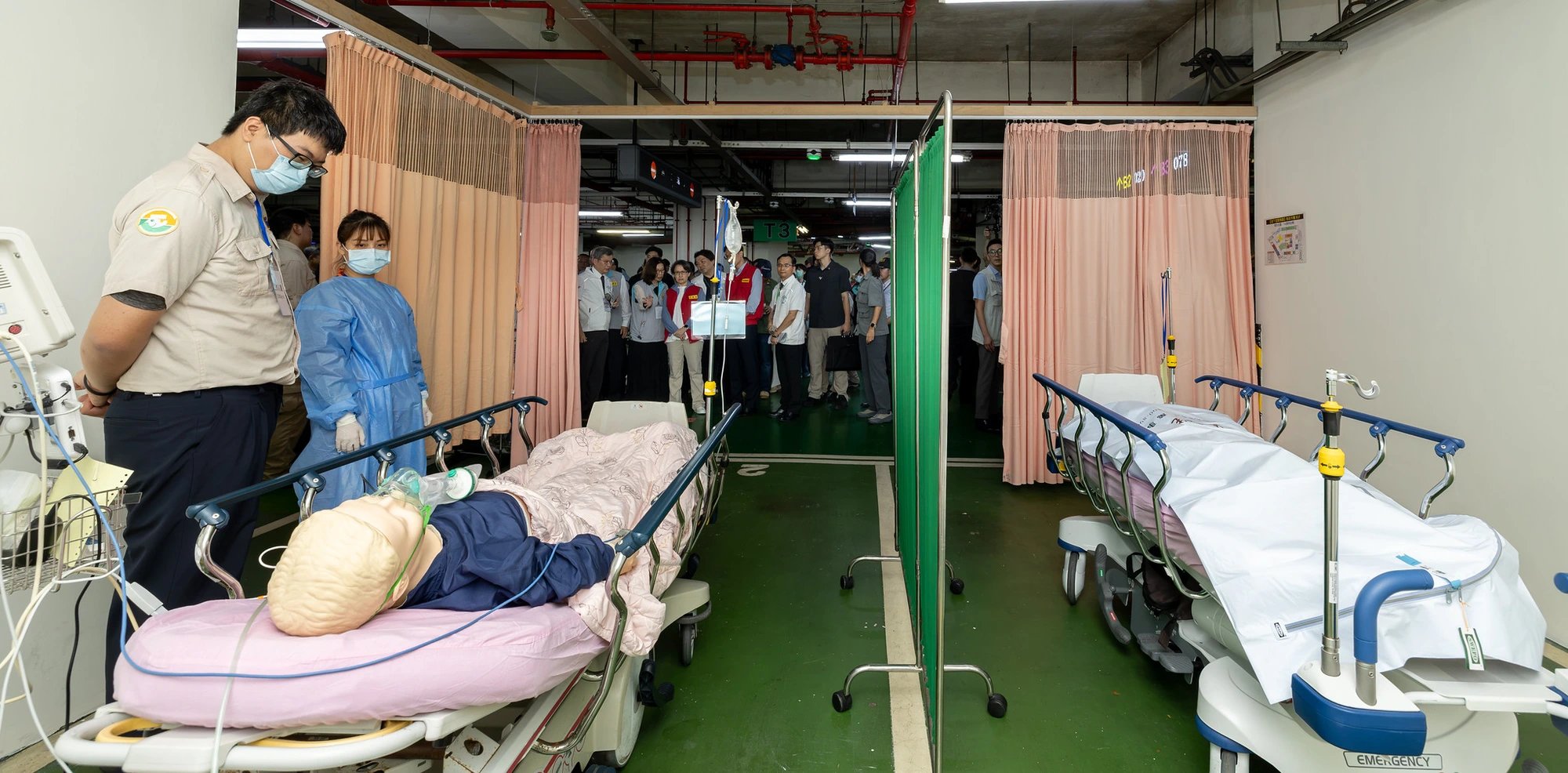
- The drills expanded from one day to two, used shared civilian-military scenarios and tested cross-jurisdictional coordination, including underground medical operations, medical evacuation, joint transportation and drone-enabled supply.
- In 2026, local government, hospitals, transport networks, emergency responders, critical infrastructure operators and military forces were brought into shared wartime scenarios alongside the Han Kuang 42 exercise.
- CSIS analysts Yu-Hsuan Yeh, Bonny Lin and Jane Nakano listed scenarios short of an invasion of Taiwan that include energy cutoffs via quarantine or blockade and cyber or kinetic attacks on the power grid.
Civil-Military Integration
Taiwan’s 2026 urban-resilience exercises further increased integration alongside the Han Kuang 42 exercise, after the two coincided for the first time in 2025. The 2026 drills brought local government, hospitals, transport networks, emergency responders, critical infrastructure operators and military forces into shared wartime scenarios. Exercises tested evacuation and sheltering, traffic control, emergency response, civil–military coordination and simulated mobile-network degradation in 14 central and northern jurisdictions. The format expanded from one day to two, used shared civilian-military scenarios and tested cross-jurisdictional coordination, including underground medical operations, medical evacuation, joint transportation and drone-enabled supply.
Deterrence Beyond Hardware
Analysts at the Center for Strategic and International Studies argue that deterrence cannot be assessed solely by ships, missiles, aircraft and reservists. Yu-Hsuan Yeh, Bonny Lin and Jane Nakano listed scenarios short of an invasion of Taiwan that include energy cutoffs via a quarantine or blockade. They also named cyber or kinetic attacks on Taiwan’s power grid and energy infrastructure among possible moves short of invasion. Disruption to power, logistics and communications constrains Taiwan’s ability to function before military forces are defeated outright.
Local Emergency Centers
A Taiwan crisis runs through roads and ports, hospitals and pharmacies, electrical substations and communications networks. At the heart of resilience are local emergency centers, which decide which vehicles move, which facilities receive power and where people are directed to shelter. The central issue is not whether Taiwan identifies essential national assets such as hospitals, ports and communication networks, but whether it preserves their functions in a crisis.
1 source
Time · lag behind first