
China industrial output slows to 4.5% in July, retail sales miss forecasts
This digest was compiled by AI from multiple sources — links to the originals are below.
China's industrial output rose 4.5% in July from a year earlier, down from 5.3% in June, and retail sales grew 0.6%, below the 1.5% forecast. The data renewed pressure on Beijing to step up stimulus. The slowdown comes as extreme weather disrupted manufacturing hubs and the property slump continued to drag on household spending.
Key Facts
- Fixed-asset investment contracted 6.7% in the first seven months of 2026, compared with an expected 6% decline and a 5.7% fall in January-June.
- New home prices in July fell 3.2% from a year earlier and 0.1% from June.
- Citi analysts noted daily average subsidy sales under the consumer goods trade-in scheme dropped to 6.3 billion yuan ($934.8 million) in July from 9 billion yuan in June.
- Three typhoons made landfall in July, and millions of people were relocated across China's eastern and southern manufacturing hubs.
- Auto sales declined for a 10th straight month in July, albeit at a slower pace, while automakers pursued overseas expansion to offset domestic weakness.
July Output and Consumption
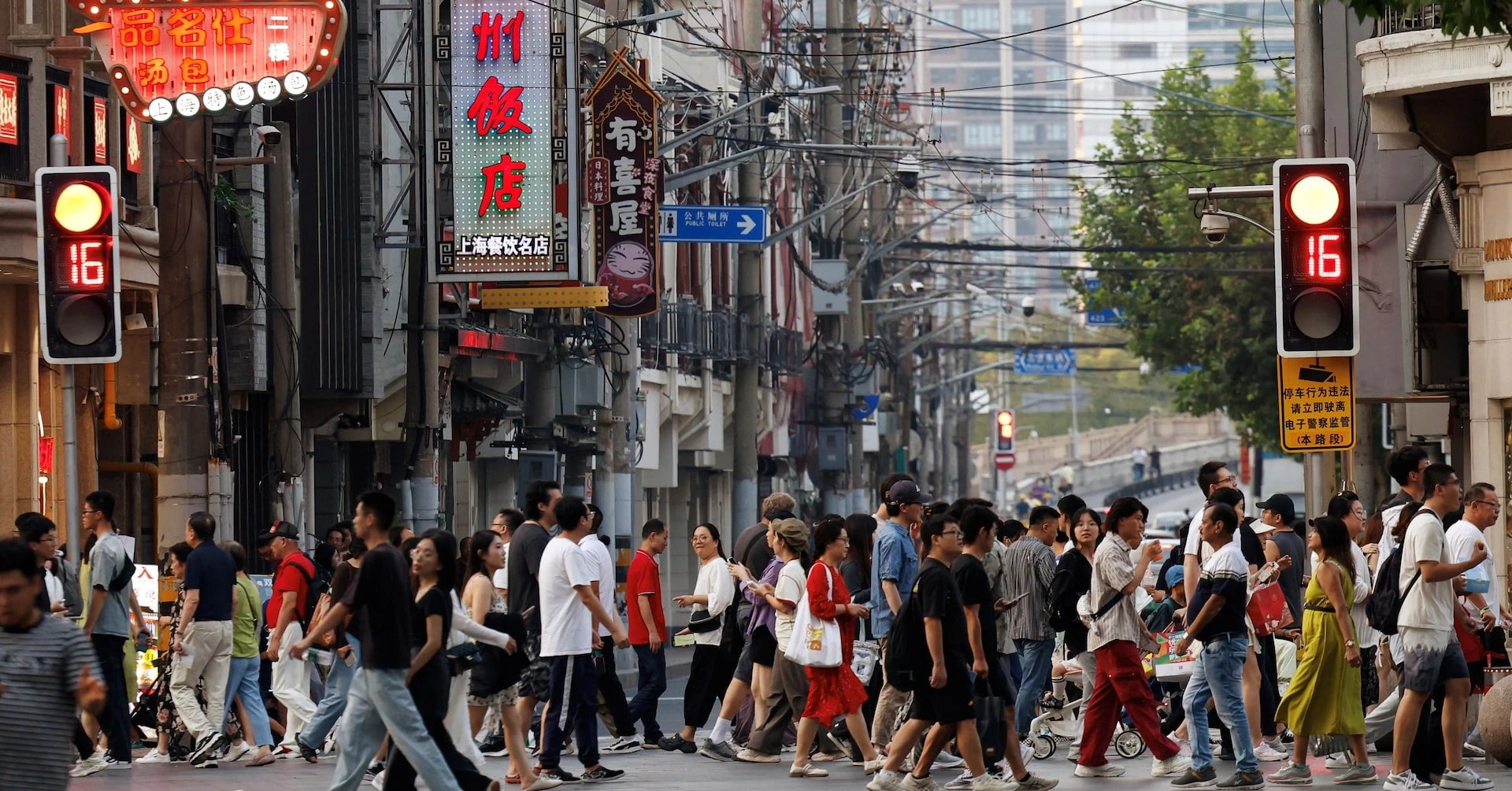
Industrial output grew 4.5% in July from a year earlier, down from 5.3% in June and below the Reuters poll forecast of 4.8%. Retail sales rose 0.6%, slowing from 1% in June and missing the 1.5% forecast, despite summer holiday tourism spending. Fixed-asset investment contracted 6.7% in January-July, sharper than the expected 6% decline and the 5.7% fall recorded in January-June. Fu Linghui, an NBS spokesperson, said officials would step up counter-cyclical policy adjustments to bolster domestic demand. Economist Xu Tianchen of the Economist Intelligence Unit said the poor performance reflected ineffective use of existing policy measures and called for bolder fiscal spending.
Property and Consumption Drag
New home prices in July fell 3.2% from a year earlier and 0.1% from June, extending the property sector slump. Economists estimate about 52% of household wealth is tied up in real estate, a share that has declined as investors shifted toward gold and other assets. The consumer goods trade-in scheme boosted sales a year earlier by bringing forward demand, making the July slowdown partly a payback effect, Julian Evans-Pritchard of Capital Economics said. Citi analysts noted daily average subsidy distribution weakened again in July, with sales dropping to 6.3 billion yuan ($934.8 million) from 9 billion yuan in June. Getting China's roughly 1.4 billion population spending again remains difficult while the property sector is in a slump.
Extreme Weather and Autos
Three typhoons made landfall in July, and millions of people were relocated across China's eastern and southern manufacturing hubs. Beijing policymakers faced extreme weather as a headwind beyond their control. Auto sales declined for a 10th straight month in July, albeit at a slower pace, contrasting with strong external demand. Automakers pursued overseas expansion to offset domestic weakness, while exports remained a key support for China's economy.
5 sources
Time · lag behind first