
Rochester-led study finds brain fluid flows 50 times slower in deep tissue than outer spaces
This digest was compiled by AI from multiple sources — links to the originals are below.
University of Rochester, Brown University and University of Copenhagen researchers used physics-informed AI to measure brain fluid flow from MRI data. The AI estimated that water-like fluid moves a few microns per second in the brain's outer spaces and about 50 times slower through deep tissue, according to a study published August 12 in Science Advances. The discovery could help detect circulation problems linked to Alzheimer's, aging and concussion.
The AI Measurement Method
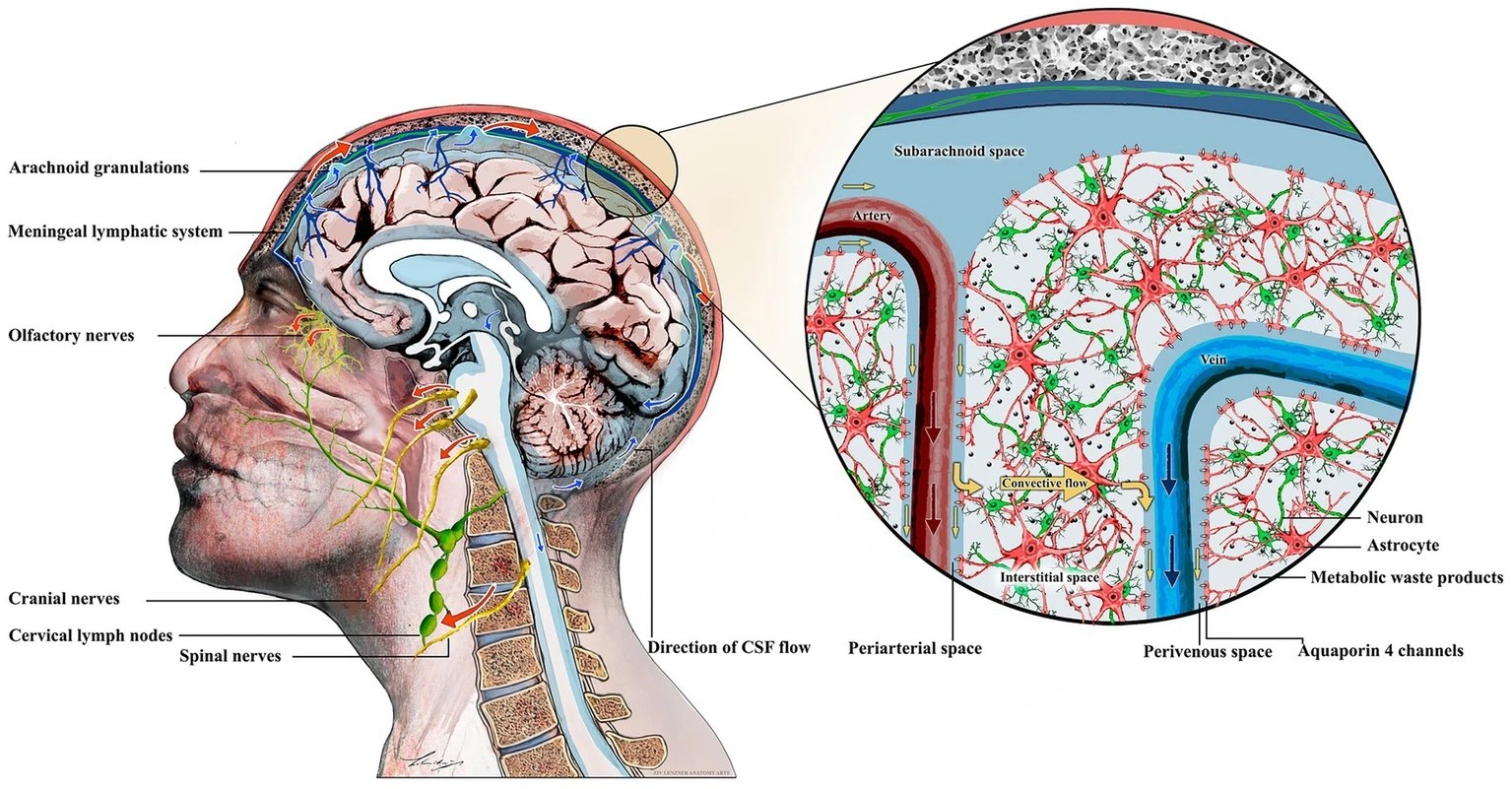
The glymphatic system was first described in 2012 by Maiken Nedergaard, co-director of the University of Rochester Center for Translational Neuromedicine. Measuring its slow fluid circulation inside a living brain is difficult because microscopes offer only a small patch view and MRI does not capture flow velocity. Douglas Kelley of the University of Rochester Department of Mechanical Engineering and colleagues from Brown University and the University of Copenhagen trained neural networks on videos of dye spreading through brain tissue. The AI then estimated fluid speed and tissue permeability from MRI data, according to the study in Science Advances.
Two Route Speeds
The AI analysis revealed two major glymphatic routes with speeds that differ by about 50-fold. In open spaces around the brain, including the area between the skull and brain surface, the water-like fluid moves at a few microns per second. Through deep tissue, flow is about 50 times slower. The system clears particles including amyloid beta proteins associated with Alzheimer's disease. Researchers said the method could eventually help spot early signs of Alzheimer's, aging and brain injury.
1 source
Time · lag behind first