
University of Zurich study finds adult mouse brain repairs damage via astrocyte nuclei
This digest was compiled by AI from multiple sources — links to the originals are below.
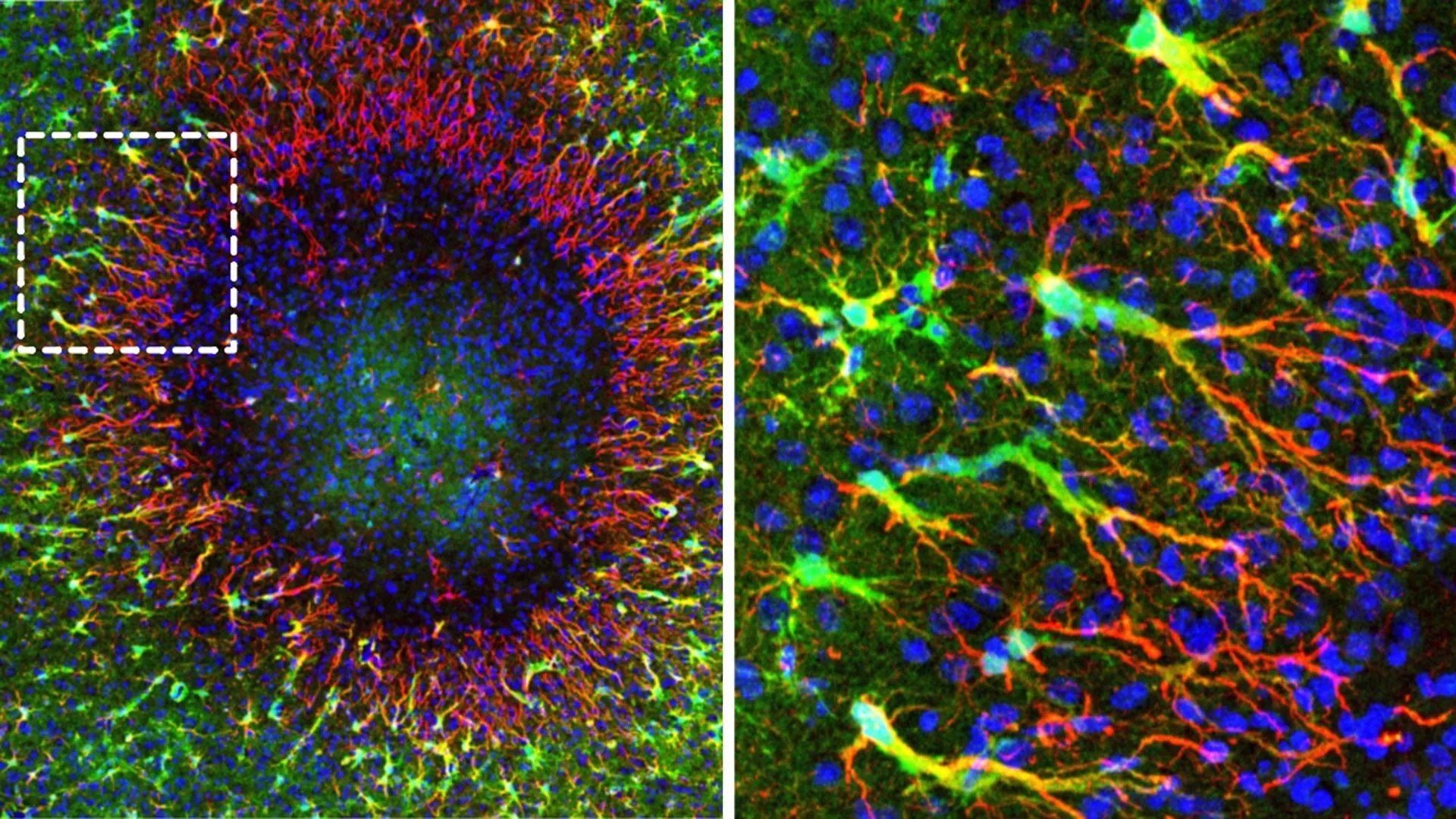
University of Zurich researchers observed in living mice that specialized astrocytes rebuild damaged brain regions by sending newly formed cell nuclei into injured areas. The finding challenges the long-held assumption that the adult brain cannot replace lost astrocytes after injury or autoimmune disease. The team tracked the repair process in real time for several weeks using two-photon microscopy.
Regenerative Astrocytes
A University of Zurich team led by Bruno Weber identified a specialized population of astrocytes that gather at the edges of damaged brain regions in mice. Co-lead authors Marina Herwerth and Matthias Wyss of the Institute of Pharmacology and Toxicology tracked these cells in real time for several weeks. The cells rebuild the lost astrocyte network rather than simply moving entire new cells into the affected area at first.
Nuclei Migration
Herwerth and Wyss used two-photon microscopy to observe newly formed nuclei traveling through long cellular extensions into damaged regions. The researchers also tracked which genes became active in different brain areas to identify the astrocytes responsible for tissue restoration. The process was observed in living mice over several weeks, challenging the view that adult brains cannot fully replace destroyed astrocytes.
Clinical Relevance
Astrocyte loss occurs after brain injuries and in neuromyelitis optica spectrum disorder, a rare autoimmune disease in which antibodies attack these support cells. According to Bruno Weber, the findings point toward new ways to support recovery from ailments involving astrocyte loss. The study was conducted in mice over several weeks, and no human data were reported.
2 sources
Time · lag behind first