
UC San Diego engineers create bacterium consuming all three corn-stalk sugars
This digest was compiled by AI from multiple sources — links to the originals are below.
Engineers at the University of California San Diego create a strain of Pseudomonas putida that simultaneously consumes glucose, xylose and arabinose, the three main sugars in corn stalks. The bacterium, evolved using an automated robotics platform, can be programmed to produce chemicals like indigoidine, a blue pigment. The work, published July 29 in Nature Communications, opens avenues for using low-cost, non-uniform feedstocks such as agricultural waste in biomanufacturing.
Automated Evolution
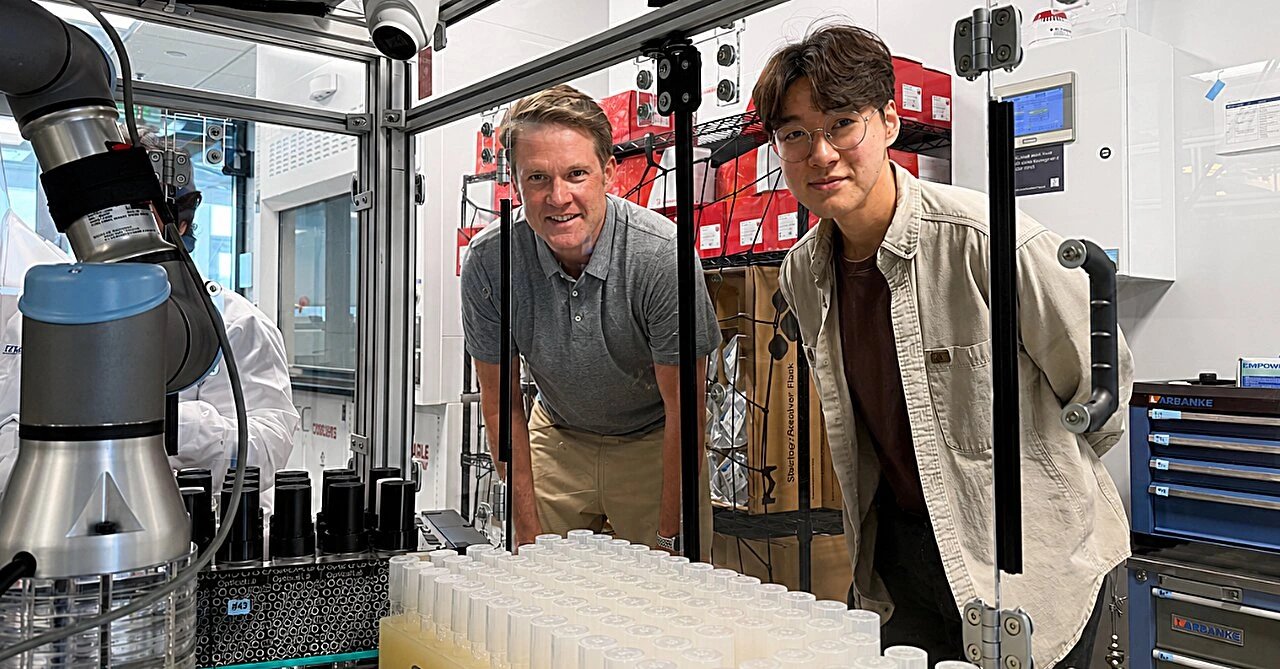
Researchers led by UC San Diego bioengineer Adam Feist used the ALEbot, an automated Adaptive Laboratory Evolution robot, to direct the evolution of Pseudomonas putida. The bacteria were cultured under a sugar mixture that required complete consumption of glucose, xylose and arabinose for survival. After months of continuous parallel testing, the team isolated generalist strains that efficiently feed on all three sugars simultaneously, unlike specialized predecessors.
Generalist vs Specialist
Conventional biomanufacturing often relies on uniform, refined feedstocks, but future economics demand microbes that thrive on complex mixtures like corn stalks. The new strain’s ability to consume all three sugars simultaneously avoids the bottlenecks that limit simpler organisms. This makes it a candidate for low-cost feedstocks including agricultural waste and mixed plastics, according to Feist, who directs the Future Biomanufacturing Center at UC San Diego.
Pigment Proof-of-Concept
To demonstrate practical utility, the engineers programmed the generalist strain to produce indigoidine, a blue pigment used in textile dyeing. This step, accomplished in collaboration with three U.S. national laboratories, validates the strain’s potential for real-world chemical manufacturing. The work was published on July 29 in Nature Communications.
1 source
Time · lag behind first