
UN FAO: global food prices rise 0.6% in July, wheat jumps 5.8% on Black Sea disruptions
This digest was compiled by AI from multiple sources — links to the originals are below.
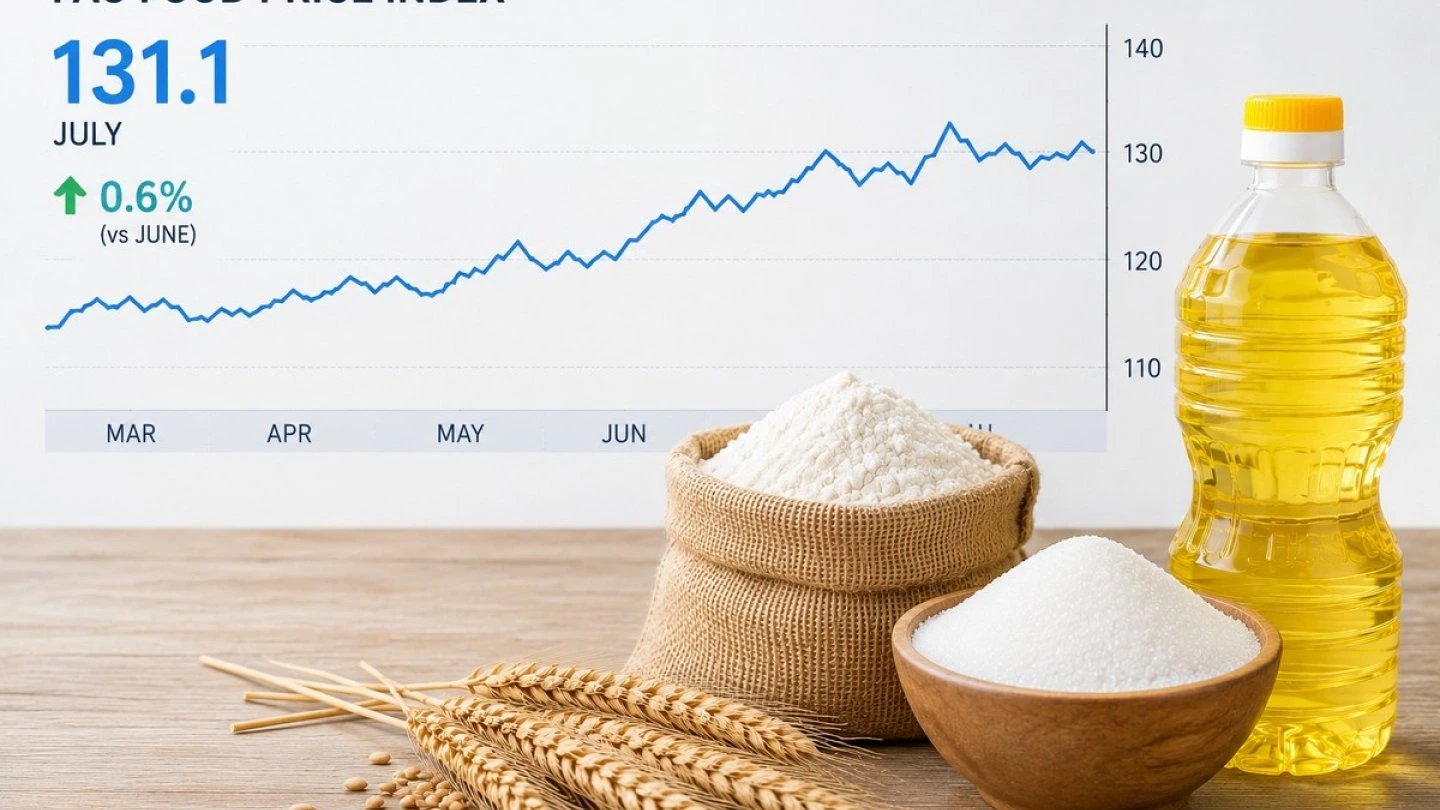
Global food prices rose 0.6% in July, driven by sharp increases in wheat and sugar, the UN Food and Agriculture Organization reported. The FAO Food Price Index reached 131.1 points, with grain prices surging 3.4% and sugar jumping 5.6%. The gains came even as meat prices fell 2.8%, their first decline this year.
Grain Prices Surge
The FAO Cereal Price Index climbed 3.4% in July. Wheat prices soared 5.8% due to concerns over Black Sea export disruptions and heatwave impacts on key producers. Corn prices rose 3.6% amid hot, dry U.S. weather and rising energy costs, while rice remained stable.
Sugar and Vegetable Oils Jump
The FAO Sugar Price Index surged 5.6%, reversing June’s decline. Prolonged European heat and drought, plus El Niño threats in Asia, drove the increase. The Vegetable Oil Index rose 2% to its highest since June 2022; palm oil gained on Indonesian biodiesel demand and crude oil prices, and soybean oil rose on U.S. biofuel demand. Sunflower and rapeseed oil prices fell.
Meat and Dairy Decline
The FAO Meat Price Index fell 2.8% from June’s record. Poultry prices dropped on abundant Brazilian supply, pork declined on EU surpluses and weak global demand, and beef eased on lower Asian imports. Lamb hit a new record due to limited Oceania exports. The Dairy Index slipped 0.7%, with powdered milk and butter cheaper, but cheese rose for the first time in a year on tight EU milk supply.
3 sources
Time · lag behind first