
Fire Point details FP-7X interceptor, targets 2,000 annually for European Freyja missile shield
This digest was compiled by AI from multiple sources — links to the originals are below.
Ukraine’s Fire Point detailed the FP-7X interceptor, revealing plans for an imaging-infrared seeker, a blast-fragmentation warhead, and a production goal of 2,000 missiles annually for Europe’s Freyja ballistic missile defense system. The company expects a first functional prototype in the first half of 2027, even as seeker integration and accuracy remain key technical risks.
The FP-7X Design
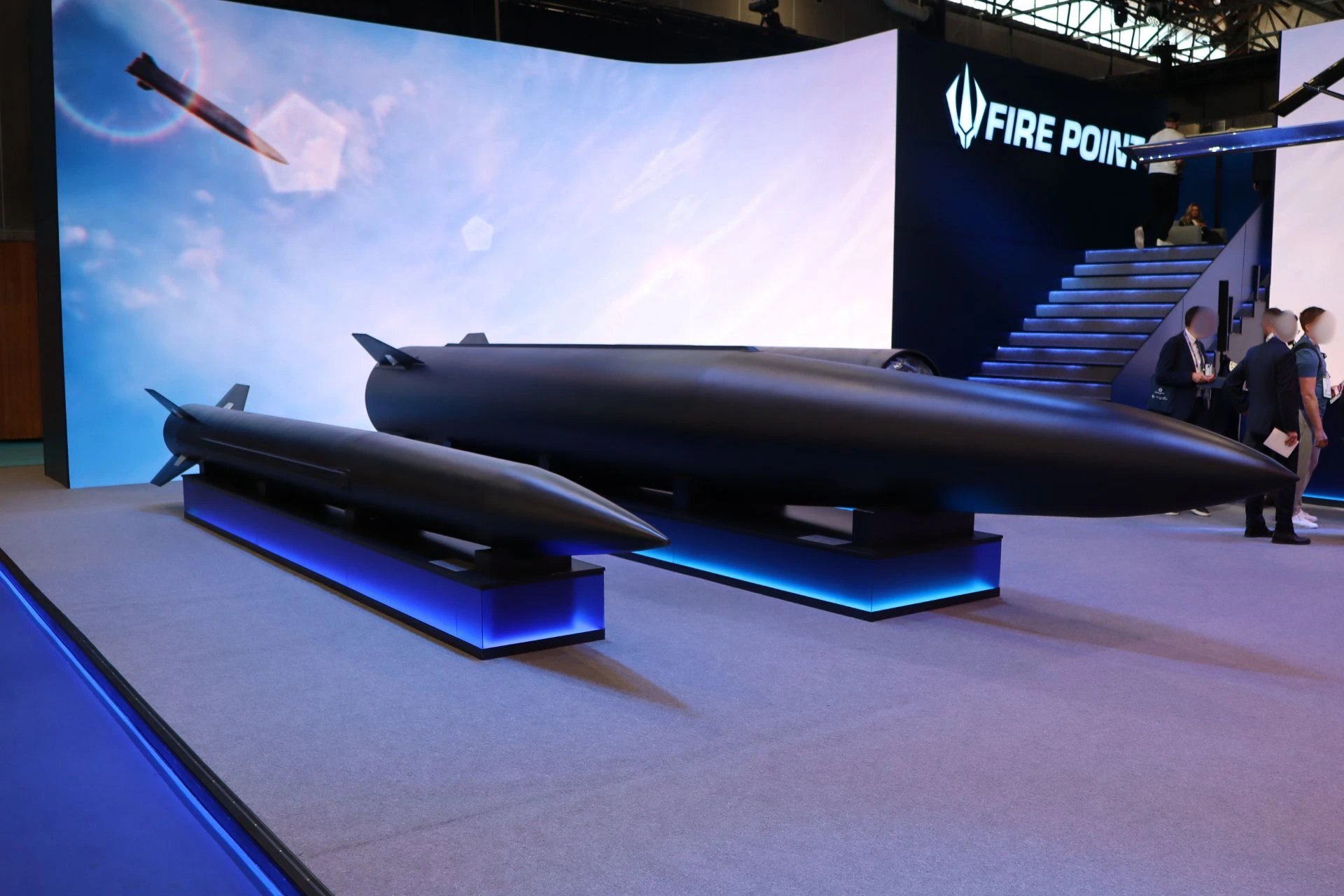
Fire Point plans to equip the FP-7X with an imaging-infrared (IIR) seeker for terminal homing, while a radio-frequency seeker is also under consideration. The first version will use a blast-fragmentation warhead before any transition to a hit-to-kill design. The company targets annual production of 2,000 interceptors, with a first functional prototype due in the first half of 2027. The missile is derived from the FP-7 architecture, displayed alongside the larger FP-9 ballistic missile at Eurosatory 2026.
The Freyja Consortium
The Freyja program brings together Ukraine, France, Germany, Italy, the United Kingdom, Denmark, the Netherlands, Norway, Spain, and Sweden. Fire Point is expected to act as prime contractor and design authority, supplying the FP-7X interceptor, launcher, and part of the control system. European partners are set to contribute radars, seekers, fire-control equipment, data links, and terminal guidance technologies. Companies including Eurosam, Leonardo, Thales, Saab, and Hensoldt have been cited, though contractual roles remain unconfirmed.
Technical Uncertainties
In an interview with The War Zone on August 3, 2026, Fire Point CEO Iryna Terekh said the FP-7X solutions under consideration rely on IIR seekers. Fire Point is working with two European companies and one Ukrainian company, but only Diehl Defence’s option has been publicly confirmed. Seeker availability, accuracy, and integration results are now the main technical uncertainties. Integrating the IIR sensor requires trade-offs in mass, electrical consumption, data processing, and maneuvering performance, affecting the entire engagement chain under very short timelines.
1 source
Time · lag behind first