
ChainDrop Worm Compromises 430 npm Packages with 2 Billion Monthly Installs
This digest was compiled by AI from multiple sources — links to the originals are below.
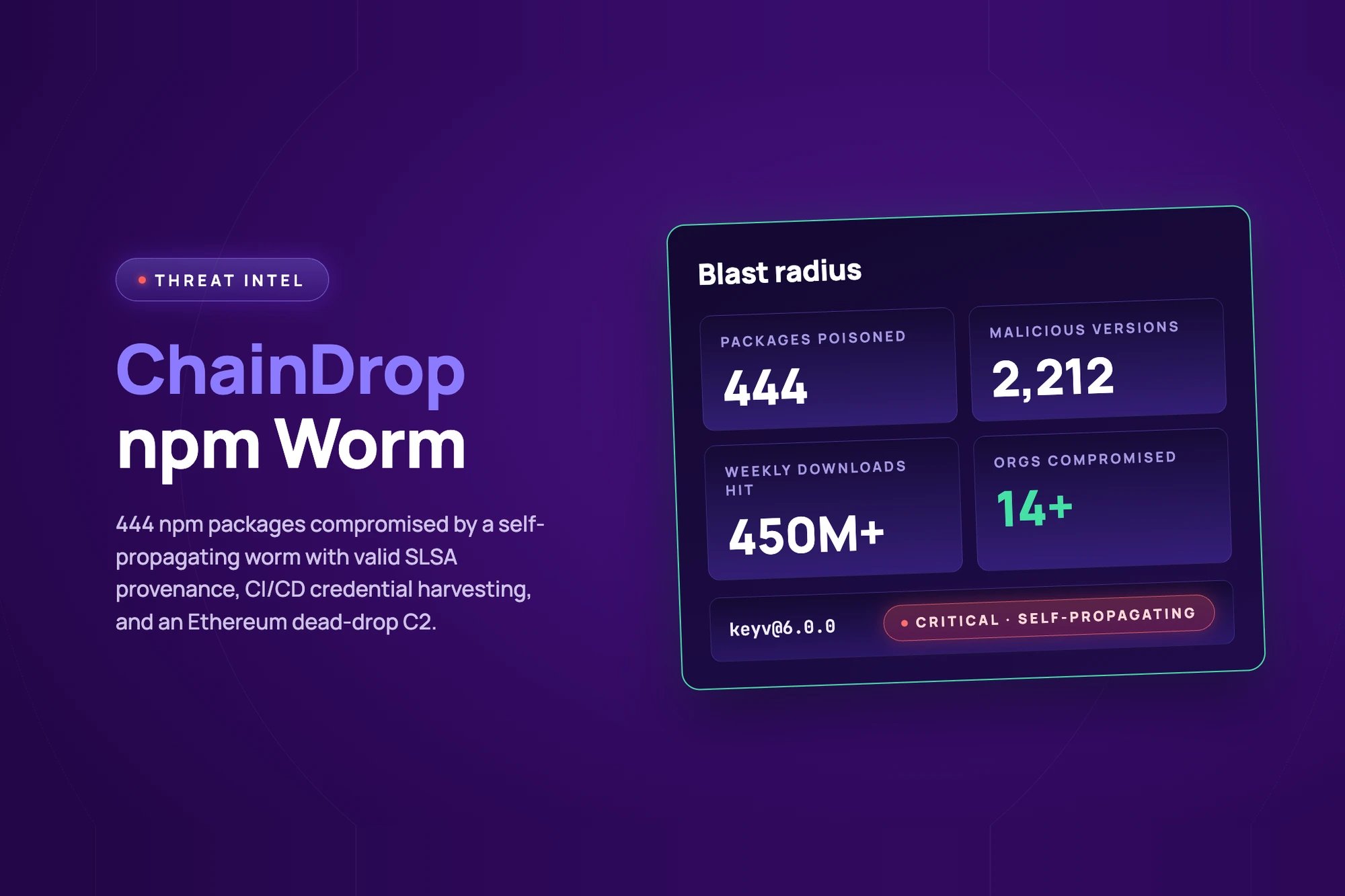
Attackers have compromised more than 430 npm packages with a combined 2 billion monthly downloads in a credential-stealing campaign dubbed ChainDrop, according to security firm Aikido. The campaign, which began August 4, used a compromised GitHub account to inject malicious code into widely-used libraries including keyv and cacheable. The worm, equipped with worm-like capabilities, spreads through stolen npm and GitHub tokens, threatening developer supply chains.
The Compromise
Attackers compromised the GitHub account of a maintainer of the keyv key storage library, which has 127 million weekly npm downloads. They pushed malicious files to the main branch and immediately cut new releases, ensuring poisoned packages were published with valid provenance signed by GitHub Actions. The campaign began August 4 and has since spread to over 430 packages, including cacheable, flat-cache, and file-entry-cache. The malicious packages were downloaded in total 2 billion times per month before the breach was detected.
Worm Capabilities and Impact
The malware is an infostealer that harvests npm and GitHub tokens, AWS credentials, Kubernetes secrets, HashiCorp Vault tokens, Stripe and Slack tokens, and performs generic file system scans. Stolen data is encrypted and sent to a public GitHub repository named 'Shai-Hulud: Here We Go Again'. The worm spreads to other maintainers and repositories using stolen tokens, similar to previous Shai-Hulud campaigns. Companies including Deliveroo, Ornikar, OneReach, Picsart, and Qlik had their packages compromised as part of the campaign.
Mitigation Guidance
Microsoft and Wiz Security published indicators of compromise (IOCs) and mitigation advice. Wiz recommends removing affected package versions from development, build, and CI/CD environments, and treating affected systems as potentially compromised. Organizations should rotate exposed credentials, review cloud and source-code environments for unauthorized access, and monitor for published IOCs. Katie-Paxton Fear of Semgrep noted that the attack pattern is not new but underscores the risk of supply chain attacks even for those not directly using affected packages.
1 source
Time · lag behind first