NASA's PUNCH mission predicts solar storm arrival within 30 minutes in first test
This digest was compiled by AI from multiple sources — links to the originals are below.
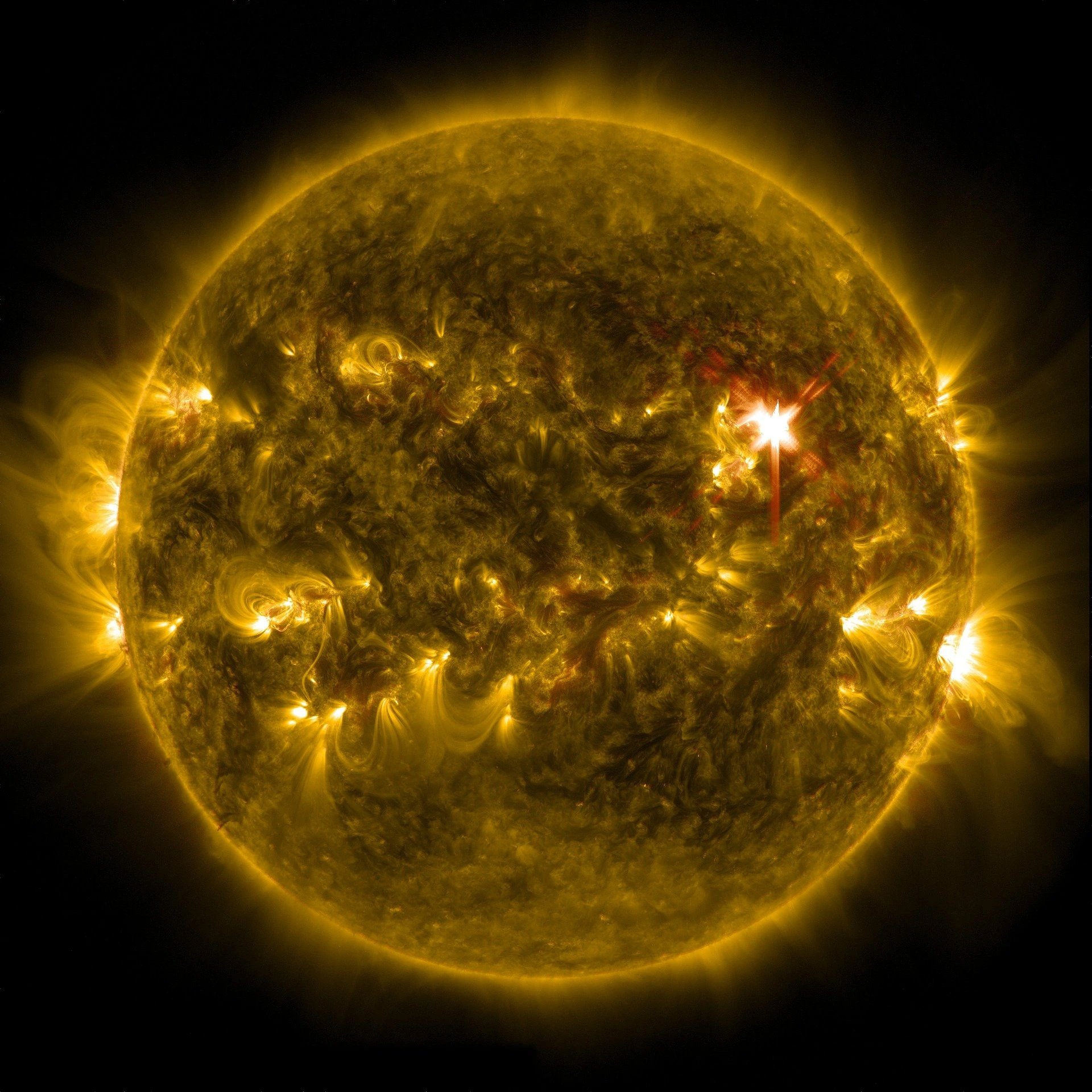
NASA’s PUNCH mission accurately predicted the arrival time of a solar storm to within 30 minutes in its first proof-of-concept test, scientists announced Tuesday at the COSPAR Scientific Meeting. The result is a tenfold improvement over standard forecasting methods, which typically provide only a five-hour window.
PUNCH’s Continuous Tracking
Launched in 2025, the four-spacecraft PUNCH mission provides continuous 3D observations of the inner solar system, tracking coronal mass ejections (CMEs) nearly all the way to Earth with a new image every four minutes. Previously, CMEs were visible only across one-fifth of the Sun–Earth distance, leaving a blind spot that forced forecasters to guess the storm’s evolution. The mission’s wide-field imagers now close that gap, enabling routine monitoring of solar eruptions from the corona through the heliosphere.
The May 2025 Test
Scientists retroactively applied PUNCH data to a CME that erupted on May 31, 2025. A computer model analyzed the leading edge’s speed and geometry as it moved across the solar system, updating predictions every four minutes. Twelve hours after the eruption, the model converged on a final arrival time, forecasting the storm would hit Earth eight hours later. The actual arrival was within 30 minutes of that prediction.
Order-of-Magnitude Improvement
Leading-edge arrival time was narrowed from the standard 5-hour uncertainty window to just 30 minutes—a tenfold gain. Principal investigator Craig DeForest of the Southwest Research Institute called the result “stunning,” noting the model itself signaled when the estimate stabilized, giving forecasters confidence in real-time. The method, though basic, leverages continuous tracking to outperform current operational systems.
What's Next
The findings are under review at the journal Space Weather, and the team plans to operationalize the model for real-time forecasting. It remains unclear whether the method will maintain its accuracy across different CME speeds and magnetic configurations.
1 source
NASA's PUNCH mission predicts solar storm arrival within 30 minutes in first test