
Senate to vote July 28 on Russia-Iran sanctions bill, Whitehouse tells RFE/RL
This digest was compiled by AI from multiple sources — links to the originals are below.
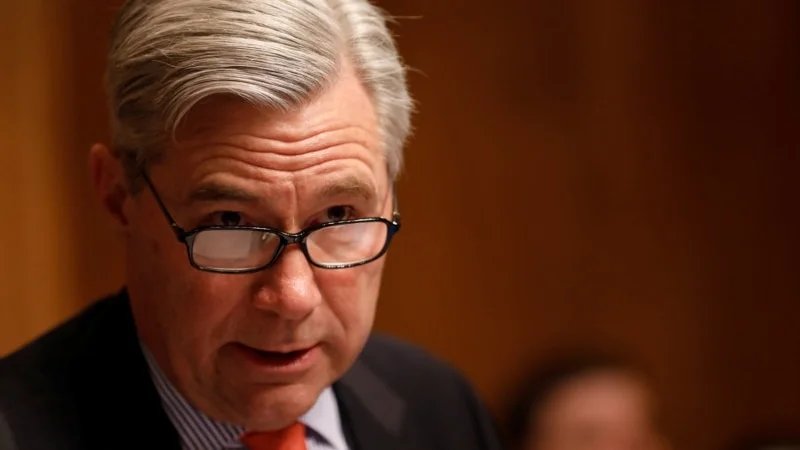
The U.S. Senate is set to vote on July 28 on a bipartisan sanctions package aimed at Russia and Iran, with co-sponsor Senator Sheldon Whitehouse predicting its passage. The legislation, renamed the Lindsey O. Graham Sanctioning Russia and Iran Act, would impose primary and secondary sanctions, target Moscow’s shadow fleet, and authorize tariffs of up to 100% on major importers of Russian oil. Whitehouse told RFE/RL that the bill reflects renewed congressional resolve to support Ukraine and squeeze the Kremlin’s war machine.
The Sanctions Package
The legislation preserves core sanctions architecture against Russia while extending the Iran Sanctions Act of 1996. It would impose primary and secondary penalties on Russia and any entities supporting its war in Ukraine. The bill specifically targets Moscow’s shadow fleet—the economic lifeline for President Vladimir Putin and his inner circle—and authorizes tariffs of up to 100% on countries that import significant volumes of Russian oil and gas. The measure also aims to choke off financial and logistical support for both Russia and Iran.
Bipartisan Support and Trump’s Backing
In an interview with RFE/RL hours before the Senate vote, Whitehouse expressed confidence that the bill would pass the chamber on July 28. He noted that the legislation has drawn rare bipartisan support and that President Donald Trump’s recent endorsement has improved its prospects in the House. 'It would be a surprise if anything stopped it from passing the Senate today,' Whitehouse said, adding that with Trump’s support, 'things usually pass the House.' The senator acknowledged that progress had been slow in part because it was difficult to advance a bill opposed by a president whose party controls both chambers, but said that final amendments and Ukraine’s battlefield successes helped shift the administration’s stance.
Ukraine’s Battlefield Momentum
Whitehouse argued that Ukraine’s recent military gains have changed the political calculus in Washington, overcoming earlier skepticism about Kyiv’s chances. 'I’ve always thought that Ukraine both could and should win,' he said, adding that 'the rather impressive success of Ukraine on the battlefield has changed the equation.' He criticized the 'naysayers' who had pushed the notion that supporting Ukraine was a doomed enterprise. The senator insisted that Congress must ensure the Trump administration enforces the new sanctions rigorously, particularly against the shadow fleet, to maximize pressure on the Kremlin.
1 source
Time · lag behind first