NASA radar misses asteroid 1998 SH2; it is a comet
This digest was compiled by AI from multiple sources — links to the originals are below.
NASA's Goldstone radar failed to detect near-Earth object 1998 SH2 during its August 2025 flyby, as the object was 153 arcseconds off its predicted position. Astronomers have now confirmed that 1998 SH2 is a comet, not an asteroid, with a faint tail that nudged it off course.
The Missed Detection
NASA's 70-meter Goldstone antenna swept the predicted position of 1998 SH2 on August 26, 2025, but received no echo. The object, discovered in 1998 and tracked until 2016, was expected to pass within 0.02 astronomical units (3 million km) of Earth. Optical recovery on August 31 from Serra da Piedade, Brazil, revealed a 19-sigma offset of 153 arcseconds — roughly a tenth of the Moon's width — explaining the radar failure.
The Comet Signature
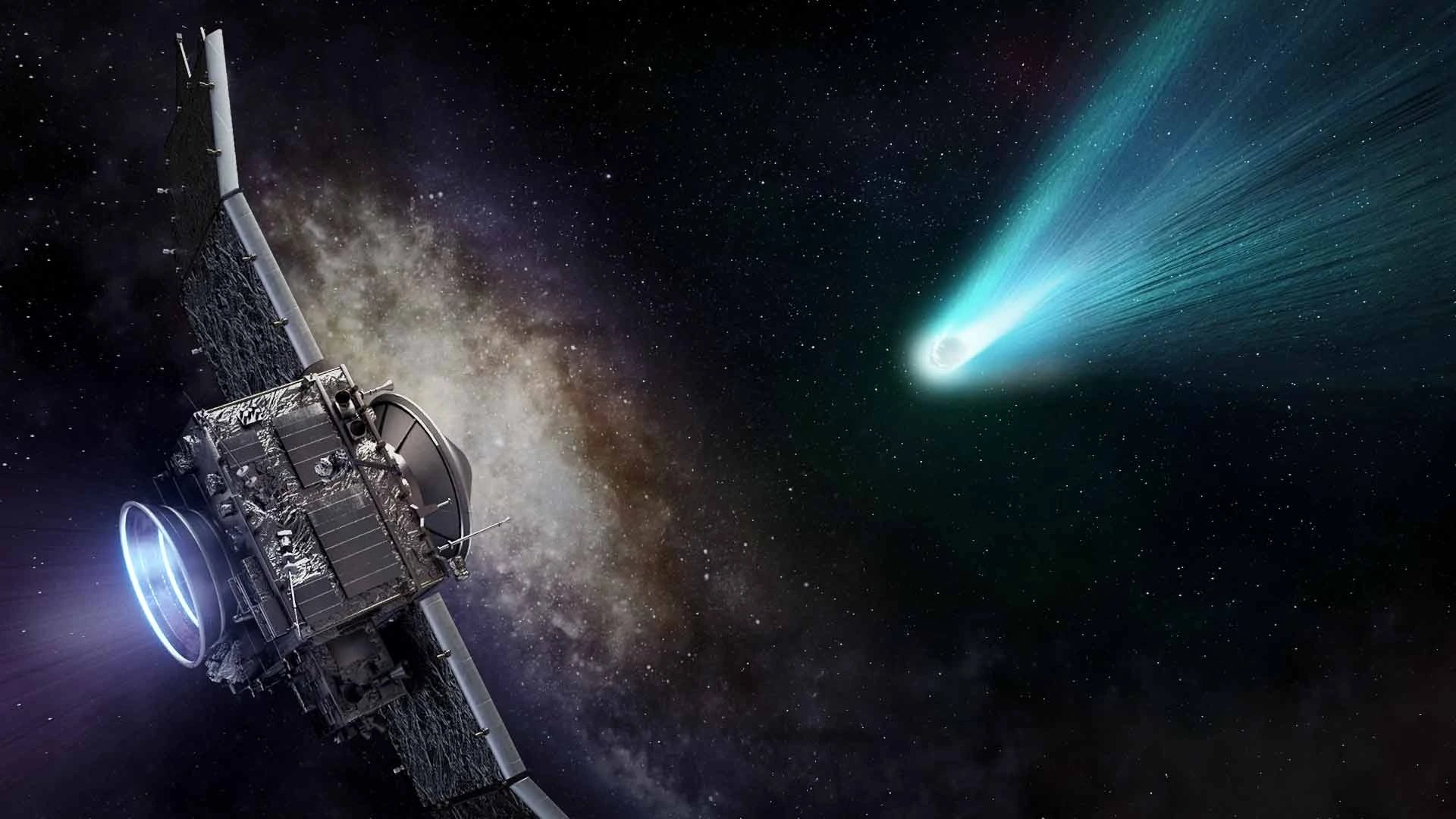
A team led by Davide Farnocchia of NASA's Jet Propulsion Laboratory measured a transverse acceleration of 1.4 × 10⁻¹⁰ m/s², too large for the Yarkovsky effect. The only plausible cause was outgassing from sublimating ice, confirming 1998 SH2 as a comet. The Minor Planet Center assigned it the comet designation P/1998 SH2, marking the first time a comet was identified by orbital perturbations alone.
The Faint Tail
The Asteroid Terrestrial-impact Last Alert System collected 53 images from September to October 2025, showing only a dot. However, the 3.6-meter Canada-France-Hawaii Telescope on September 17 captured a low-surface-brightness tail 20 arcseconds west. The 8-meter Very Large Telescope in Chile confirmed a long, narrow tail on September 30, and re-examination of earlier images from September 13-14 also revealed it.
What's Next
The discovery is published in Nature Astronomy, and further observations are planned to characterize the comet's activity. It remains unclear whether other near-Earth objects classified as asteroids may also be faint comets, potentially affecting impact risk assessments.
1 source
NASA radar misses asteroid 1998 SH2; it is a comet