
Thwaites Glacier melt prompts $80bn underwater curtain plan
This digest was compiled by AI from multiple sources — links to the originals are below.
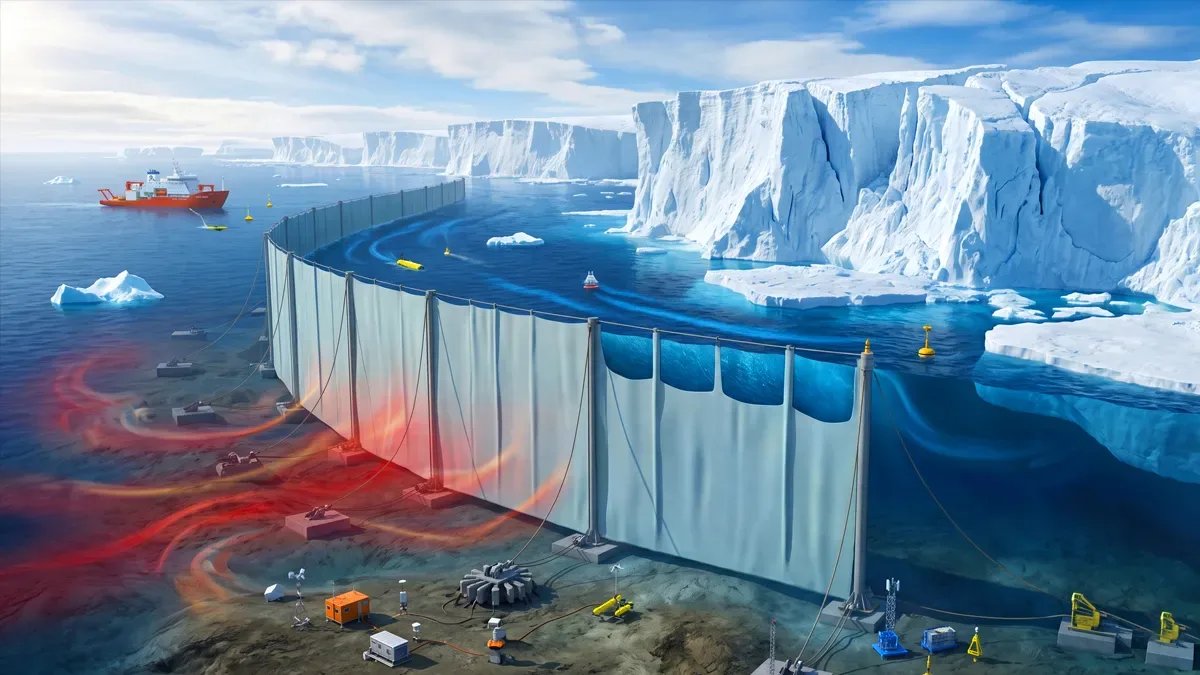
Scientists propose an 80-kilometer underwater curtain to slow the melting of Antarctica's Thwaites Glacier, known as the 'Doomsday Glacier'. The project, estimated at $80 billion, aims to block warm ocean currents from reaching the glacier's base. Its feasibility and environmental impact remain debated.
The Proposal
Researchers are developing a plan to install an 80-kilometer-long underwater curtain in Antarctica to protect the Thwaites Glacier from warm ocean currents. The curtain, made of a flexible material, would be anchored to the seafloor and rise to the surface, acting as a barrier. The project's cost is estimated at $80 billion, according to Sabah.
Glacier Threat
Thwaites Glacier, roughly the size of Florida, is one of Antarctica's fastest-melting glaciers. Its collapse could raise global sea levels by up to 3 meters, threatening coastal cities worldwide. Scientists warn that without intervention, the glacier could destabilize within decades.
Feasibility Concerns
The proposed curtain faces significant technical and environmental challenges. Critics question the durability of the structure in Antarctica's harsh conditions and its potential impact on marine ecosystems. The project is still in early conceptual stages, with no timeline for implementation.
1 source
Time · lag behind first