
Rubio arrives in Manila for ASEAN talks amid Iran war fears
This digest was compiled by AI from multiple sources — links to the originals are below.
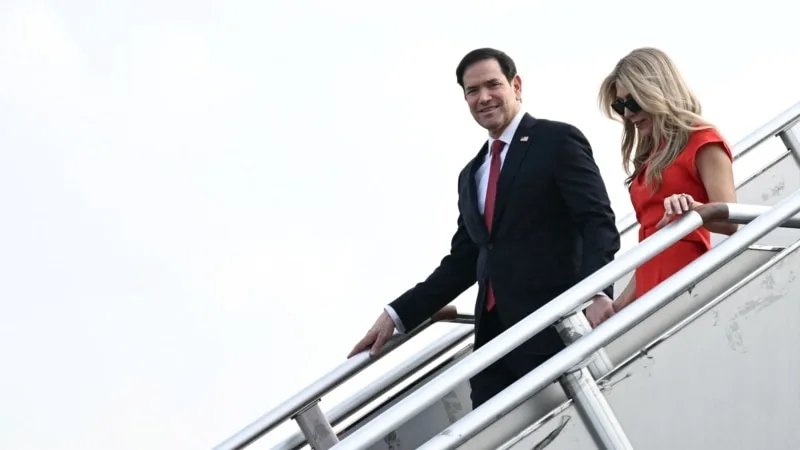
US Secretary of State Marco Rubio arrived in Manila on July 21 for his first visit to the Philippines as America's top diplomat, joining an ASEAN ministerial gathering overshadowed by renewed conflict with Iran and rising tensions in the South China Sea. Rubio said he was open to meeting Chinese and Russian foreign ministers on the sidelines, though no formal discussions had been confirmed. The visit comes as Washington seeks to reinforce its Indo-Pacific strategy and reassure regional allies amid multiple global crises.
South China Sea Tensions
Shortly after Rubio landed, the US State Department issued a sharply worded statement calling on Beijing to 'immediately cease its destabilizing conduct.' The statement condemned China's 'dangerous and aggressive actions' against Philippine Navy personnel at Second Thomas Shoal, a disputed reef where a confrontation on July 20 left a Philippine serviceman injured. The incident underscores the ongoing territorial disputes in the South China Sea, where China claims sovereignty over most of the waterway.
Energy Security Concerns
Analysts say Southeast Asian governments increasingly view geopolitical challenges through the lens of energy security rather than military competition alone. Peter Cockcroft, director of the Asia-Pacific Net-Zero Institute, told RFE/RL that 'a chokepoint crisis a thousand miles away has done more to concentrate ASEAN minds on energy security than a decade of US-China rivalry rhetoric.' Southeast Asian countries are highly affected by oil supply shortages caused by the Iran war and the closure of the Strait of Hormuz, according to Al Jazeera.
Regional Diversification
Cockcroft noted that governments across Southeast Asia are increasingly preoccupied with fuel prices, electricity costs, shipping routes, inflation, currency pressures, and domestic political stability. 'The region is not choosing sides, it is diversifying its exposure,' he said. This shift could complicate Rubio’s message in Manila, as the US seeks to rally allies against China while addressing energy security concerns.
2 sources
Time · lag behind first