
Climate change reshapes waterborne disease risks, review finds
This digest was compiled by AI from multiple sources — links to the originals are below.
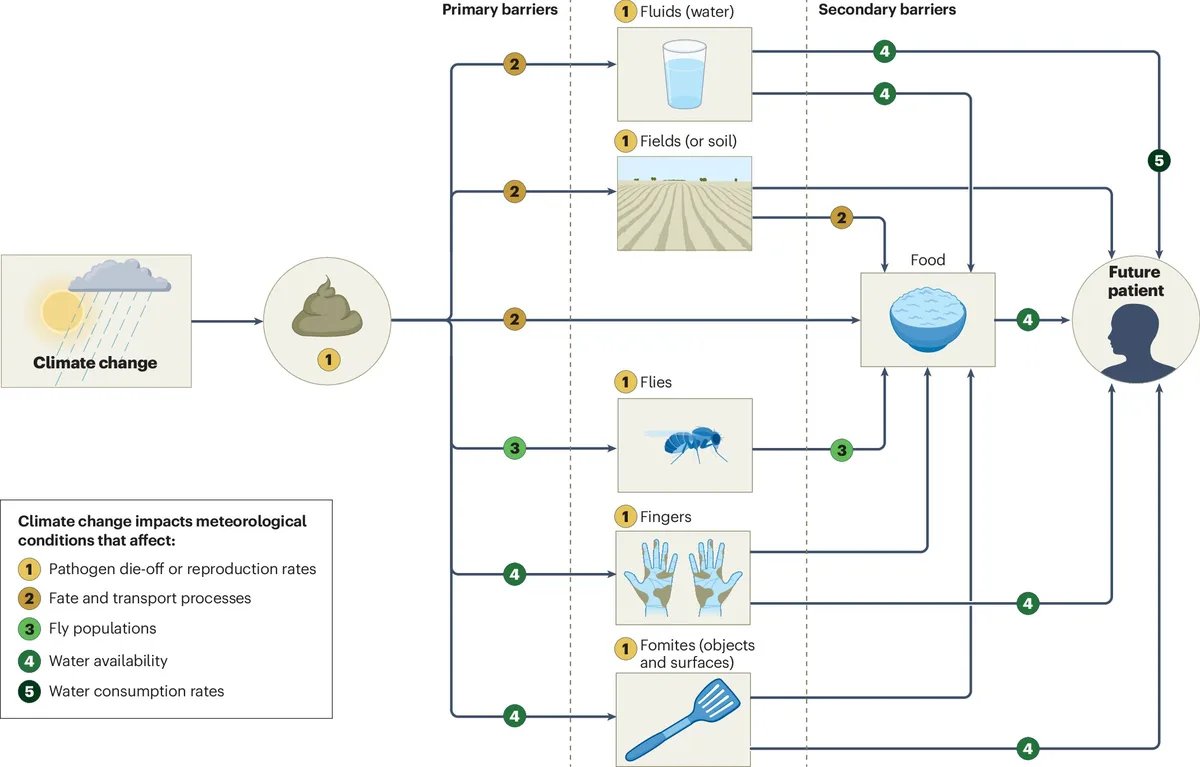
A comprehensive review in Nature Reviews Microbiology finds climate change alters waterborne disease spread. Pathogens respond differently, complicating prediction and control.
The Review Scope
The study, published today, is the most up-to-date analysis of climate change impacts on waterborne diseases. It examines how pathogens like Vibrio, Cryptosporidium, and norovirus respond to warming waters and extreme weather. The review synthesizes data from over 200 studies globally.
Pathogen-Specific Responses
Vibrio bacteria thrive in warmer coastal waters, increasing risk of cholera and wound infections. Cryptosporidium outbreaks rise after heavy rainfall events that overwhelm water treatment. Norovirus shows seasonal shifts, with longer transmission windows in temperate regions.
Public Health Implications
The authors call for adaptive water safety plans and real-time monitoring systems. Current infrastructure may be inadequate for projected changes. The review highlights a need for region-specific risk assessments.
1 source
Time · lag behind first