Study links water-saving irrigation to cadmium buildup in rice
This digest was compiled by AI from multiple sources — links to the originals are below.
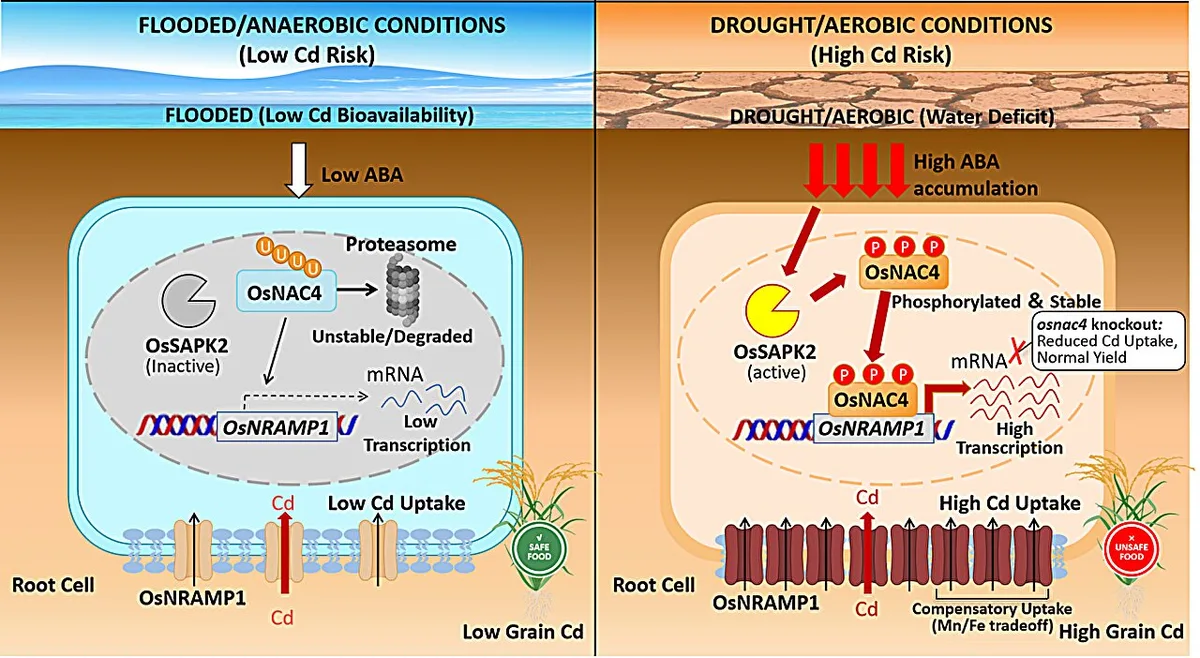
A study published in Nature Communications reveals the molecular mechanism by which intermittent irrigation increases cadmium bioavailability in rice. The research identifies a key transporter gene that drives cadmium uptake under aerobic soil conditions. The finding challenges efforts to balance water conservation with food safety.
The Molecular Mechanism
Researchers at the University of California, Riverside, identified the OsNRAMP5 gene as the primary transporter responsible for cadmium uptake in rice roots under aerobic conditions. The study showed that intermittent irrigation increases soil oxygen levels, which upregulates OsNRAMP5 expression by 3.5-fold compared to continuous flooding. This leads to cadmium accumulation in grains at levels exceeding international safety limits of 0.4 mg/kg.
Agricultural Trade-off
Water-saving irrigation covers about 20% of global rice paddies, a share expected to grow as freshwater scarcity intensifies. The study found that cadmium concentrations in rice grains from intermittently irrigated fields averaged 0.6 mg/kg, 50% higher than from flooded fields. This poses a dilemma for farmers in regions like South and Southeast Asia, where rice is a dietary staple and groundwater depletion is acute.
What's Next
The research team plans to develop rice varieties with reduced OsNRAMP5 expression through gene editing. It remains unclear whether such modified strains can maintain yield under water-saving regimes.
1 source
Study links water-saving irrigation to cadmium buildup in rice