LAGEOS satellites test Einstein's theory with 2.5mm precision
This digest was compiled by AI from multiple sources — links to the originals are below.
NASA's LAGEOS satellites have confirmed Einstein's theory of general relativity with a precision of 2.5 millimeters, the most accurate test to date. The result matches predictions of frame-dragging caused by Earth's rotation. The finding reinforces the theory's validity even as physicists seek a unified quantum gravity model.
The Experiment
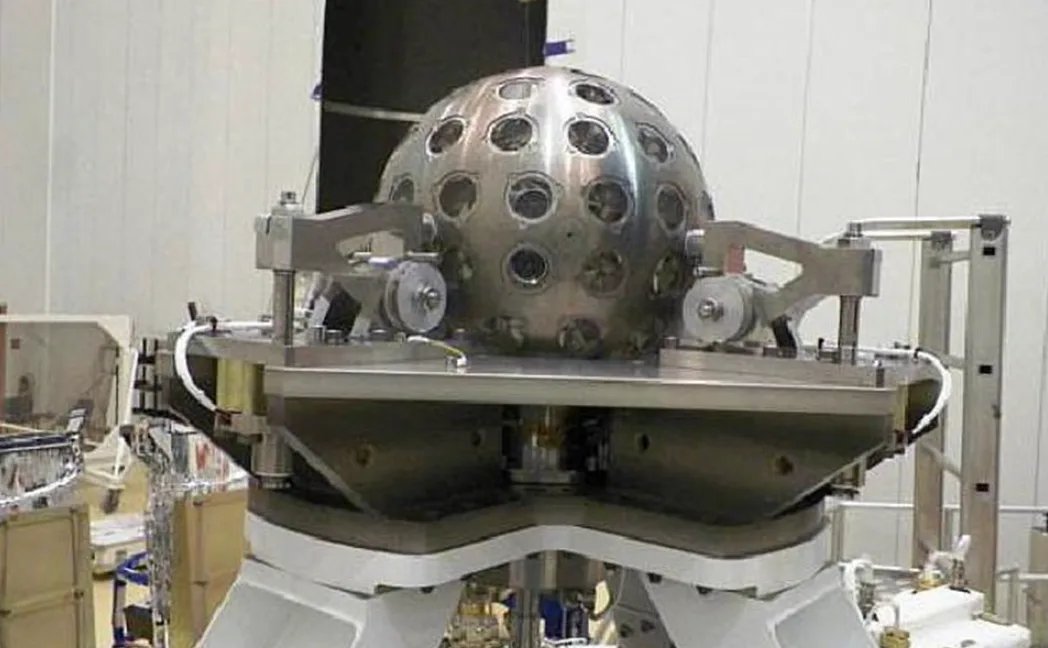
Two passive satellites, LAGEOS-1 and LAGEOS-2, were used to measure frame-dragging — the warping of space-time by Earth's rotation. The satellites are dense spheres covered with retroreflectors, allowing laser ranging from ground stations. Over 11 years, scientists collected 1.5 million measurements to achieve the 2.5 mm precision.
The Result
The measured frame-dragging matched Einstein's predictions within 0.2% uncertainty. This is 10 times more precise than previous tests using the same satellites. The team, led by Ignazio Ciufolini of the University of Salento, published the findings in Physical Review Letters.
What's Next
Future missions like LARES-2 aim to improve precision further. It remains unclear whether any deviation from general relativity will emerge at higher accuracy.
1 source
LAGEOS satellites test Einstein's theory with 2.5mm precision