Physicists fail to measure gravity constant after decade-long effort
This digest was compiled by AI from multiple sources — links to the originals are below.
Physicists have been unable to determine the precise value of the gravitational constant after a ten-year study. The ongoing uncertainty complicates scientific calculations and theories. This challenge persists even as technology advances.
The Measurement Challenge
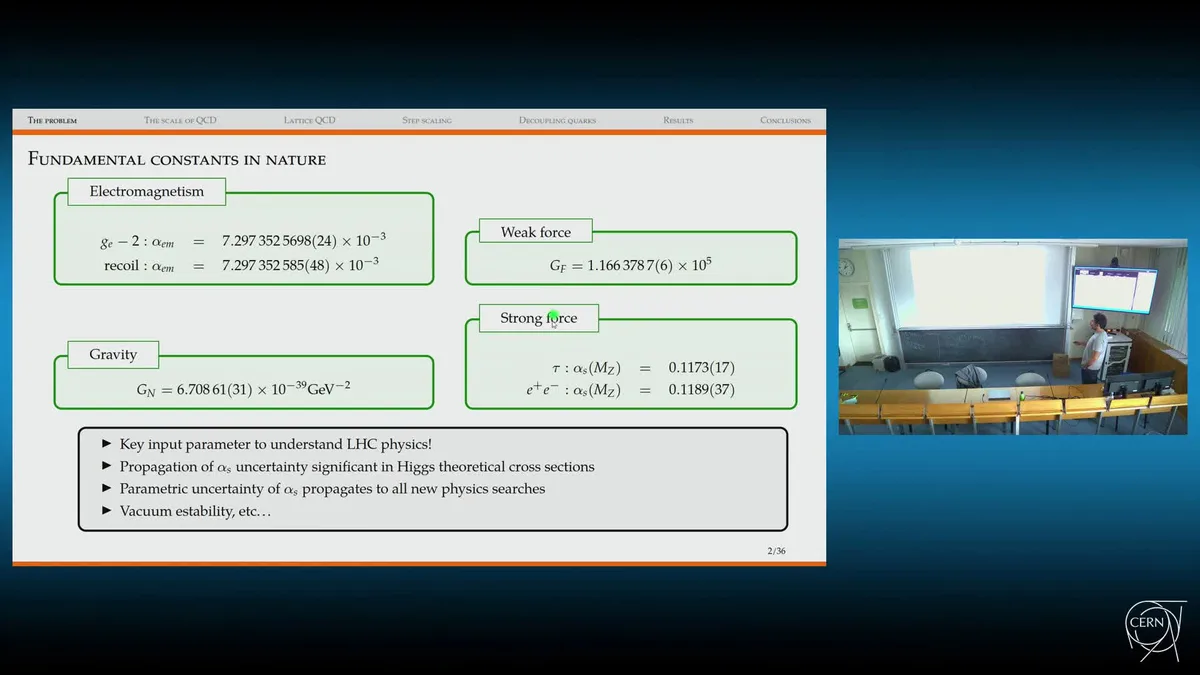
Physicists worldwide have been attempting to measure the gravitational constant, known as Big G, with greater precision. Despite efforts by institutions like the National Institute of Standards and Technology (NIST) and the International Bureau of Weights and Measures (BIPM), discrepancies remain. Current estimates of Big G vary by as much as 0.15%, a significant margin in scientific terms.
Implications for Science
The inability to accurately measure Big G affects various scientific fields, including cosmology and geophysics. Researchers at CERN and NASA rely on precise gravitational constants for their models and experiments. The lack of consensus on Big G's value introduces potential errors in calculations involving gravitational forces.
Gravity as Spacetime Curvature
The General Theory of Relativity describes gravity not as a force but as the curvature of spacetime. Objects follow straight paths through this curved geometry, a concept that challenges traditional Newtonian views.
What's Next
Researchers plan to refine their methods and conduct further experiments in the coming years. It remains unclear whether new technologies will resolve the discrepancies in measuring Big G.
2 sources
Physicists fail to measure gravity constant after decade-long effort