Nature publishes atlas of maternal-fetal interface, identifying key cell types
Nature has published a comprehensive single-cell atlas of the human maternal-fetal interface. The study identifies cell types involved in pre-eclampsia, preterm birth, and miscarriage. This research comes as global maternal health issues remain a concern.
Maternal-Fetal Interface Atlas
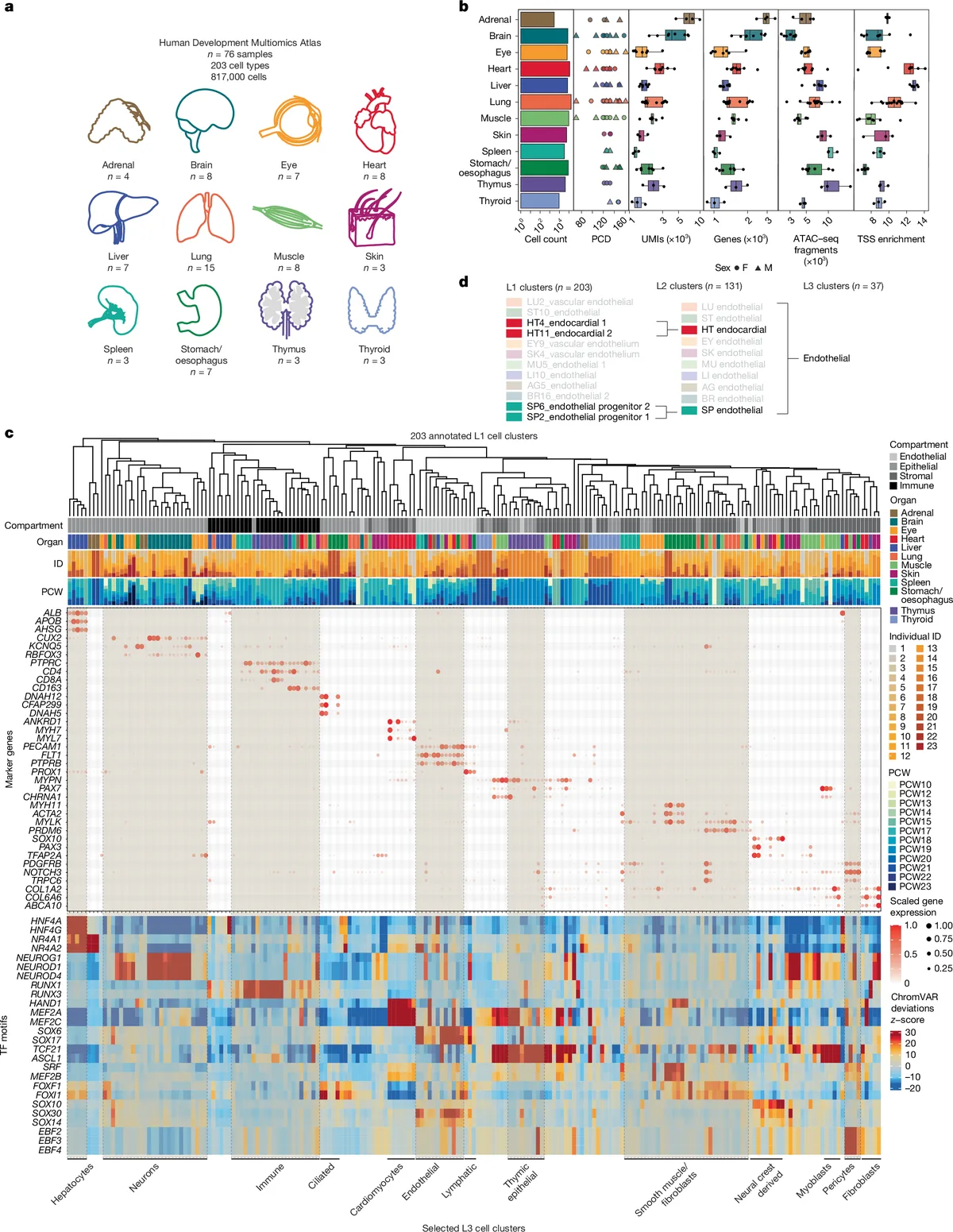
The atlas, published by Nature, maps the human maternal-fetal interface across pregnancy using single-cell multiomics. It reveals cell types, states, and spatial niches, providing insights into developmental tissue architectures. The study highlights transcriptional programs and identifies roles of specific cell types in pregnancy complications.
Implications for Pregnancy Complications
The research identifies cell types linked to pre-eclampsia, spontaneous preterm birth, and miscarriage. These findings could inform future therapeutic strategies targeting these complications. The study involved collaboration among international research institutions, enhancing its credibility and scope.
What's Next
Further research is expected to explore therapeutic applications of these findings. It remains uncertain how quickly these insights can be translated into clinical practice.
2 sources
Nature publishes atlas of maternal-fetal interface, identifying key cell types