Max Planck Institute detects close supermassive black holes in Markarian 501
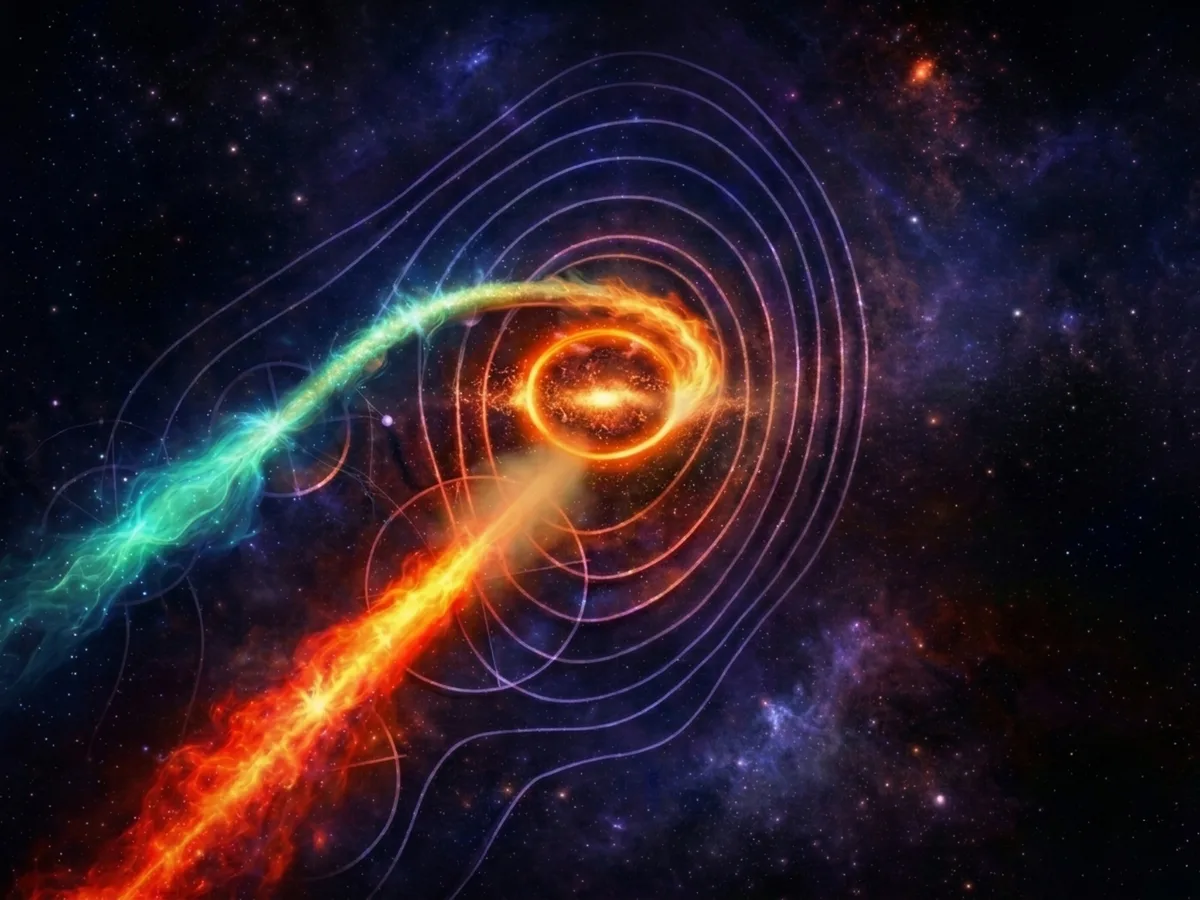
Researchers at the Max Planck Institute for Radio Astronomy have detected two supermassive black holes orbiting closely in the galaxy Markarian 501. This discovery marks the first direct evidence of such a pair on the verge of merging. The finding offers a unique opportunity to study galaxy evolution processes.
Discovery Details
The research team led by Silke Britzen from the Max Planck Institute for Radio Astronomy identified the black holes in the galaxy Markarian 501. The black holes are located at the galaxy's center and are in close orbit around each other. This discovery is significant as it provides the first direct evidence of a supermassive black hole pair about to merge. The study was conducted using advanced radio astronomy techniques.
Implications for Galaxy Evolution
The detection of these black holes offers insights into the processes governing galaxy evolution. Supermassive black holes are known to merge over time, contributing to the growth of galaxies. The findings from Markarian 501 could help astronomers understand how such mergers influence the structure and dynamics of galaxies. The research underscores the importance of studying black holes to comprehend cosmic evolution.
What's Next
The research team plans to continue monitoring the black holes for further developments. It remains uncertain how soon the merger will occur and what its effects will be.
1 source
Max Planck Institute detects close supermassive black holes in Markarian 501